Looking for a DSCR Loan in Arizona?
We are the experts!
Qualify Based on Rental Income Only!
No Personal Income Needed to Qualify!
Interest Only Options Available!
Fund Into Corporation or LLC
No Pre-Pay Options
AirBnB's Allowed
Answer a Few Quick Questions and Let’s See if You’re Eligible
🔒 This site is secure
🔒 This site is secure
Qualify Based on bank statements only!
No W2's or Tax Returns Needed!
Interest Only Options Available!
Get up to 90% Financing
100% Gift Funds Allowed
Fixed Rate and Adjustable Rate Options
DSCR Loans in Arizona: Finance Rentals on the Property's Income
A DSCR (debt service coverage ratio) loan lets Arizona investors qualify using the rent a property earns instead of personal tax returns, W-2s, or pay stubs. If the rent covers the mortgage payment, taxes, insurance, and any HOA dues, the property can usually carry its own loan. That makes DSCR financing a natural fit for self-employed investors, people growing past conventional loan limits, and anyone buying in an LLC.
Broker Buddy shops DSCR programs from multiple wholesale lenders for single-family homes, 2–4 unit properties, condos, townhomes, and short-term rentals across all 15 Arizona counties — purchases, rate-and-term refinances, and cash-out refinances.
Arizona DSCR Loan Guidelines at a Glance
Each lender writes its own rulebook, but most Arizona DSCR loans fall inside the ranges below. Because we compare multiple programs side by side, a Phoenix or Tucson deal that misses one lender's guideline often fits another's.
| Guideline | Typical range in Arizona |
|---|---|
| Credit score | Many programs open at 620–660; 700 and above earns the most leverage and the best pricing |
| Down payment / LTV | Usually 20–25% down (up to 80% LTV) for purchases and rate-and-term refinances; cash-out generally caps around 75% LTV, with a few strong-credit programs reaching 85% |
| Minimum DSCR | 1.00 is the common target; some programs go to 0.75–0.99, and no-ratio options exist |
| Reserves | Often 3–6 months of PITIA; set aside more for HVAC and roof wear in the desert heat |
| Loan size | Minimums typically start around $75,000–$100,000, with jumbo DSCR for Scottsdale, Paradise Valley and Sedona properties |
| HOA communities | Much of metro Phoenix sits in master-planned HOAs; review CC&Rs for minimum lease terms or short-term rental bans before you count on Airbnb income |
| Water & utilities | Most city homes are on municipal water; properties served by a shared well or hauled water can face extra lender review |
| Who can borrow | Individuals or an LLC; first-time investors qualify on many programs |
| Time to close | Roughly 3–5 weeks once the appraisal is ordered |
Guidelines change often and differ by lender and property. Test your deal with our DSCR calculator or see how 30-year, 40-year, interest-only and ARM terms change your ratio.
Why Investors Are Buying Rentals in Arizona
Arizona has been one of the country's fastest-growing states for years, and its effective property tax rates are low by national standards. Much of the rental stock is newer single-family housing, which keeps repair budgets manageable. Demand comes from several directions at once:
- Semiconductors and advanced manufacturing — TSMC's fabs in north Phoenix and Intel's Chandler campus bring engineers, contractors, and suppliers to the Valley.
- Healthcare, finance, and logistics anchor the Phoenix-Mesa-Chandler metro, which is home to most of the state's population.
- Military installations such as Luke AFB (Glendale), Davis-Monthan AFB (Tucson), and Fort Huachuca (Sierra Vista) create rotating rental demand.
- Universities — Arizona State University in Tempe, the University of Arizona in Tucson, and Northern Arizona University in Flagstaff — support student and staff rentals.
- Tourism and seasonal visitors in Scottsdale, Sedona, Flagstaff, and the Grand Canyon area, plus winter visitors in the Valley and Yuma, drive strong short-term and mid-term rental demand.
Arizona Rental Markets Investors Are Targeting
Arizona's rental demand runs well beyond Phoenix. Here's how investors tend to think about the state's main markets — underwrite the exact address before you write an offer.
TSMC's chip fabs in north Phoenix and a wave of logistics and manufacturing jobs in the West Valley (Glendale, Goodyear, Buckeye, Surprise) support demand for newer single-family rentals at lower prices than the East Valley.
Tempe (Arizona State University), Chandler (Intel), Mesa and Gilbert offer deep tenant pools of students, engineers and families. Scottsdale leans luxury and short-term rental, where city licensing and HOA rules matter.
The University of Arizona, Davis-Monthan Air Force Base, Raytheon and Banner medical centers give Tucson diversified demand, with entry prices that usually sit below the Phoenix metro.
Northern Arizona University and Grand Canyon and red-rock tourism make these high-demand but high-priced markets. Many investors here lean on short-term rental income, so check local licensing first.
Sierra Vista (Fort Huachuca) and Yuma (Marine Corps Air Station Yuma and Yuma Proving Ground) offer lower prices and steady military and contractor tenants, which often helps the ratio.
Lake Havasu City draws boaters and winter visitors to vacation rentals, while Prescott and Prescott Valley attract retirees and remote workers looking for cooler summers.
Want a quick read on what an Arizona property should rent for? Try our free DSCR rent estimate tool.
Arizona Rent Benchmarks by Metro
Lenders qualify DSCR loans using the lower of the current lease or an appraiser's market-rent estimate, so it helps to know where local rents sit before you make an offer. HUD's Fair Market Rents are a useful, neutral starting point:
| Metro area | 2-bedroom | 3-bedroom | 4-bedroom |
|---|---|---|---|
| Phoenix-Mesa-Chandler | $1,734 | $2,287 | $2,537 |
| Flagstaff | $1,729 | $2,109 | $2,312 |
| Prescott Valley-Prescott | $1,550 | $2,146 | $2,263 |
| Tucson | $1,405 | $1,946 | $2,211 |
| Navajo County (Show Low; non-metro) | $1,264 | $1,567 | $1,661 |
| Yuma | $1,244 | $1,703 | $2,087 |
| Lake Havasu City-Kingman | $1,229 | $1,708 | $1,881 |
| Sierra Vista-Douglas | $1,153 | $1,597 | $1,927 |
Source: HUD Fair Market Rents, FY2027 schedule (effective October 1, 2026). Fair Market Rents are a government benchmark, not an appraisal; actual market rent for a specific property may be higher or lower. Phoenix and Tucson figures are HUD's metro-wide FMRs; HUD also publishes ZIP-code-level Small Area FMRs for those two metros.
Example: How a Phoenix Rental Pencils Out
Here's a simplified look at how a lender would calculate DSCR on a three-bedroom single-family rental in the Phoenix area:
| Purchase price | $375,000 |
| Down payment (20%) | $75,000 |
| Loan amount | $300,000 |
| Principal & interest (30-yr fixed, 7.25% example rate) | $2,047 / mo |
| Property taxes (estimate) | $188 / mo |
| Homeowners insurance (estimate) | $120 / mo |
| Total housing payment (PITI) | $2,355 / mo |
| Monthly rent (HUD 3-bedroom benchmark) | $2,287 / mo |
| DSCR = $2,287 ÷ $2,355 | 0.97 |
A DSCR of 1.0 or higher means the rent covers the full payment, which qualifies with most lenders. At 0.97, this example falls just short at 20% down. Putting 25% down brings it to about 1.03, and a lower rate (for example, by choosing a prepayment penalty) helps too. Some programs also go below 1.0 with stronger credit and reserves, and ratios at 1.20 and above typically earn better pricing. The rate, taxes, and insurance shown are illustrations only — request a quote for numbers on your property.
Run your own Phoenix numbers in the DSCR calculator, or see whether an interest-only or 40-year term closes the gap on a deal sitting just under 1.00.
Arizona Prepayment Penalty Rules for DSCR Loans
Arizona is one of the states where lenders may include a standard prepayment penalty on investment-property (business-purpose) loans, whether the loan closes in your own name or in an LLC. Arizona doesn't impose a state-specific cap on these penalties, so the lender's program rules set the options. Choosing a prepayment penalty usually lowers your rate; choosing no penalty gives you the freedom to sell or refinance at any time. We'll price both ways so you can compare.
| Prepay option | How it works | Best for |
|---|---|---|
| 5-year step-down (5-4-3-2-1) | Penalty is 5% of the balance paid off in year 1, falling 1% each year to 0% after year 5. | Long-term buy-and-hold; lowest rate |
| 3-year step-down (3-2-1) | 3% in year 1, 2% in year 2, 1% in year 3, then none. | A balance of rate and flexibility |
| Six months' interest | Penalty is capped at six months of interest on 80% of the original principal balance. | Investors who want a smaller, predictable penalty |
| No prepayment penalty | Sell or refinance any time with no penalty, usually at a higher rate. | Flips-to-rentals, BRRRR, short holds |
Arizona-Specific Costs Every Investor Should Budget For
Property taxes: rentals don't get the homeowner rebate
Arizona assesses both owner-occupied homes (Class 3) and residential rentals (Class 4) at 10% of the property's limited property value, which generally can't rise more than 5% a year. The difference is the state's Additional State Aid to Education, which pays part of the school district tax on an owner-occupied primary residence (generally up to $600 a year). A rental doesn't get that rebate, so its tax bill can be higher than what the previous owner-occupant paid. Arizona also requires owners of residential rental property to register with the county assessor (A.R.S. § 33-1902), and out-of-state owners must name an in-state statutory agent. See the Arizona Department of Revenue Property Tax page for how assessments work.
Insurance, monsoon, and wildfire risk
Arizona's main hazards are monsoon storms (wind, hail, and flash flooding), wildfire in the high country around Flagstaff, Prescott, and the White Mountains, and extreme summer heat that is hard on roofs and cooling systems. Standard policies don't cover flood, and even dry washes can flood, so check the flood zone of any address on the FEMA Flood Map Service Center before you make an offer. The Arizona Department of Insurance and Financial Institutions has consumer guidance on homeowners and landlord coverage.
Transaction privilege tax on short-term rentals
Stays of less than 30 days are subject to Arizona transaction privilege tax (TPT) under the transient lodging classification, plus county and city taxes, and some cities add a separate hotel tax. Every host needs an Arizona TPT license — even if all bookings go through Airbnb or Vrbo — and the license number must appear on your listings. Registered online lodging marketplaces collect and remit TPT on the bookings they handle, but direct bookings are your responsibility. Details are on the ADOR short-term lodging page. Cities can add their own rules: Phoenix, for example, requires a short-term rental permit in addition to the TPT license. For long-term rentals, cities stopped taxing residential rents of 30 days or more on January 1, 2025.
Landlord-tenant law
Long-term rentals are governed by the Arizona Residential Landlord and Tenant Act (Arizona Revised Statutes, Title 33, Chapter 10), which covers security deposits, notices, and repairs. A security deposit, including any prepaid rent, is limited to one and one-half month's rent, and the landlord has 14 days (not counting weekends and legal holidays) after the tenancy ends and the tenant requests it to return the deposit with an itemized list of deductions. You can read the current statutes on the Arizona Legislature's Title 33 page.
Eviction notices and rent control
Under the Arizona Residential Landlord and Tenant Act, a landlord gives written notice of unpaid rent and the tenant has 5 days to pay before the landlord can file a special detainer action. Most other material lease violations get a 10-day notice to cure, while health and safety violations get 5 days, and a material and irreparable breach (such as violent or drug-related conduct on the property) allows immediate termination. Arizona also bars cities, including charter cities, from controlling rents on private residential property. Sources: A.R.S. § 33-1368 and A.R.S. § 33-1329.
State short-term rental law
Arizona cities and towns may not ban vacation or short-term rentals outright, but they can require a local permit (with the fee capped at the lesser of processing cost or $250), a 24/7 emergency contact, written notice to neighbors before your first booking, and at least $500,000 in liability coverage or a booking platform that provides it. Repeat violations bring escalating fines and possible permit suspension. Source: A.R.S. § 9-500.39.
Rental tax and income tax
Since January 1, 2025, owners no longer collect city transaction privilege tax on residential rentals of 30 days or more, and the residential rental TPT license is no longer required for those leases; stays under 30 days are still taxed as transient lodging. Arizona's individual income tax is a flat 2.5% tax on taxable income, including net rental income. Sources: Arizona Department of Revenue and ADOR rate guidance.
Buying in an LLC
Many Arizona investors hold rentals in an LLC for liability protection, and DSCR loans can close directly in the entity's name. In Arizona, LLCs are formed with the Arizona Corporation Commission rather than the Secretary of State. Talk to your attorney or CPA about the right structure for your situation.
Arizona County Property Tax & Assessment Offices
Use these official county offices to look up a property's assessed value, current tax bill, and parcel details before you make an offer. In Arizona, the elected county Assessor sets values and handles rental registration, while the county Treasurer bills and collects the tax.
| County | Major cities | Assessment office |
|---|---|---|
| Maricopa | Phoenix, Mesa, Chandler, Scottsdale | Assessor's Office |
| Pima | Tucson, Marana, Oro Valley | Assessor's Office |
| Pinal | Casa Grande, Maricopa, Florence | Assessor |
| Yavapai | Prescott, Prescott Valley, Cottonwood | Assessor's Office |
| Yuma | Yuma, San Luis, Somerton | Assessor's Office |
| Mohave | Lake Havasu City, Kingman, Bullhead City | Assessor |
| Coconino | Flagstaff, Page, Sedona (part) | Assessor |
| Cochise | Sierra Vista, Douglas, Benson | Assessor |
| Navajo | Show Low, Winslow, Pinetop-Lakeside | Assessor |
| Apache | St. Johns, Springerville, Eagar | Assessor |
| Gila | Payson, Globe | Assessor |
| Graham | Safford, Thatcher | Assessor |
| La Paz | Parker, Quartzsite | Assessor |
| Greenlee | Clifton, Duncan | Assessor |
Other counties: for Santa Cruz County (Nogales) and contact details for all 15 county assessors, see the Arizona Department of Revenue's County Assessor Contacts list.
More Free Resources for Arizona Investors
- HUD Fair Market Rents — rent benchmarks by county and ZIP code
- U.S. Census QuickFacts: Arizona — population, income, and housing data
- FEMA Flood Map Service Center — look up the flood zone for any address
- Arizona short-term lodging tax (TPT) — short-term rental tax and licensing rules
- Arizona Corporation Commission: LLCs — form or look up an entity
Arizona DSCR Loan Options & Free Tools
Arizona investors use DSCR financing for much more than a standard 30-year purchase. Pick the option that fits your plan:
Check whether a Phoenix, Mesa or Tucson rental covers its payment before you make an offer.
Estimate market rent the way a DSCR appraiser will, from Tempe student rentals to Sierra Vista military homes.
See how much cash you could pull from a Chandler or Gilbert rental with a cash-out refi.
Compare 30-year fixed, 40-year, interest-only and ARM options and how each one changes your ratio.
Tap equity in an Arizona rental without giving up a low first-mortgage rate.
Finance Scottsdale, Sedona, Flagstaff and Lake Havasu vacation rentals on projected nightly income.
Arizona DSCR Loan FAQs
How much do I need to put down on an Arizona DSCR loan?
Most DSCR programs require 20–25% down on a purchase. Select programs allow less with strong credit and a higher DSCR. Short-term rentals and properties with a DSCR under 1.0 usually need more down.
Do Arizona DSCR loans have prepayment penalties?
They can. Arizona permits standard prepayment penalties on investment loans, such as 5-4-3-2-1 or 3-2-1 step-downs, whether you close in your own name or an LLC. You can also choose a loan with no prepayment penalty, typically at a slightly higher rate.
Can I use Airbnb income to qualify?
Yes, on eligible programs. Lenders use your booking history or a short-term rental market analysis for the property. This is popular for Scottsdale, Sedona, Flagstaff, and White Mountains properties around Show Low and Pinetop. You'll also need an Arizona TPT license and any permit your city requires.
Can I close in my LLC?
Yes. DSCR loans can close in the name of an LLC or corporation, with the owners signing a personal guarantee.
Do I have to register my Arizona rental with the county?
Yes. Arizona requires owners of residential rental property to register with the county assessor, including a responsible person for an LLC or other entity owner and an in-state statutory agent for out-of-state owners. Short-term rentals also need a TPT license.
Can I do a cash-out refinance on an Arizona rental?
Yes. DSCR cash-out refinances let you pull equity from a rental you already own to fund your next purchase, again qualifying on the property's rent.
Can an Arizona city ban my short-term rental?
No. State law bars Arizona cities and towns from prohibiting short-term rentals, though they can require a permit, an emergency contact, neighbor notice and liability insurance. HOAs, however, can still restrict rentals through their CC&Rs, so check those before you buy.
Do I still need a TPT license for a long-term rental in Arizona?
Not for leases of 30 days or more. Since January 1, 2025, cities no longer tax residential rentals, so the residential rental TPT license is no longer required for long-term rentals. Short-term rentals under 30 days still owe transient lodging tax.
How long does an Arizona tenant have to pay late rent?
After the landlord delivers written notice of nonpayment, the tenant has five days to pay before the landlord can file a special detainer action. The tenant can usually still reinstate by paying the past-due rent and allowed fees before the case is filed.
What credit score do I need for an Arizona DSCR loan?
Many programs start around a 620 to 660 score. Borrowers with 700 or higher typically get the most leverage and best pricing, while lower scores usually need a larger down payment.
Get an Arizona DSCR Rate Quote
Tell us about the property and we'll shop multiple DSCR lenders — with and without a prepayment penalty — so you can compare. No credit check to see your options.
Check My EligibilityLooking for another state? See all DSCR loan states.
DSCR Loans Explained
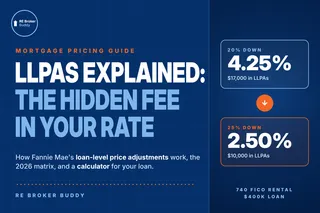
LLPA Explained: Fannie Mae's Loan-Level Price Adjustment Matrix (2026)
What a loan-level price adjustment (LLPA) is, how it works, the 2026 Fannie Mae LLPA matrix, investment property LLPAs, real-dollar examples and a calculator. ...more
DSCR loans ,Mortgage Market Updates
October 28, 2026
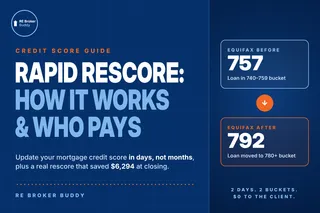
Rapid Rescore: How It Works, How Long It Takes and Who Pays
What a rapid rescore is, how it works, how long it takes, what it costs and who pays, what it can't fix, and a real rescore that saved $6,294 at closing. ...more
DSCR loans
October 28, 2026
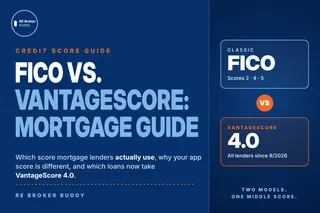
FICO vs. VantageScore for Mortgages: Which Credit Score Do Lenders Use?
Which credit score mortgage lenders use, how classic FICO and VantageScore 4.0 differ, why Credit Karma doesn't match your mortgage score, and which loans now accept VantageScore 4.0. ...more
DSCR loans ,Mortgage Market Updates
October 28, 2026
Where We Offer DSCR Loans
*Must Close in LLC
STEP 1
Apply Online or Call Directly
Find out how much home you can buy or discover how much you can save by refinancing.
STEP 2
Review What Options You Can Qualify For
Learn exactly how much you qualify for and what you would save by working with us.
STEP 3
Get Loan Approval in 24 Hours
Get mortgage loan approval to move forward with your property.


Broker Buddy LLC
Trevor Gravink
Mortgage Consultant
CEO/Owner
(619) 404-6637
NMLS: 1707407
NMLS Consumer Access Lookup Tool
CA DRE # 02117228
5371 Wilshire Dr. San Diego, CA 92116
© 2026 Broker Buddy LLC
Powered by Adaptive Mortgage Solutions
Company NMLS # 2022974
CA DRE # 02126109