Looking for a DSCR Loan in Colorado?
We are the experts!
Qualify Based on Rental Income Only!
No Personal Income Needed to Qualify!
Interest Only Options Available!
Fund Into Corporation or LLC
No Pre-Pay Options
AirBnB's Allowed
Answer a Few Quick Questions and Let’s See if You’re Eligible
🔒 This site is secure
🔒 This site is secure
Qualify Based on bank statements only!
No W2's or Tax Returns Needed!
Interest Only Options Available!
Get up to 90% Financing
100% Gift Funds Allowed
Fixed Rate and Adjustable Rate Options
DSCR Loans in Colorado: Finance Rentals on the Property's Income
A DSCR (debt service coverage ratio) loan lets Colorado investors qualify using the rent a property earns instead of personal tax returns, W-2s, or pay stubs. If the rent covers the mortgage payment, taxes, insurance, and any HOA dues, the property can usually carry its own loan. Colorado's rental demand is concentrated along the Front Range (Denver, Colorado Springs, Fort Collins, Boulder, Greeley) and in mountain resort counties, where HUD Fair Market Rents are among the highest in the state. Residential rentals are taxed at the same residential assessment rates as owner-occupied homes, which are far lower than commercial rates.
Broker Buddy shops DSCR programs from multiple wholesale lenders for single-family homes, 2–4 unit properties, condos and townhomes across all 64 Colorado counties — purchases, rate-and-term refinances, and cash-out refinances.
Colorado DSCR Loan Guidelines at a Glance
Colorado's prices and mountain-town rules shape which DSCR programs fit a deal. Here are the ranges most Colorado rental loans fall into — and because we shop several lenders at once, a property that misses one program's guideline can often fit another.
| Guideline | Typical range in Colorado |
|---|---|
| Credit score | Programs generally start around 620–660; 700 and above gets the most leverage and best pricing |
| Down payment / LTV | Usually 20–25% down (up to 80% LTV) on purchases and rate-and-term refinances; cash-out generally caps near 75% LTV |
| Minimum DSCR | 1.00 is the common target; programs accepting 0.75–0.99 or no ratio help on Front Range deals where rent runs close to the payment |
| Reserves | Typically 3–6 months of PITIA, more for resort-area and jumbo loans |
| Loan size | Minimums commonly start around $75,000–$100,000, with jumbo DSCR for Boulder, Vail, Aspen and Breckenridge properties |
| Resort condos | Ski-town condos with on-site rental desks, front-desk check-in or heavy short-term rental use may be treated as condotels and need a specialty program |
| Short-term rentals | Denver only allows STRs in a host's primary residence, so DSCR Airbnb loans there rarely work; mountain towns often cap or zone licenses, so lenders may ask for proof of a license |
| Who can borrow | Individuals or an LLC; first-time investors qualify on many programs |
| Time to close | About 3–5 weeks once the appraisal is ordered |
Guidelines vary by lender, credit and property. Check your deal in our DSCR calculator or compare 30-year, 40-year, interest-only and ARM terms to see how each changes your ratio.
Why Investors Are Buying Rentals in Colorado
- Denver International Airport is listed by the state's economic development site as one of Colorado's largest employers, with about 35,000 workers on site.
- Aerospace is a core industry: Colorado reports more than 2,000 aerospace businesses directly employing over 55,000 people, with Lockheed Martin (about 14,000 Colorado employees) the largest private employer listed.
- Military installations support housing demand, including Fort Carson in Colorado Springs (about 23,700 active-duty soldiers and 57,000 family members) and Space Force bases Buckley, Peterson and Schriever.
- The University of Colorado Boulder enrolled 38,808 students in fall 2025, and Colorado State University in Fort Collins anchors the northern Front Range rental market.
- Tourism supported 188,210 jobs and drew 95.4 million visitors in 2024, driving short-term and workforce rental demand in mountain resort counties such as Eagle, Summit, Pitkin and Routt.
Colorado Rental Markets Investors Are Watching
Colorado splits into a Front Range of long-term rental markets and a mountain belt that leans on tourism. Here's how investors usually think about each — underwrite the specific address before you offer.
Aerospace, healthcare, finance and tech jobs keep Denver, Aurora, Lakewood and Arvada rentals in demand. Because Denver limits short-term rentals to a host's primary residence, most investors here buy for long-term tenants.
Fort Carson, Peterson and Schriever Space Force Bases, the Air Force Academy and Cheyenne Mountain bring constant military moves, and prices sit below Denver, which helps the ratio.
Fort Collins (Colorado State University), Greeley (University of Northern Colorado and food processing) and Loveland offer student, healthcare and manufacturing tenants with a mix of older and newer homes.
CU Boulder, federal labs and tech firms create deep demand, but very high prices make cash flow hard; investors often use larger down payments or interest-only terms here.
Pueblo offers some of the lowest prices on the Front Range, and Grand Junction is the Western Slope hub for healthcare and Colorado Mesa University. These are where long-term rent tends to come closest to covering the full payment.
Breckenridge, Steamboat Springs, Vail Valley and other ski towns draw year-round tourists, but many cap, zone or tax short-term rentals heavily. Confirm a license is available before you count on nightly income.
Want a quick read on what a Colorado property should rent for? Try our free DSCR rent estimate tool.
Colorado Rent Benchmarks
Lenders qualify DSCR loans using the lower of the current lease or an appraiser's market-rent estimate, so it helps to know where local rents sit before you make an offer. HUD's Fair Market Rents are a useful, neutral starting point:
| Area | 2-bedroom | 3-bedroom | 4-bedroom |
|---|---|---|---|
| Denver-Aurora-Centennial MSA | $2,169 | $2,846 | $3,183 |
| Boulder MSA | $2,033 | $2,703 | $3,146 |
| Fort Collins-Loveland MSA | $1,759 | $2,379 | $2,576 |
| Greeley MSA | $1,647 | $2,281 | $2,753 |
| Colorado Springs HMFA | $1,621 | $2,245 | $2,574 |
| Teller County HMFA | $1,474 | $2,041 | $2,346 |
| Grand Junction MSA | $1,282 | $1,775 | $2,143 |
| Pueblo MSA | $1,263 | $1,611 | $1,891 |
Source: HUD Fair Market Rents, FY2027 schedule (effective October 1, 2026). Fair Market Rents are a government benchmark, not an appraisal; actual market rent for a specific property may be higher or lower.
How Much Can a Denver Rental Support?
A quick way to size a deal is to work backward from the rent. Using the HUD 3-bedroom benchmark for the Denver area and some simple assumptions, here's roughly what purchase price that rent can carry with 20% down:
| Monthly rent (HUD 3-bedroom benchmark) | $2,846 |
| Purchase price the rent covers at a 1.00 DSCR | about $424,000 |
| Purchase price for a 1.20 DSCR (better pricing) | about $354,000 |
| Median value of owner-occupied homes, Denver | $616,000 |
Typical homes in the area cost more than a benchmark rent alone supports, so investors often put more down, choose an interest-only option, or target properties with above-benchmark rents or multiple units. Assumptions: 30-year fixed at a 7.25% example rate, with taxes and insurance estimated at 1.5% of the price per year. The median value is from U.S. Census QuickFacts. These are illustrations only — request a quote for numbers on your property.
Try your own Denver price, rent and down payment in the DSCR calculator, or see whether an interest-only or 40-year term helps a Front Range deal reach 1.00.
Colorado Prepayment Penalty Rules for DSCR Loans
Colorado is one of the states where lenders may include a standard prepayment penalty on investment-property (business-purpose) loans. Choosing a prepayment penalty usually lowers your rate; choosing no penalty gives you the freedom to sell or refinance at any time. We'll price both ways so you can compare.
| Prepay option | How it works | Best for |
|---|---|---|
| Flat 5% (1–5 years) | 5% of the amount prepaid during the penalty term, e.g. 5/5/5 for a 3-year term. | Long-term buy-and-hold; often the best rate |
| Step-down (5-4-3-2-1 or 3-2-1) | The penalty drops each year, e.g. 5% in year 1, 4% in year 2, down to 0% after year 5. Offered by many lenders. | A balance of rate and flexibility |
| Six months' interest | Offered by some lenders: the penalty is capped at six months of interest on 80% of the original balance. | Investors who want a smaller, predictable penalty |
| No prepayment penalty | Sell or refinance any time with no penalty, at a higher rate or price. | Flips-to-rentals, BRRRR, short holds |
Colorado-Specific Costs and Rules for Investors
Property taxes on rentals
Colorado classifies rental homes and apartments as residential property, so they are assessed at the same rates as owner-occupied homes. For tax year 2026 the residential assessment rate is 6.80% for local government levies (after a 10% reduction of the first $700,000 of actual value) and 7.05% for school district levies, compared with 25% to 26% for commercial and other nonresidential property. Real property is revalued every odd-numbered year. The Senior Property Tax Exemption (50% of the first $200,000 of actual value) requires the owner to have lived in the home as a primary residence for 10 years, so it does not apply to investment rentals. Source: Colorado Division of Property Taxation: Understanding Property Taxes.
Insurance, hail and wildfire risk
The Colorado Division of Insurance says hail is the number one cost driver of home insurance in Colorado, making up an estimated 26% to 54% of the average statewide premium. Wildfire risk is priced into premiums in high-risk areas, and a 2025 law (HB25-1182) requires insurers to disclose wildfire risk scores and the mitigation steps that could lower them. The Colorado FAIR Plan, created by HB23-1288, is the insurer of last resort for properties that cannot get coverage elsewhere. See Colorado Division of Insurance: Homeowners and HOA insurance toolkit.
Short-term rentals and lodging tax
Colorado charges sales tax on rooms and accommodations unless the guest is a permanent resident under a written agreement for at least 30 consecutive days. Marketplace facilitators such as Airbnb and Vrbo must collect and remit state and state-administered sales taxes, plus county lodging and local marketing district taxes. Home-rule cities administer their own lodging taxes. Denver allows short-term rentals only in the host's primary residence, requires a license ($50 application, $100 annual fee) whose number must appear in every listing, and charges a 10.75% lodger's tax. Details: Colorado Department of Revenue: Rooms and Accommodations.
Landlord-tenant law
Long-term rentals are governed by the Colorado Revised Statutes Title 38, Article 12 (Tenants and Landlords), including the security deposit law at C.R.S. 38-12-101 et seq. A landlord may not require a security deposit of more than two months' rent (C.R.S. 38-12-102.5). The deposit must be returned within one month after the lease ends, or within a longer period of up to 60 days if the lease says so (C.R.S. 38-12-103). Read more: Colorado Legislative Council: Renters' Rights law summary.
Eviction notices and for-cause rules
Colorado requires a written 10-day Demand for Compliance or Right to Possession before an eviction for unpaid rent or a lease violation, and the 10-day period applies even if the lease says otherwise. Since 2024, most tenants who have lived in a unit for at least 12 months can only be removed or non-renewed for a cause listed in state law, such as nonpayment, a substantial lease violation, or a qualifying no-fault reason like an owner move-in, sale or major renovation, generally with 90 days' notice for no-fault non-renewals. Owner-occupied single-family homes, duplexes and triplexes are among the exemptions. Sources: Denver Department of Housing Stability and Colorado Bar Association summary of HB24-1098.
Rent increases, late fees and rent control
Colorado landlords may raise rent only once in a 12-month period, and a tenant without a written lease must get 60 days' written notice. A late fee can't be charged until rent is at least seven days late and is capped at the greater of $50 or 5% of the past-due rent, and a tenant can't be evicted only for unpaid late fees. State law still bars cities and counties from adopting rent control on private housing. Sources: Denver Department of Housing Stability and C.R.S. § 38-12-301.
Buying in an LLC
Colorado LLCs file Articles of Organization online with the Secretary of State for $50, with a $25 periodic report each year. Start here: Colorado Secretary of State: Articles of Organization. Talk to your attorney or CPA about the right structure for your situation.
Colorado County Assessor Offices
Use these official county assessor offices to look up a property's actual value, assessed value and parcel details before you make an offer.
| County | Major cities | Office |
|---|---|---|
| Denver (City and County) | Denver | Denver Assessor's Office |
| El Paso County | Colorado Springs, Fountain, Monument | El Paso County Assessor |
| Arapahoe County | Aurora, Centennial, Englewood, Littleton | Arapahoe County Assessor |
| Jefferson County | Lakewood, Arvada, Westminster, Golden | Jefferson County Assessor's Office |
| Adams County | Thornton, Westminster, Commerce City, Brighton | Adams County Assessor's Office |
| Douglas County | Castle Rock, Parker, Highlands Ranch, Lone Tree | Douglas County Assessor's Office |
| Larimer County | Fort Collins, Loveland, Estes Park | Larimer County Assessor |
| Boulder County | Boulder, Longmont, Louisville, Lafayette | Boulder County Assessor's Office |
| Weld County | Greeley, Evans, Windsor | Weld County Assessor |
| Pueblo County | Pueblo, Pueblo West | Pueblo County Assessor |
| Mesa County | Grand Junction, Fruita, Palisade | Mesa County Assessor's Office |
| Broomfield (City and County) | Broomfield | Broomfield Assessor's Office |
| Eagle County | Vail, Avon, Eagle | Eagle County Assessor's Office |
| Summit County | Breckenridge, Frisco, Silverthorne | Summit County Assessor's Office |
| La Plata County | Durango, Bayfield | La Plata County Assessor's Office |
Other counties: The Colorado Division of Property Taxation lists the assessor and treasurer for all 64 counties, with addresses, phone numbers and websites. View the directory.
More Free Resources for Colorado Investors
- HUD Fair Market Rents — rent benchmarks by county and ZIP code
- U.S. Census QuickFacts: Colorado — population, income, and housing data
- FEMA Flood Map Service Center — look up the flood zone for any address
- Colorado Department of Revenue: Rooms and Accommodations — short-term rental tax rules
- Colorado Secretary of State: Articles of Organization — form or look up an entity
Colorado DSCR Loan Options & Free Tools
Colorado investors use DSCR financing for more than a standard 30-year purchase. Explore the option that fits your plan:
Check whether a Denver, Aurora or Colorado Springs rental covers its payment before you make an offer.
Estimate market rent the way a DSCR appraiser will, from Fort Collins student homes to Pueblo single-family rentals.
See how much cash you could pull from a Front Range rental that has appreciated since you bought it.
Compare 30-year fixed, 40-year, interest-only and ARM options; interest-only often helps Boulder and Denver deals pencil.
Tap equity in a Colorado rental without giving up a low first-mortgage rate.
Finance Breckenridge, Steamboat and other mountain-town vacation rentals using projected nightly income.
Colorado DSCR Loan FAQs
How much do I need to put down on a Colorado DSCR loan?
Most DSCR programs require 20-25% down on a purchase. Select programs allow less with strong credit and a higher DSCR. Short-term rentals and properties with a DSCR under 1.0 usually need more down.
Do Colorado DSCR loans have prepayment penalties?
They can. Colorado permits standard prepayment penalties on investment loans, such as a flat 5% for 1-5 years or a 5-4-3-2-1 step-down, depending on the lender. You can also choose a loan with no prepayment penalty, typically at a slightly higher rate.
Can I use Airbnb income to qualify?
Yes, on eligible programs, using booking history or a short-term rental market analysis. Check local licensing first: Denver only licenses short-term rentals in the host's primary residence, and many mountain towns cap or restrict licenses.
Can I close in my LLC?
Yes. DSCR loans can close in the name of an LLC or corporation, with the owners signing a personal guarantee.
Can I run a DSCR-financed rental as an Airbnb in Denver?
Only if it is your primary residence. Denver issues short-term rental licenses only for the host's primary residence, so a non-owner-occupied investment property in Denver cannot be licensed as a short-term rental. Rules differ in other cities and in mountain counties, so check local licensing before you count on short-term rental income.
How often are Colorado rental properties reassessed, and what rate applies?
Colorado revalues real property every odd-numbered year. Residential rentals are taxed at the residential rates: for tax year 2026, 6.80% for local government levies (after a 10% reduction of the first $700,000 of actual value) and 7.05% for school levies. Commercial property is assessed at 25% to 26%.
Do I need a reason to end a Colorado lease?
Usually, once the tenant has lived in the unit for 12 months. Colorado's for-cause eviction law requires a reason listed in the statute, such as nonpayment, a serious lease violation, or a qualifying no-fault reason like selling or moving in, with advance notice. Some properties, including owner-occupied single-family homes and duplexes, are exempt.
How much can a Colorado landlord charge for a late fee?
No late fee can be charged until the rent is at least seven days late, and the fee is capped at the greater of $50 or 5% of the past-due rent. A tenant also can't be evicted solely for unpaid late fees.
Can I get a DSCR loan on a ski-town condo?
Often, yes, but resort condos with rental desks, hotel-style check-in or heavy short-term use may be classified as condotels. Those need a specialty program, and the lender will want to confirm the town allows short-term rentals there.
What credit score do I need for a Colorado DSCR loan?
Many programs start around a 620 to 660 score. Scores of 700 and up usually get the most leverage and best pricing, while lower scores typically need more money down.
Get a Colorado DSCR Rate Quote
Tell us about the property and we'll shop multiple DSCR lenders so you can compare options. No credit check to see your options.
Check My EligibilityLooking for another state? See all DSCR loan states.
DSCR Loans Explained
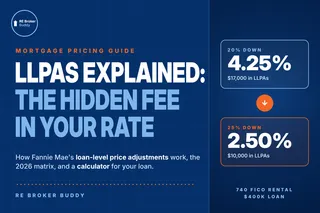
LLPA Explained: Fannie Mae's Loan-Level Price Adjustment Matrix (2026)
What a loan-level price adjustment (LLPA) is, how it works, the 2026 Fannie Mae LLPA matrix, investment property LLPAs, real-dollar examples and a calculator. ...more
DSCR loans ,Mortgage Market Updates
October 28, 2026
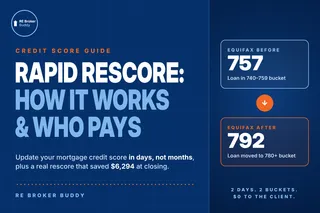
Rapid Rescore: How It Works, How Long It Takes and Who Pays
What a rapid rescore is, how it works, how long it takes, what it costs and who pays, what it can't fix, and a real rescore that saved $6,294 at closing. ...more
DSCR loans
October 28, 2026
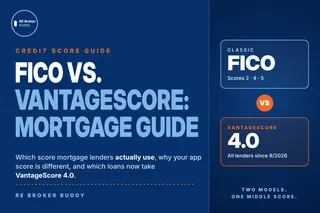
FICO vs. VantageScore for Mortgages: Which Credit Score Do Lenders Use?
Which credit score mortgage lenders use, how classic FICO and VantageScore 4.0 differ, why Credit Karma doesn't match your mortgage score, and which loans now accept VantageScore 4.0. ...more
DSCR loans ,Mortgage Market Updates
October 28, 2026
Where We Offer DSCR Loans
*Must Close in LLC
STEP 1
Apply Online or Call Directly
Find out how much home you can buy or discover how much you can save by refinancing.
STEP 2
Review What Options You Can Qualify For
Learn exactly how much you qualify for and what you would save by working with us.
STEP 3
Get Loan Approval in 24 Hours
Get mortgage loan approval to move forward with your property.


Broker Buddy LLC
Trevor Gravink
Mortgage Consultant
CEO/Owner
(619) 404-6637
NMLS: 1707407
NMLS Consumer Access Lookup Tool
CA DRE # 02117228
5371 Wilshire Dr. San Diego, CA 92116
© 2026 Broker Buddy LLC
Powered by Adaptive Mortgage Solutions
Company NMLS # 2022974
CA DRE # 02126109