Looking for a DSCR Loan in Illinois?
We are the experts!
Qualify Based on Rental Income Only!
No Personal Income Needed to Qualify!
Interest Only Options Available!
Fund Into Corporation or LLC
No Pre-Pay Options
AirBnB's Allowed
Answer a Few Quick Questions and Let’s See if You’re Eligible
🔒 This site is secure
🔒 This site is secure
Qualify Based on bank statements only!
No W2's or Tax Returns Needed!
Interest Only Options Available!
Get up to 90% Financing
100% Gift Funds Allowed
Fixed Rate and Adjustable Rate Options
DSCR Loans in Illinois: Finance Rentals on the Property's Income
A DSCR (debt service coverage ratio) loan lets Illinois investors qualify using the rent a property earns instead of personal tax returns, W-2s, or pay stubs. If the rent covers the mortgage payment, taxes, insurance, and any HOA dues, the property can usually carry its own loan. Illinois rental demand is centered on the six-county Chicago metro, with smaller markets in the Metro East (St. Louis area), Rockford, Peoria, Springfield, Bloomington-Normal and Champaign-Urbana. Investors should note the state's distinctive property tax system: Cook County assesses property by class, while the other 101 counties assess at one-third of market value.
Broker Buddy shops DSCR programs from multiple wholesale lenders for single-family homes, 2–4 unit properties, condos and townhomes across all 102 Illinois counties — purchases, rate-and-term refinances, and cash-out refinances.
Illinois DSCR Loan Guidelines at a Glance
No two DSCR lenders write the same rulebook, but most Illinois rental loans land inside the ranges below. Because we shop several programs at once, a Chicago three-flat that misses one lender's box can often fit another's.
| Guideline | Typical range in Illinois |
|---|---|
| Credit score | Most programs open the door somewhere around 620–660; scores of 700 and up get the most leverage and the strongest pricing |
| Down payment / LTV | Plan on 20–25% down (up to 80% LTV) for purchases and rate-and-term refinances; cash-out usually caps near 75% LTV, and lower scores often mean 30–35% down |
| Minimum DSCR | 1.00 is the usual target; some programs go to 0.75–0.99, and no-ratio options exist for high-tax Cook County deals that don't quite cash-flow |
| Property taxes in the ratio | Illinois tax bills are heavy, so lenders use the actual current bill, not a percentage estimate. A reassessment year in Cook County can move your escrow, and your DSCR, noticeably. |
| Reserves | Commonly 3–6 months of PITIA after closing; larger loans, more properties or lower scores can push that higher |
| Loan size | Minimums often start around $75,000–$100,000, which matters in low-priced downstate markets like Decatur or parts of Peoria; jumbo DSCR runs into the millions |
| Property types | Single-family, condos, townhomes and 2–4 units, including Chicago's classic two-flats and three-flats; select programs take 5–10 unit buildings and mixed-use storefronts |
| Condos | The building must pass the lender's project review; some Chicago associations cap or bar leasing, so check the declaration before you offer |
| Who can borrow | Individuals or an LLC (owners usually sign a personal guarantee); first-time investors qualify on many programs |
| Time to close | Typically 3–5 weeks after the appraisal is ordered; many Illinois buyers, especially around Chicago, also bring a real estate attorney into the deal |
Ranges shift often and depend on the lender, your credit and the property. Run your own numbers in the DSCR calculator, or see how 30-year, 40-year, interest-only and ARM terms change the payment and the ratio.
Why Investors Are Buying Rentals in Illinois
- The state's economic development agency describes Illinois as having the most diverse economy in the nation, with dozens of Fortune 500 headquarters and strengths in advanced manufacturing, agribusiness and food processing, life sciences and professional services.
- Illinois is a national logistics hub: it is the only state served by all seven Class I freight railroads and has three international airports, including Chicago O'Hare, run by the Chicago Department of Aviation.
- Naval Station Great Lakes in Lake County is the Navy's largest training installation and home to its only boot camp, supporting more than 50 tenant commands and over 20,000 Sailors, Marines, Soldiers and DoD civilians.
- Scott Air Force Base in the Metro East area hosts the 375th Air Mobility Wing, which alone has about 2,900 active-duty personnel.
- Illinois has more than 190 higher education institutions, led by the University of Illinois Urbana-Champaign with roughly 60,000 students, and federal research labs Argonne and Fermilab in the Chicago suburbs.
Illinois Rental Markets Worth a Closer Look
Illinois rentals range from Chicago multi-flats to farm-town single-families, and each area pencils differently. Use these as starting points, then underwrite the specific address.
Two-flats and three-flats are the city's signature rental stock, and neighborhoods like Logan Square, Pilsen, Bridgeport and Rogers Park draw steady renters. Long-term leases fall under the city's RLTO, so budget for its notice and deposit rules.
Naperville, Aurora, Joliet and Elgin pair commuter rail to the Loop with large warehouse and distribution corridors along I-55, I-80 and I-88. Townhomes and newer single-families here often lease to families.
The University of Illinois and Illinois State keep student and staff demand renewing each fall, while State Farm's headquarters and the Rivian plant in Normal add a workforce tenant base.
Peoria leans on OSF HealthCare, Caterpillar's local operations and Bradley University; Springfield runs on state government, two large hospital systems and Lincoln-heritage tourism. Both offer entry prices well below Chicagoland.
Aerospace manufacturing and healthcare anchor Rockford, one of the state's lower-cost metros. Farther west, Galena and the Mississippi River towns draw weekend visitors, but check local short-term rental permits before buying.
Edwardsville, O'Fallon, Belleville and Collinsville sit across the river from St. Louis. Scott Air Force Base and SIU Edwardsville supply military, civilian and student renters.
Need a quick read on market rent before you write an offer? Try our free DSCR rent estimate tool.
Illinois Rent Benchmarks
Lenders qualify DSCR loans using the lower of the current lease or an appraiser's market-rent estimate, so it helps to know where local rents sit before you make an offer. HUD's Fair Market Rents are a useful, neutral starting point:
| Area | 2-bedroom | 3-bedroom | 4-bedroom |
|---|---|---|---|
| Kendall County HMFA | $2,341 | $3,042 | $3,238 |
| Chicago-Joliet-Naperville HMFA | $2,011 | $2,586 | $2,954 |
| Grundy County HMFA | $1,613 | $2,219 | $2,567 |
| DeKalb County HMFA | $1,481 | $2,006 | $2,301 |
| Kankakee MSA | $1,349 | $1,775 | $1,876 |
| St. Louis MO-IL HMFA (Metro East) | $1,349 | $1,731 | $1,997 |
| Bloomington MSA | $1,287 | $1,685 | $1,691 |
| Springfield MSA | $1,237 | $1,631 | $1,728 |
| Peoria MSA | $1,212 | $1,557 | $1,710 |
| Rockford MSA | $1,172 | $1,542 | $1,578 |
Source: HUD Fair Market Rents, FY2027 schedule (effective October 1, 2026). Fair Market Rents are a government benchmark, not an appraisal; actual market rent for a specific property may be higher or lower.
How Much Can a Chicago Rental Support?
A quick way to size a deal is to work backward from the rent. Using the HUD 3-bedroom benchmark for the Chicago area and some simple assumptions, here's roughly what purchase price that rent can carry with 20% down:
| Monthly rent (HUD 3-bedroom benchmark) | $2,586 |
| Purchase price the rent covers at a 1.00 DSCR | about $386,000 |
| Purchase price for a 1.20 DSCR (better pricing) | about $321,000 |
| Median value of owner-occupied homes, Chicago | $334,100 |
Benchmark rents can support a typical home in the area, which is why many investors here qualify at or above a 1.00 DSCR. Assumptions: 30-year fixed at a 7.25% example rate, with taxes and insurance estimated at 1.5% of the price per year. The median value is from U.S. Census QuickFacts. These are illustrations only — request a quote for numbers on your property.
Have a specific Chicago property in mind? Enter its price, rent and real tax bill in the DSCR calculator, or see whether an interest-only or 40-year term gets a tight Cook County deal over 1.00.
Illinois Prepayment Penalty Rules for DSCR Loans
Illinois allows prepayment penalties on investment-property loans in many cases, but lenders generally won't include one when the loan's APR is above 8%. Choosing a prepay usually lowers your rate; choosing no penalty gives you the freedom to sell or refinance at any time. We'll price both ways so you can compare.
| Prepay option | How it works | Best for |
|---|---|---|
| Flat 5% (1–5 years) | 5% of the amount prepaid during the penalty term, e.g. 5/5/5 for a 3-year term. | Long-term buy-and-hold; often the best rate |
| Step-down (5-4-3-2-1 or 3-2-1) | The penalty drops each year, e.g. 5% in year 1, 4% in year 2, down to 0% after year 5. Offered by many lenders. | A balance of rate and flexibility |
| Six months' interest | Offered by some lenders: the penalty is capped at six months of interest on 80% of the original balance. | Investors who want a smaller, predictable penalty |
| No prepayment penalty | Sell or refinance any time with no penalty, at a higher rate or price. | Flips-to-rentals, BRRRR, short holds |
Illinois-Specific Costs and Rules for Investors
Property taxes on rentals
Outside Cook County, most Illinois property, rental homes included, is assessed at 33 1/3% of fair market value, with a general reassessment every four years. Cook County classifies property instead: residential property is assessed at 10% of market value and commercial at 25%, and a state equalizer brings the county's overall level to 33.33%; Cook reassesses on a three-year cycle. The General Homestead Exemption (up to $10,000 of EAV in Cook, $8,000 in the collar counties and $6,000 elsewhere) applies only to an owner's principal residence, so non-owner-occupied rentals do not qualify. Source: Illinois Department of Revenue: Property Tax Exemption Information (PIO-74).
Insurance, tornado, flood and earthquake risk
The Illinois Department of Insurance names tornadoes, floods and earthquakes as the disasters most likely to affect Illinois homes, depending on location. Basic homeowners policies do not cover flood, earthquake or mine subsidence damage; those perils must be added for extra premium, and NFIP flood coverage typically takes effect 30 days after purchase. See Illinois Department of Insurance: Disasters.
Short-term rentals and lodging tax
The Illinois Hotel Operators' Occupation Tax (5.64% of taxable receipts) applies to rooms rented for fewer than 30 consecutive days, and IDOR explicitly covers short-term rental hosts. Since July 1, 2026, short-term rental hosting platforms that meet the hotel marketplace facilitator definition and the $100,000 threshold must register and remit the state and IDOR-administered local hotel taxes. Chicago adds a 4.5% Hotel Accommodations Tax plus a 6% vacation rental and shared housing surcharge (10.5% total city tax), and every Chicago short-term rental of 31 days or fewer needs a Shared Housing Registration Number ($125 a year) to be listed on a platform; hosts with more than one unit also need a Shared Housing Unit Operator License. Details: Illinois Department of Revenue: Hotel Operators' Occupation Tax.
Landlord-tenant law
Long-term rentals are governed by the Illinois Security Deposit Return Act (765 ILCS 710); in Chicago, the Residential Landlord and Tenant Ordinance (RLTO). Illinois sets no statewide limit on the amount of a security deposit. Under the Security Deposit Return Act, a landlord who deducts for damage must give an itemized statement with receipts within 30 days after move-out, and if no statement is given the full deposit must be returned within 45 days; bad-faith violations can cost twice the deposit plus fees. Read more: Illinois General Assembly: Security Deposit Return Act (765 ILCS 710).
Eviction notices
Before an Illinois landlord can end a lease for unpaid rent, the written demand must give the tenant at least 5 days to pay. For other lease violations, a 10-day notice to quit is enough. Chicago's RLTO and other local ordinances can layer on extra requirements, so have an Illinois attorney review your notice forms. Sources: 735 ILCS 5/9-209 and 735 ILCS 5/9-210.
No local rent control
The Rent Control Preemption Act bars Illinois cities and counties, Chicago included, from passing ordinances that cap the rent charged on private property. That means rent increases are set by your lease and the market, though local rules on notices, licensing and deposits still apply. Source: 50 ILCS 825/5.
State income tax on rental profits
Illinois taxes individual income at a flat rate of 4.95%, which applies to net rental income on your state return. Ask your CPA how depreciation and LLC pass-through treatment affect what you actually owe. Source: Illinois Comptroller, 2026 bulletin.
Buying in an LLC
Illinois LLCs are formed by filing Articles of Organization with the Illinois Secretary of State's Department of Business Services. Start here: Illinois Secretary of State: Business Services. Talk to your attorney or CPA about the right structure for your situation.
Illinois County Assessment Offices
Use these official county assessment offices to look up a property's assessed value, current tax bill and parcel details before you make an offer.
| County | Major cities | Office |
|---|---|---|
| Cook County | Chicago, Evanston, Schaumburg, Oak Park | Cook County Assessor's Office |
| DuPage County | Naperville, Aurora, Wheaton, Downers Grove | DuPage County Supervisor of Assessments |
| Lake County | Waukegan, North Chicago, Highland Park, Libertyville | Lake County Chief County Assessment Office |
| Will County | Joliet, Bolingbrook, Naperville, Plainfield | Will County Supervisor of Assessments |
| McHenry County | Crystal Lake, McHenry, Woodstock, Algonquin | McHenry County Office of Assessments |
| Winnebago County | Rockford, Loves Park, Machesney Park | Winnebago County Supervisor of Assessments |
| Madison County | Edwardsville, Alton, Granite City, Collinsville | Madison County Chief County Assessment Office |
| St. Clair County | Belleville, O'Fallon, East St. Louis | St. Clair County Assessor's Office |
| Sangamon County | Springfield, Chatham, Rochester | Sangamon County Supervisor of Assessments |
| Peoria County | Peoria, Peoria Heights, Chillicothe | Peoria County Supervisor of Assessments |
| McLean County | Bloomington, Normal | McLean County Assessor |
Other counties: The Illinois Department of Revenue lists all 102 Illinois counties with links to each county's property tax website, to help owners find their Property Index Number and local officials. View the directory.
More Free Resources for Illinois Investors
- HUD Fair Market Rents — rent benchmarks by county and ZIP code
- U.S. Census QuickFacts: Illinois — population, income, and housing data
- FEMA Flood Map Service Center — look up the flood zone for any address
- Illinois Department of Revenue: Hotel Operators' Occupation Tax — short-term rental tax rules
- Illinois Secretary of State: Business Services — form or look up an entity
Illinois DSCR Loan Options & Free Tools
Illinois investors use DSCR financing for more than a plain 30-year purchase. Pick the option that matches your plan:
Test whether a Chicago two-flat or a Peoria single-family covers its payment, taxes and insurance before you offer.
Estimate market rent in Champaign, Springfield or the suburbs the way a DSCR appraiser will.
See how much cash a cash-out refi could free up from a Naperville or Metro East rental.
Compare 30-year fixed, 40-year, interest-only and ARM options, and how each helps a high-tax Cook County deal reach 1.00.
Pull equity from an Illinois rental without disturbing a low-rate first mortgage.
Finance Galena getaways, college-town game-day rentals or a permitted Chicago unit using projected nightly income.
Illinois DSCR Loan FAQs
How much do I need to put down on an Illinois DSCR loan?
Most DSCR programs require 20-25% down on a purchase. Select programs allow less with strong credit and a higher DSCR. Short-term rentals and properties with a DSCR under 1.0 usually need more down.
Do Illinois DSCR loans have prepayment penalties?
They can. Illinois prepayment penalties are generally available when the loan's APR is 8% or less, using structures such as a flat 5% or a step-down, depending on the lender. You can also choose a loan with no prepayment penalty.
Can I use Airbnb income to qualify?
Yes, on eligible programs. Lenders use your booking history or a short-term rental market analysis for the property. Check local short-term rental licensing first.
Can I close in my LLC?
Yes. DSCR loans can close in the name of an LLC or corporation, with the owners signing a personal guarantee.
Why are property tax assessments different in Cook County?
Cook County is the only Illinois county that classifies property: residential property, including rentals, is assessed at 10% of market value and commercial property at 25%, with a state equalizer applied so the county averages 33.33%. The other 101 counties assess most property at 33 1/3% of market value. Cook reassesses one-third of the county each year on a three-year cycle, while other counties reassess every four years.
Can I run a DSCR-financed rental as a short-term rental in Chicago?
Each Chicago short-term rental unit (stays of 31 days or fewer) needs an approved Shared Housing Registration Number, renewed annually for $125, before it can be listed on a platform, and hosts with more than one registration also need a Shared Housing Unit Operator License. Not every residential unit qualifies, so confirm eligibility with the city before counting on short-term income. Stays are subject to the state hotel tax plus Chicago's 10.5% combined hotel tax and surcharge.
What notice do Illinois landlords give for unpaid rent?
Illinois requires a written demand giving the tenant at least 5 days to pay before the landlord can end the lease and file for eviction. Other lease violations call for a 10-day notice, and Chicago's RLTO adds its own rules, so confirm your forms with an Illinois attorney.
Does Illinois allow rent control?
No. The Rent Control Preemption Act prevents Illinois cities and counties, including Chicago, from capping rents on privately owned property. Your lease terms and local notice rules still govern how and when you can raise rent.
Can I get a DSCR loan on a Chicago two-flat or three-flat?
Yes. Two- to four-unit buildings are standard DSCR collateral, and the lender combines the rent from every unit when it calculates the ratio. Buildings with five or more units are available on select programs, often with stronger experience or credit requirements.
How do Illinois property taxes affect my DSCR?
Property taxes are part of the PITIA payment, so a high tax bill lowers your ratio. Lenders use the property's actual current bill, which is why a Cook County rental may need a larger down payment or an interest-only term to reach 1.00.
Get an Illinois DSCR Rate Quote
Tell us about the property and we'll shop multiple DSCR lenders so you can compare options. No credit check to see your options.
Check My EligibilityLooking for another state? See all DSCR loan states.
DSCR Loans Explained
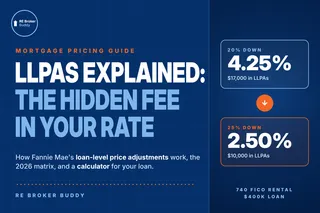
LLPA Explained: Fannie Mae's Loan-Level Price Adjustment Matrix (2026)
What a loan-level price adjustment (LLPA) is, how it works, the 2026 Fannie Mae LLPA matrix, investment property LLPAs, real-dollar examples and a calculator. ...more
DSCR loans ,Mortgage Market Updates
October 28, 2026
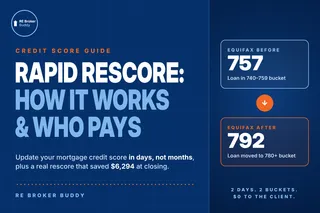
Rapid Rescore: How It Works, How Long It Takes and Who Pays
What a rapid rescore is, how it works, how long it takes, what it costs and who pays, what it can't fix, and a real rescore that saved $6,294 at closing. ...more
DSCR loans
October 28, 2026
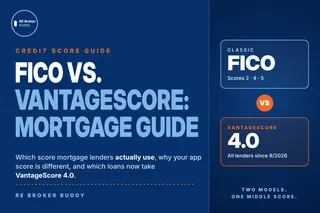
FICO vs. VantageScore for Mortgages: Which Credit Score Do Lenders Use?
Which credit score mortgage lenders use, how classic FICO and VantageScore 4.0 differ, why Credit Karma doesn't match your mortgage score, and which loans now accept VantageScore 4.0. ...more
DSCR loans ,Mortgage Market Updates
October 28, 2026
Where We Offer DSCR Loans
*Must Close in LLC
STEP 1
Apply Online or Call Directly
Find out how much home you can buy or discover how much you can save by refinancing.
STEP 2
Review What Options You Can Qualify For
Learn exactly how much you qualify for and what you would save by working with us.
STEP 3
Get Loan Approval in 24 Hours
Get mortgage loan approval to move forward with your property.


Broker Buddy LLC
Trevor Gravink
Mortgage Consultant
CEO/Owner
(619) 404-6637
NMLS: 1707407
NMLS Consumer Access Lookup Tool
CA DRE # 02117228
5371 Wilshire Dr. San Diego, CA 92116
© 2026 Broker Buddy LLC
Powered by Adaptive Mortgage Solutions
Company NMLS # 2022974
CA DRE # 02126109