Looking for a DSCR Loan in Delaware?
We are the experts!
Qualify Based on Rental Income Only!
No Personal Income Needed to Qualify!
Interest Only Options Available!
Fund Into Corporation or LLC
No Pre-Pay Options
AirBnB's Allowed
Answer a Few Quick Questions and Let’s See if You’re Eligible
🔒 This site is secure
🔒 This site is secure
Qualify Based on bank statements only!
No W2's or Tax Returns Needed!
Interest Only Options Available!
Get up to 90% Financing
100% Gift Funds Allowed
Fixed Rate and Adjustable Rate Options
DSCR Loans in Delaware: Finance Rentals on the Property's Income
A DSCR (debt service coverage ratio) loan lets Delaware investors qualify using the rent a property earns instead of personal tax returns, W-2s, or pay stubs. If the rent covers the mortgage payment, taxes, insurance, and any HOA dues, the property can usually carry its own loan. Delaware's rental markets range from the Wilmington and Newark area, part of the Philadelphia metro, to the state capital and Air Force base in Dover and the seasonal beach market in Sussex County. Property taxes are levied by the three counties and local school districts, and 2025 bills were the first based on a statewide reassessment in roughly four decades.
Broker Buddy shops DSCR programs from multiple wholesale lenders for single-family homes, 2–4 unit properties, condos and townhomes in New Castle, Kent and Sussex counties — purchases, rate-and-term refinances, and cash-out refinances.
Delaware DSCR Loan Guidelines at a Glance
DSCR lenders each set their own rules, but most Delaware rental loans fit inside these ranges. We price several lenders on every scenario, so if one program's limit doesn't work for your deal, another one often will.
| Guideline | Typical range in Delaware |
|---|---|
| Credit score | Many programs open around 620–660; 700+ unlocks the most leverage and the best pricing |
| Down payment / LTV | Typically 20–25% down (up to 80% LTV) on purchases and rate-and-term refinances; cash-out usually caps near 75% LTV, and a few strong-credit programs reach 85% |
| Minimum DSCR | 1.00 is the common target; some programs accept 0.75–0.99, and no-ratio options exist for beach homes or rehabs that don't cash-flow yet |
| Reserves | Usually 3–6 months of PITIA after closing, with more for jumbo coastal loans or lower scores |
| Loan size | Minimums often start around $75,000–$100,000; jumbo programs cover high-value Rehoboth, Lewes and Bethany Beach homes |
| Property types | Single-family, 2–4 units, condos and townhomes, plus short-term rentals on eligible programs; select programs finance 5–10 units and mixed-use |
| Who can borrow | Individuals or an LLC; out-of-state investors often use a Delaware LLC, which needs a Delaware registered agent |
| Closing costs | Budget for Delaware's realty transfer tax — 4% of the price in most areas, split evenly between buyer and seller unless the contract says otherwise |
| Time to close | Roughly 3–5 weeks after the appraisal is ordered |
Guidelines change often and vary by lender, credit profile and property. Test a deal with our DSCR calculator, or see how 30-year, 40-year, interest-only and ARM terms change your payment and ratio.
Why Investors Are Buying Rentals in Delaware
- Financial services is a core industry, with large employers such as JPMorgan Chase and Bank of America named by the Delaware Prosperity Partnership as major employers in the state.
- Dover Air Force Base, home of the 436th Airlift Wing and the Department of Defense's largest aerial port, supports about 11,000 Airmen, joint service members, civilians and families in Kent County.
- The University of Delaware in Newark enrolls more than 24,000 students and employs about 4,800 people, and Delaware State University, an HBCU in Dover, enrolls about 6,300 students.
- Health systems including Bayhealth and Nemours, along with DuPont and Highmark Blue Cross Blue Shield, are among the major employers listed by the Delaware Prosperity Partnership.
- Sussex County's beach towns, including Rehoboth Beach, Lewes, Dewey Beach, Bethany Beach and Fenwick Island, draw seasonal visitors, while poultry processors Perdue and Mountaire are major employers downstate.
Delaware Rental Markets Worth a Closer Look
Delaware is small, but its three counties rent very differently. Here's a quick guide to how investors approach each area — run the numbers on the exact property before you offer.
The state's largest city sits on I-95 and the Northeast Corridor rail line between Philadelphia and Baltimore. Trolley Square, the Riverfront and older rowhouse neighborhoods attract renters; the city runs its own rental registration program.
University of Delaware students and staff create a steady tenant pool around Main Street, while Bear, Glasgow and Pike Creek suit families. Check city rental permit rules before buying near campus.
Fast-growing southern New Castle and northern Kent County subdivisions draw commuters looking for newer homes, which can mean lower maintenance and solid single-family rents.
The state capital pairs government jobs with Dover Air Force Base, Delaware State University and the Bayhealth hospital system. Entry prices are among the most affordable in the state.
The Sussex County beaches are the heart of Delaware's vacation-rental market. Each town and the county set their own rental licensing and tax rules, so verify them before counting nightly income.
Seaford, Georgetown, Millsboro and Milford offer lower prices and year-round tenants tied to agriculture, poultry processing and healthcare jobs.
Want a quick read on what a Delaware property should rent for before you write an offer? Try our free DSCR rent estimate tool.
Delaware Rent Benchmarks
Lenders qualify DSCR loans using the lower of the current lease or an appraiser's market-rent estimate, so it helps to know where local rents sit before you make an offer. HUD's Fair Market Rents are a useful, neutral starting point:
| Area | 2-bedroom | 3-bedroom | 4-bedroom |
|---|---|---|---|
| Dover (Kent County) | $1,629 | $2,244 | $2,590 |
| Wilmington area (New Castle County, Philadelphia-Camden-Wilmington MSA) | $1,860 | $2,216 | $2,445 |
| Sussex County (nonmetro) | $1,498 | $1,843 | $2,222 |
Source: HUD Fair Market Rents, FY2027 schedule (effective October 1, 2026). Fair Market Rents are a government benchmark, not an appraisal; actual market rent for a specific property may be higher or lower.
How Much Can a Wilmington Rental Support?
A quick way to size a deal is to work backward from the rent. Using the HUD 3-bedroom benchmark for the Wilmington area and some simple assumptions, here's roughly what purchase price that rent can carry with 20% down:
| Monthly rent (HUD 3-bedroom benchmark) | $2,216 |
| Purchase price the rent covers at a 1.00 DSCR | about $330,000 |
| Purchase price for a 1.20 DSCR (better pricing) | about $275,000 |
| Median value of owner-occupied homes, Wilmington | $231,400 |
Benchmark rents can support a typical home in the area, which is why many investors here qualify at or above a 1.00 DSCR. Assumptions: 30-year fixed at a 7.25% example rate, with taxes and insurance estimated at 1.5% of the price per year. The median value is from U.S. Census QuickFacts. These are illustrations only — request a quote for numbers on your property.
Try your own Wilmington numbers, or any Delaware address, in the DSCR calculator, and see whether an interest-only or 40-year term helps a tight deal reach 1.00.
Delaware Prepayment Penalty Rules for DSCR Loans
Delaware is one of the states where lenders may include a standard prepayment penalty on investment-property (business-purpose) loans. Choosing a prepayment penalty usually lowers your rate; choosing no penalty gives you the freedom to sell or refinance at any time. We'll price both ways so you can compare.
| Prepay option | How it works | Best for |
|---|---|---|
| Flat 5% (1–5 years) | 5% of the amount prepaid during the penalty term, e.g. 5/5/5 for a 3-year term. | Long-term buy-and-hold; often the best rate |
| Step-down (5-4-3-2-1 or 3-2-1) | The penalty drops each year, e.g. 5% in year 1, 4% in year 2, down to 0% after year 5. Offered by many lenders. | A balance of rate and flexibility |
| Six months' interest | Offered by some lenders: the penalty is capped at six months of interest on 80% of the original balance. | Investors who want a smaller, predictable penalty |
| No prepayment penalty | Sell or refinance any time with no penalty, at a higher rate or price. | Flips-to-rentals, BRRRR, short holds |
Delaware-Specific Costs and Rules for Investors
Property taxes on rentals
Delaware real estate is taxed by the three counties, school districts and some municipalities on assessed value, and state law requires counties to assess property at fair market value and reassess at least once every five years. The court-ordered statewide reassessment took effect with 2025 tax bills (New Castle County values property as of July 1, 2024; Kent County as of July 1, 2023), and in 2025 New Castle County school districts were allowed to split rates into residential and nonresidential categories, with apartment properties classified as nonresidential. Owner-occupant relief such as the Senior School Property Tax Credit (50% of school taxes, up to $500) applies only to a primary residence, so investors should not count on it. Source: Delaware Code Title 9, Chapter 83 (assessment of real property).
Insurance and coastal flood risk
The Delaware Department of Insurance notes that standard homeowners and business policies do not cover flood damage, and that flood coverage is mostly sold through the federal National Flood Insurance Program. NFIP policies generally take effect 30 days after purchase, so investors, especially near the beaches and Delaware Bay, should price flood coverage before closing. See Delaware Department of Insurance: Flood Insurance.
Short-term rentals and lodging tax
Delaware has no state sales tax, but since January 1, 2025 it charges a 4.5% lodging tax on short-term rentals of a residential unit (house, condo or apartment) for no more than 31 consecutive nights; the separate 8% public accommodations tax applies to hotels, motels and tourist homes. When a stay is booked through a platform such as Airbnb or Vrbo, the platform, as a licensed accommodations intermediary, collects and remits the tax; owners who rent directly need a $25 accommodations intermediary license and must file monthly. Municipal lodging taxes and rental licenses are separate and still apply. Details: Delaware Division of Revenue: Short-Term Rental FAQs.
Landlord-tenant law
Long-term rentals are governed by the Delaware Residential Landlord-Tenant Code (Title 25, Chapters 51-59 of the Delaware Code); security deposits under Section 5514. For leases of one year or more (and month-to-month tenancies that have lasted a year), a landlord can't require more than one month's rent as a security deposit; furnished units are exempt from the cap. The landlord must return the deposit, or provide an itemized list of damages, within 20 days after the tenancy ends, or owe double the amount wrongfully withheld. Read more: Delaware Code Title 25, Chapter 55 (Obligations of Landlord).
Rent demands, cure notices and rent increases
Before filing for nonpayment, a Delaware landlord must make a written demand for the rent that gives the tenant at least 7 days to pay. For other lease breaches, the tenant must get written notice and at least 7 days to fix the problem. Either side can end a month-to-month tenancy with at least 60 days' written notice, and a landlord who wants to renew at a higher rent must give at least 60 days' written notice before the lease expires. Sources: 25 Del. C. ch. 55 and 25 Del. C. §§ 5106–5107.
Transfer tax at closing
Delaware's realty transfer tax totals 4% of the property's value in most locations: 2.5% to the state and 1.5% to the county or town. By default it's split evenly, so a buyer typically pays about 2% at closing — build that into your cash to close. Source: Delaware Division of Revenue.
State income tax on rental profits
Delaware has graduated personal income tax rates, with the top 6.6% rate applying to taxable income over $60,000. Net rental income is reported on your state return; your CPA can explain how depreciation and LLC pass-through rules affect what you owe.
Buying in an LLC
A Delaware LLC is formed by filing a Certificate of Formation with the Division of Corporations for a $110 filing fee and must keep a registered agent in Delaware; LLCs pay a $300 annual tax due by June 1 instead of filing an annual report. Start here: Delaware Division of Corporations: how to form a business. Talk to your attorney or CPA about the right structure for your situation.
Delaware County Assessment Offices
Use these official county assessment offices to look up a property's assessed value, current tax bill and parcel details before you make an offer.
| County / city | Major cities | Office |
|---|---|---|
| New Castle County | Wilmington, Newark, Middletown, New Castle | Office of Finance, Assessment Division |
| Kent County | Dover, Smyrna, Milford, Harrington | Department of Finance, Division of Assessment |
| Sussex County | Georgetown, Lewes, Rehoboth Beach, Seaford, Millsboro | Assessment Division |
| City of Wilmington | Wilmington (New Castle County) | Department of Licenses and Inspections, Residential Rental Property Program |
More Free Resources for Delaware Investors
- HUD Fair Market Rents — rent benchmarks by county and ZIP code
- U.S. Census QuickFacts: Delaware — population, income, and housing data
- FEMA Flood Map Service Center — look up the flood zone for any address
- Delaware Division of Revenue: Short-Term Rental FAQs — short-term rental tax rules
- Delaware Division of Corporations: how to form a business — form or look up an entity
Delaware DSCR Loan Options & Free Tools
Delaware investors use DSCR financing for more than a basic 30-year purchase. Pick the option that fits your plan:
Check whether a Wilmington rowhouse or Dover single-family covers its payment before you make an offer.
Estimate market rent for a Newark or Middletown rental the way a DSCR appraiser will.
See how much cash you could pull from a Kent or New Castle County rental with a cash-out refinance.
Compare 30-year fixed, 40-year, interest-only and ARM options and how each changes your DSCR.
Tap equity in a Delaware rental without touching a low-rate first mortgage.
Finance Rehoboth, Lewes, Dewey and Bethany Beach vacation rentals using projected nightly income.
Delaware DSCR Loan FAQs
How much do I need to put down on a Delaware DSCR loan?
Most DSCR programs require 20-25% down on a purchase. Select programs allow less with strong credit and a higher DSCR. Short-term rentals and properties with a DSCR under 1.0 usually need more down.
Do Delaware DSCR loans have prepayment penalties?
They can. Delaware permits standard prepayment penalties on investment loans, such as a flat 5% for 1-5 years or a 5-4-3-2-1 step-down, depending on the lender. You can also choose a loan with no prepayment penalty, typically at a slightly higher rate.
Can I use Airbnb income to qualify?
Yes, on eligible programs. Lenders use your booking history or a short-term rental market analysis for the property. Check local short-term rental licensing first.
Can I close in my LLC?
Yes. DSCR loans can close in the name of an LLC or corporation, with the owners signing a personal guarantee.
Why did Delaware property tax bills change in 2025?
After a court ruled the old assessments unconstitutional, all three counties completed the first statewide reassessment in about four decades, and 2025 tax bills are based on current fair market values. State law now requires a reassessment at least every five years, so values are expected to be updated again around 2030.
What tax applies to an Airbnb or Vrbo rental in Delaware?
Short-term rentals of a house, condo or apartment for 31 consecutive nights or fewer are subject to Delaware's 4.5% lodging tax, which booking platforms collect when they handle the reservation. Hotels, motels and tourist homes instead pay the 8% public accommodations tax, and any municipal lodging tax or rental license is separate.
What credit score do I need for a Delaware DSCR loan?
Many DSCR programs start around a 620 to 660 credit score. Scores of 700 and above usually get the highest loan-to-value and the best pricing, while lower scores typically need more down.
Who pays the transfer tax when I buy a Delaware rental?
Delaware's realty transfer tax is generally 4% of the price, and by default it's split evenly between buyer and seller. The contract can assign it differently, so check it before you estimate your cash to close.
How much notice do Delaware landlords give before raising the rent?
If you want to renew a lease at a higher rent, you must give the tenant at least 60 days' written notice before the lease ends. Month-to-month tenancies also require at least 60 days' notice to terminate.
Can a first-time investor get a DSCR loan in Delaware?
Yes. Many DSCR programs accept first-time investors, though some short-term rental and 5-10 unit programs want prior ownership experience. We can match you with a lender whose rules fit your background.
Get a Delaware DSCR Rate Quote
Tell us about the property and we'll shop multiple DSCR lenders so you can compare options. No credit check to see your options.
Check My EligibilityLooking for another state? See all DSCR loan states.
DSCR Loans Explained
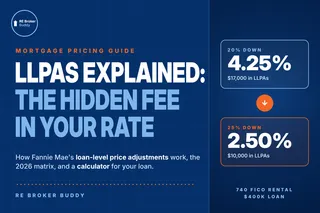
LLPA Explained: Fannie Mae's Loan-Level Price Adjustment Matrix (2026)
What a loan-level price adjustment (LLPA) is, how it works, the 2026 Fannie Mae LLPA matrix, investment property LLPAs, real-dollar examples and a calculator. ...more
DSCR loans ,Mortgage Market Updates
October 28, 2026
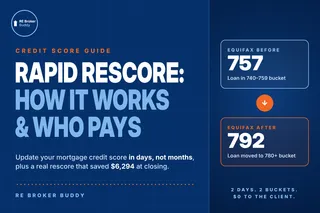
Rapid Rescore: How It Works, How Long It Takes and Who Pays
What a rapid rescore is, how it works, how long it takes, what it costs and who pays, what it can't fix, and a real rescore that saved $6,294 at closing. ...more
DSCR loans
October 28, 2026
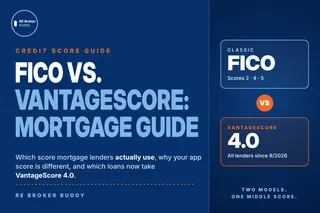
FICO vs. VantageScore for Mortgages: Which Credit Score Do Lenders Use?
Which credit score mortgage lenders use, how classic FICO and VantageScore 4.0 differ, why Credit Karma doesn't match your mortgage score, and which loans now accept VantageScore 4.0. ...more
DSCR loans ,Mortgage Market Updates
October 28, 2026
Where We Offer DSCR Loans
*Must Close in LLC
STEP 1
Apply Online or Call Directly
Find out how much home you can buy or discover how much you can save by refinancing.
STEP 2
Review What Options You Can Qualify For
Learn exactly how much you qualify for and what you would save by working with us.
STEP 3
Get Loan Approval in 24 Hours
Get mortgage loan approval to move forward with your property.


Broker Buddy LLC
Trevor Gravink
Mortgage Consultant
CEO/Owner
(619) 404-6637
NMLS: 1707407
NMLS Consumer Access Lookup Tool
CA DRE # 02117228
5371 Wilshire Dr. San Diego, CA 92116
© 2026 Broker Buddy LLC
Powered by Adaptive Mortgage Solutions
Company NMLS # 2022974
CA DRE # 02126109