Looking for a DSCR Loan in California?
We are the experts!
Qualify Based on Rental Income Only!
No Personal Income Needed to Qualify!
Interest Only Options Available!
Fund Into Corporation or LLC
No Pre-Pay Options
AirBnB's Allowed
Answer a Few Quick Questions and Let’s See if You’re Eligible
🔒 This site is secure
🔒 This site is secure
Qualify Based on bank statements only!
No W2's or Tax Returns Needed!
Interest Only Options Available!
Get up to 90% Financing
100% Gift Funds Allowed
Fixed Rate and Adjustable Rate Options
DSCR Loans in California: Finance Rentals on the Property's Income
A DSCR (debt service coverage ratio) loan lets California investors qualify using the rent a property earns instead of personal tax returns, W-2s, or pay stubs. If the rent covers the mortgage payment, taxes, insurance, and any HOA dues, the property can usually carry its own loan. That makes DSCR financing a natural fit for self-employed investors, people growing past conventional loan limits, and anyone buying in an LLC.
Broker Buddy shops DSCR programs from multiple wholesale lenders for single-family homes, 2–4 unit properties, condos, townhomes, and short-term rentals across all 58 California counties — purchases, rate-and-term refinances, and cash-out refinances.
California DSCR Loan Guidelines at a Glance
California's high prices mean bigger loans, thinner ratios and more program shopping than most states. Here are the ranges most California DSCR loans land in — and because we compare many lenders at once, we can often find a program that fits a deal others turn down.
| Guideline | Typical range in California |
|---|---|
| Credit score | Many programs start at 620–660; 700+ earns the most leverage and best pricing, and the largest loans often need 700–740 |
| Down payment / LTV | Commonly 20–25% down (up to 80% LTV) on purchases and rate-and-term refinances; cash-out generally caps near 75% LTV, and jumbo balances often require more equity |
| Minimum DSCR | 1.00 is typical, but because coastal rents rarely cover full payments, programs that accept 0.75–0.99 or no ratio are used far more here than elsewhere |
| Reserves | Often 3–6 months of PITIA, with 9–12 months common on loans above $1 million |
| Loan size | Minimums around $100,000; jumbo DSCR programs commonly run to $3 million and beyond for Bay Area, LA and coastal properties |
| ADUs & multi-unit | A home with a permitted ADU may count rent from both units on some programs; unpermitted units usually don't count |
| Insurance | The lender needs bound coverage before closing; in wildfire areas that may mean a FAIR Plan policy paired with a difference-in-conditions policy, which many lenders accept |
| Who can borrow | Individuals or an LLC; remember that LLCs doing business in California owe the annual franchise tax |
| Time to close | About 3–5 weeks once the appraisal is ordered |
Guidelines change often and vary by lender. Test your deal with the DSCR calculator or see how 30-year, 40-year, interest-only and ARM terms can lift a thin ratio.
Why Investors Are Buying Rentals in California
California has the largest population and economy of any state, and high home prices keep many households renting for longer. Purchase prices are high, so investors usually focus on rent growth, long-term appreciation, and careful underwriting of taxes and insurance. Demand comes from several directions at once:
- Technology and innovation in Silicon Valley, San Francisco, and the wider Bay Area support some of the highest rents in the country.
- Entertainment, trade, and logistics — the Ports of Los Angeles and Long Beach and the Inland Empire's warehouse and distribution hubs keep Southern California's working-age renter base large.
- Military installations such as Marine Corps Base Camp Pendleton, Naval Base San Diego, and Travis AFB (Fairfield) create rotating rental demand.
- Universities — the University of California and Cal State systems, plus Stanford and USC — support student and staff rentals in nearly every metro.
- Tourism and vacation markets such as Lake Tahoe, Big Bear, Palm Springs and the Coachella Valley, wine country, and the coast drive short-term rental demand.
California Rental Markets Investors Are Watching
California is really several rental markets in one. Cash flow tends to improve as you move inland, while coastal metros trade cash flow for long-term appreciation. Here's how investors usually think about them — underwrite the exact address before you offer.
Riverside and San Bernardino counties are the warehouse and logistics hub of Southern California, near Ontario International Airport and major freight corridors. Lower prices than LA and Orange County make this the most common DSCR market in the south.
State government, UC Davis and large health systems anchor Sacramento, Elk Grove and Roseville. Bay Area transplants keep demand for single-family rentals strong.
Fresno, Bakersfield, Stockton and Modesto offer some of the state's lowest entry prices, backed by agriculture, energy, healthcare and distribution jobs. These are where long-term rent comes closest to covering the full payment.
Navy and Marine Corps bases, biotech and UC San Diego keep demand deep. The city caps whole-home short-term rental licenses, so most investors here underwrite on long-term rent.
Entertainment, ports, aerospace and universities create a huge tenant pool, but many cities layer rent stabilization and just-cause rules on top of state law. Check the city's rules before you buy.
Palm Springs and the Coachella Valley, Joshua Tree, Big Bear and Lake Tahoe draw vacation renters. Many of these jurisdictions cap or zone short-term rental permits, so confirm a permit is available first.
Want a fast estimate of what a California property should rent for? Try our free DSCR rent estimate tool.
California Rent Benchmarks by Metro
Lenders qualify DSCR loans using the lower of the current lease or an appraiser's market-rent estimate, so it helps to know where local rents sit before you make an offer. HUD's Fair Market Rents are a useful, neutral starting point:
| Metro area | 2-bedroom | 3-bedroom | 4-bedroom |
|---|---|---|---|
| San Francisco | $3,697 | $4,832 | $5,439 |
| San Jose-Sunnyvale-Santa Clara | $3,272 | $4,396 | $4,688 |
| Santa Ana-Anaheim-Irvine (Orange Co.) | $3,057 | $4,153 | $4,964 |
| Los Angeles-Long Beach-Glendale | $2,964 | $3,760 | $4,208 |
| San Diego-Chula Vista-Carlsbad | $2,823 | $3,743 | $4,526 |
| Oakland-Fremont | $2,805 | $3,592 | $4,250 |
| Sacramento-Roseville-Arden-Arcade | $2,201 | $2,887 | $3,329 |
| Riverside-San Bernardino-Ontario | $2,103 | $2,771 | $3,336 |
| Fresno | $1,685 | $2,333 | $2,671 |
| Bakersfield-Delano | $1,656 | $2,293 | $2,768 |
Source: HUD Fair Market Rents, FY2027 schedule (effective October 1, 2026). Fair Market Rents are a government benchmark, not an appraisal; actual market rent for a specific property may be higher or lower.
Example: How a Riverside-San Bernardino Rental Pencils Out
Here's a simplified look at how a lender would calculate DSCR on a three-bedroom single-family rental in the Inland Empire (Riverside-San Bernardino):
| Purchase price | $480,000 |
| Down payment (20%) | $96,000 |
| Loan amount | $384,000 |
| Principal & interest (30-yr fixed, 7.25% example rate) | $2,620 / mo |
| Property taxes (estimate) | $480 / mo |
| Homeowners insurance (estimate) | $150 / mo |
| Total housing payment (PITI) | $3,250 / mo |
| Monthly rent (HUD 3-bedroom benchmark) | $2,771 / mo |
| DSCR = $2,771 ÷ $3,250 | 0.85 |
A DSCR of 1.0 or higher means the rent covers the full payment, which qualifies with most lenders. At 0.85, this example doesn't reach 1.0 at 20% down, which is common in California because prices are high relative to rents. Options include a larger down payment (about 35% down brings this example to 1.00), a lower rate by choosing a prepayment penalty, a program that allows ratios below 1.0 with stronger credit and reserves, or lower-priced markets such as Fresno and Bakersfield. Ratios at 1.20 and above typically earn better pricing. The rate, taxes, and insurance shown are illustrations only — request a quote for numbers on your property.
Plug your own Inland Empire price, rent and down payment into the DSCR calculator, or see how an interest-only or 40-year term can move a 0.85 ratio closer to 1.00.
California Prepayment Penalty Rules for DSCR Loans
California's best-known prepayment limit, Civil Code § 2954.9(b), applies only to owner-occupied homes of one to four units: there, a charge is allowed only in the first five years and can't exceed six months' advance interest on the amount prepaid above 20% of the original principal in any 12-month period. For a non-owner-occupied rental, the borrower can agree in writing to a prepayment charge, so DSCR lenders generally offer the standard options below whether you close in your own name or in an LLC.
Choosing a prepayment penalty usually lowers your rate; choosing no penalty gives you the freedom to sell or refinance at any time. We'll price both ways so you can compare.
| Prepay option | How it works | Best for |
|---|---|---|
| 5-year step-down (5-4-3-2-1) | Penalty is 5% of the balance paid off in year 1, falling 1% each year to 0% after year 5. | Long-term buy-and-hold; lowest rate |
| 3-year step-down (3-2-1) | 3% in year 1, 2% in year 2, 1% in year 3, then none. | A balance of rate and flexibility |
| Six months' interest | Penalty is capped at six months of interest on 80% of the original principal balance. | Investors who want a smaller, predictable penalty |
| No prepayment penalty | Sell or refinance any time with no penalty, usually at a higher rate. | Flips-to-rentals, BRRRR, short holds |
California-Specific Costs Every Investor Should Budget For
Property taxes: Prop 13 resets the value when you buy
Under Proposition 13, the base property tax rate is 1% of assessed value, plus voter-approved bonds and other local charges, so many bills land somewhat above 1% of value. When a property changes ownership, the assessor resets its value to market value, and after that the assessed value can rise no more than 2% a year. The seller's tax bill is not a guide — budget taxes on your purchase price, and expect a separate supplemental tax bill after closing. Rentals don't qualify for the $7,000 homeowners' exemption. If you hold property in an LLC, a change in control (one person or entity gaining more than 50%) or transfers of more than 50% of the original owners' interests can trigger reassessment and a BOE-100-B filing within 90 days. See the California State Board of Equalization Property Tax Department for details.
Insurance, wildfire, and earthquake risk
Wildfire is the biggest insurance issue in much of California, and in higher-risk areas some owners have trouble finding coverage and turn to the California FAIR Plan. Standard policies don't cover earthquake or flood, which need separate coverage. Get an insurance quote early, because premiums can move your DSCR. Check the flood zone of any address on the FEMA Flood Map Service Center, and see the California Department of Insurance for consumer guidance.
Transient occupancy tax and local short-term rental rules
California has no statewide lodging tax. Instead, cities and counties levy a transient occupancy tax (TOT) on stays of 30 days or less, and rates, registration, and platform collection vary by city. Local rules matter even more: San Diego, for example, requires a Short-Term Residential Occupancy license, caps the number of whole-home licenses, and requires a TOT certificate. Many other California cities limit short-term rentals to a host's primary residence or cap them, so confirm the city's rules before you buy.
Landlord-tenant law
Long-term rentals are governed by the California Civil Code (starting at § 1940), which covers security deposits, notices, and repairs. Since July 1, 2024, a security deposit is generally limited to one month's rent; small landlords (individuals, or LLCs whose members are all individuals, owning no more than two rental properties with four units total) may charge up to two months. The deposit, with an itemized statement, is due back within 21 days after the tenant moves out. The statewide Tenant Protection Act (Civil Code § 1947.12) limits rent increases to 5% plus inflation, up to 10% a year; single-family homes and condos can be exempt if they aren't owned by a REIT, a corporation, or an LLC with a corporate member and the tenant gets the required written notice. Many cities also have stricter local rent control. You can read the current code on the California Legislative Information site.
Eviction notices and just cause
For unpaid rent, a California landlord serves a written three-day notice to pay or quit, and the three days exclude Saturdays, Sundays and court holidays. Once a tenant has lived in a unit for 12 months (or any adult tenant for 24 months), the Tenant Protection Act generally requires a just cause to end the tenancy. For no-fault reasons such as an owner move-in or a substantial remodel, the landlord must provide relocation help equal to one month's rent or waive the final month. Single-family homes and condos can be exempt if the owner isn't a corporation, a REIT or an LLC with a corporate member and the lease includes the required written exemption notice. Sources: Cal. Code Civ. Proc. § 1161 and a county summary of Civil Code § 1946.2.
Income tax and withholding when you sell
California taxes net rental income at the same graduated rates as wages, so profits can be taxed well above most states. When you sell a California rental for more than $100,000, the buyer or escrow generally withholds 3 1/3% of the total sales price toward your state tax unless an exemption applies or you elect to base withholding on the estimated gain. Rentals don't qualify for the principal-residence exemption. Source: FTB Publication 1016. Talk to your CPA before listing so the withholding doesn't surprise you.
Buying in an LLC
Many California investors hold rentals in an LLC for liability protection, and DSCR loans can close directly in the entity's name. California LLCs are formed with the California Secretary of State (bizfile Online). Every LLC organized or doing business in California owes the Franchise Tax Board's $800 annual tax, plus an additional fee once California income exceeds $250,000. Talk to your attorney or CPA about the right structure for your situation.
California County Property Tax & Assessment Offices
Use these official county offices to look up a property's assessed value, current tax bill, and parcel details before you make an offer. In California, the county Assessor sets values, while the Tax Collector bills and collects the tax.
| County | Major cities | Assessment office |
|---|---|---|
| Los Angeles | Los Angeles, Long Beach, Glendale | Office of the Assessor |
| San Diego | San Diego, Chula Vista, Oceanside | Assessor/Recorder/County Clerk |
| Orange | Anaheim, Santa Ana, Irvine | Assessor Department |
| Riverside | Riverside, Moreno Valley, Corona | Assessor-County Clerk-Recorder |
| San Bernardino | San Bernardino, Fontana, Ontario | Assessor-Recorder-County Clerk |
| Santa Clara | San Jose, Sunnyvale, Santa Clara | Office of the Assessor |
| Alameda | Oakland, Fremont, Hayward | Assessor's Office |
| Sacramento | Sacramento, Elk Grove, Citrus Heights | Assessor |
| Contra Costa | Concord, Antioch, Richmond | Assessor's Office |
| Fresno | Fresno, Clovis | Assessor-Recorder |
| Kern | Bakersfield, Delano | Assessor-Recorder |
| San Francisco | San Francisco | Office of the Assessor-Recorder |
| San Mateo | Daly City, San Mateo, Redwood City | Assessor-County Clerk-Recorder |
| San Joaquin | Stockton, Tracy, Manteca | Assessor-Recorder-County Clerk |
Other counties: the State Board of Equalization keeps a directory of assessors, auditor-controllers, and tax collectors for all 58 counties, including Ventura: County Assessors, Auditors & Tax Collectors.
More Free Resources for California Investors
- HUD Fair Market Rents — rent benchmarks by county and ZIP code
- U.S. Census QuickFacts: California — population, income, and housing data
- FEMA Flood Map Service Center — look up the flood zone for any address
- City of San Diego short-term rental licensing — an example of local STR rules (California has no statewide lodging tax)
- California Secretary of State: bizfile Online — form or look up an LLC
California DSCR Loan Options & Free Tools
California investors use DSCR financing for more than a basic 30-year purchase. Explore the option that fits your strategy:
Check whether a Riverside, Sacramento or Fresno rental covers its payment before you make an offer.
Estimate market rent the way a DSCR appraiser will, from Inland Empire single-family homes to Bay Area duplexes.
See how much cash you could pull from a long-held LA, Orange County or San Diego rental with a cash-out refi.
Compare 30-year fixed, 40-year, interest-only and ARM options; interest-only is often what makes a coastal ratio work.
Tap equity in a California rental without refinancing away a low first-mortgage rate.
Finance Palm Springs, Joshua Tree, Big Bear and Tahoe vacation rentals using projected nightly income.
California DSCR Loan FAQs
How much do I need to put down on a California DSCR loan?
Most DSCR programs require 20–25% down on a purchase. Select programs allow less with strong credit and a higher DSCR. Because California prices are high relative to rents, many investors put more down to reach a DSCR of 1.0, and short-term rentals usually need more down as well.
Do California DSCR loans have prepayment penalties?
They can. California's statutory prepayment limits apply to owner-occupied homes, so DSCR loans on rentals can carry standard prepayment penalties such as 5-4-3-2-1 or 3-2-1 step-downs, whether you close in your own name or an LLC. You can also choose a loan with no prepayment penalty, typically at a slightly higher rate.
Can I use Airbnb income to qualify?
Yes, on eligible programs. Lenders use your booking history or a short-term rental market analysis for the property. This is popular for Big Bear, Lake Tahoe, and Palm Springs-area properties. Check city and county permit rules first, since many California cities restrict or cap short-term rentals.
Can I close in my LLC?
Yes. DSCR loans can close in the name of an LLC or corporation, with the owners signing a personal guarantee. California LLCs owe an $800 minimum annual tax to the Franchise Tax Board.
Will my property taxes go up when I buy a California rental?
Usually. Under Proposition 13, the assessed value resets to market value when ownership changes, and you'll receive a supplemental tax bill for the difference. After that, the assessed value can rise no more than 2% a year. Budget taxes on your purchase price, not the seller's bill.
Can I do a cash-out refinance on a California rental?
Yes. DSCR cash-out refinances let you pull equity from a rental you already own to fund your next purchase, again qualifying on the property's rent.
Can I get a DSCR loan if the rent doesn't cover the payment in California?
Often, yes. Many California deals run below a 1.00 ratio, and some programs accept 0.75 to 0.99 or use no ratio at all, usually with stronger credit, more reserves or a larger down payment. An interest-only or 40-year term can also lift the ratio.
Does the California Tenant Protection Act apply to my single-family rental?
It can. A single-family home or condo is exempt only if the owner isn't a corporation, a REIT or an LLC with a corporate member, and the lease includes the required written exemption notice. Local rent-control and just-cause ordinances may still apply.
Can rent from an ADU help me qualify?
On some programs, yes. If the ADU is permitted and the appraiser can support its market rent, the lender may count rent from both the main house and the ADU. Unpermitted units usually aren't counted.
How much notice does a California landlord give for unpaid rent?
A three-day written notice to pay or quit, and the three days don't count Saturdays, Sundays or court holidays. If the tenant doesn't pay or move, the landlord files an unlawful detainer case.
Get a California DSCR Rate Quote
Tell us about the property and we'll shop multiple DSCR lenders — with and without a prepayment penalty — so you can compare. No credit check to see your options.
Check My EligibilityLooking for another state? See all DSCR loan states.
DSCR Loans Explained
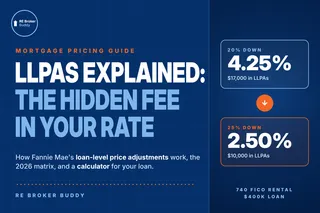
LLPA Explained: Fannie Mae's Loan-Level Price Adjustment Matrix (2026)
What a loan-level price adjustment (LLPA) is, how it works, the 2026 Fannie Mae LLPA matrix, investment property LLPAs, real-dollar examples and a calculator. ...more
DSCR loans ,Mortgage Market Updates
October 28, 2026
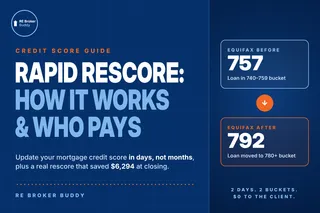
Rapid Rescore: How It Works, How Long It Takes and Who Pays
What a rapid rescore is, how it works, how long it takes, what it costs and who pays, what it can't fix, and a real rescore that saved $6,294 at closing. ...more
DSCR loans
October 28, 2026
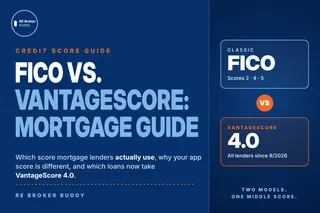
FICO vs. VantageScore for Mortgages: Which Credit Score Do Lenders Use?
Which credit score mortgage lenders use, how classic FICO and VantageScore 4.0 differ, why Credit Karma doesn't match your mortgage score, and which loans now accept VantageScore 4.0. ...more
DSCR loans ,Mortgage Market Updates
October 28, 2026
Where We Offer DSCR Loans
*Must Close in LLC
STEP 1
Apply Online or Call Directly
Find out how much home you can buy or discover how much you can save by refinancing.
STEP 2
Review What Options You Can Qualify For
Learn exactly how much you qualify for and what you would save by working with us.
STEP 3
Get Loan Approval in 24 Hours
Get mortgage loan approval to move forward with your property.


Broker Buddy LLC
Trevor Gravink
Mortgage Consultant
CEO/Owner
(619) 404-6637
NMLS: 1707407
NMLS Consumer Access Lookup Tool
CA DRE # 02117228
5371 Wilshire Dr. San Diego, CA 92116
© 2026 Broker Buddy LLC
Powered by Adaptive Mortgage Solutions
Company NMLS # 2022974
CA DRE # 02126109