Looking for a DSCR Loan in Massachusetts?
We are the experts!
Qualify Based on Rental Income Only!
No Personal Income Needed to Qualify!
Interest Only Options Available!
Fund Into Corporation or LLC
No Pre-Pay Options
AirBnB's Allowed
Answer a Few Quick Questions and Let’s See if You’re Eligible
🔒 This site is secure
🔒 This site is secure
Qualify Based on bank statements only!
No W2's or Tax Returns Needed!
Interest Only Options Available!
Get up to 90% Financing
100% Gift Funds Allowed
Fixed Rate and Adjustable Rate Options
DSCR Loans in Massachusetts: Finance Rentals on the Property's Income
A DSCR (debt service coverage ratio) loan lets Massachusetts investors qualify using the rent a property earns instead of personal tax returns, W-2s, or pay stubs. If the rent covers the mortgage payment, taxes, insurance, and any HOA or condo fees, the property can usually carry its own loan. That makes DSCR financing a natural fit for self-employed investors, people growing past conventional loan limits, and anyone buying in an LLC.
Broker Buddy shops DSCR programs from multiple wholesale lenders for single-family homes, 2–4 unit properties (including the classic New England triple-decker), condos, townhomes, and short-term rentals across all 14 Massachusetts counties and 351 cities and towns — purchases, rate-and-term refinances, and cash-out refinances.
Massachusetts DSCR Loan Guidelines at a Glance
Massachusetts DSCR programs follow a familiar framework, but triple-deckers, condo-heavy cities and a strict state prepayment statute all affect which lender is the best fit. Most rental loans here land inside these ranges, and because we price several lenders side by side, a guideline that knocks out one program rarely ends the deal.
| Guideline | Typical range in Massachusetts |
|---|---|
| Credit score | Programs commonly open around 620–660; scores of 700+ get the most leverage and the strongest pricing |
| Down payment / LTV | Plan on 20–25% down (up to 80% LTV) for purchases and rate-and-term refinances; cash-out usually caps near 75% LTV. Strong-credit borrowers can sometimes go a bit higher. |
| Minimum DSCR | 1.00 is the usual benchmark; select programs take 0.75–0.99 with more down, which matters in high-tax suburbs and pricier Greater Boston deals |
| Reserves | Typically 3–6 months of PITIA after closing; larger balances and lower scores can call for more |
| Loan size | Minimums often start near $100,000; Greater Boston prices push many loans well past conforming limits, and jumbo DSCR options run into the millions |
| Property types | Single-family, 2–4 units (including classic triple-deckers), condos, townhomes and short-term rentals; condos may need a project review, and some programs add 5–10 unit and mixed-use buildings |
| Who can borrow | Individuals or an LLC with a personal guarantee; closing in an entity can open more prepayment structures under state law |
| Property condition | Rent-ready with no major deferred maintenance. On pre-1978 homes, budget for Lead Law compliance if a child under six will live there. |
| Time to close | About 3–5 weeks after the appraisal is ordered; Massachusetts closings are typically run by a closing attorney |
Guidelines shift often and depend on the lender, your credit and the property. Check the ratio on your own numbers with our DSCR calculator, or compare 30-year, 40-year, interest-only and ARM terms to see how each one moves your payment and DSCR.
Why Investors Are Buying Rentals in Massachusetts
Massachusetts pairs deep rental demand with housing production that has lagged job growth for years, and 2–4 unit buildings are common in nearly every older city. Prices are high, so investors focus on rent-to-price ratios and multifamily properties. Demand comes from several directions at once:
- Healthcare, biotech, and life sciences around Boston, Cambridge's Kendall Square, and Worcester bring a steady stream of well-paid renters, from Mass General Brigham to UMass Memorial.
- Universities — Harvard, MIT, Boston University, Northeastern, UMass Amherst, and Worcester's WPI and Clark — support student, graduate, and staff rentals.
- Gateway cities such as Worcester, Springfield, Lowell, Brockton, and New Bedford offer lower prices and plenty of 2–4 unit stock within reach of Boston-area jobs.
- Military and defense employers, including Hanscom Air Force Base in Bedford and Joint Base Cape Cod, create rotating rental demand.
- Tourism on Cape Cod, Martha's Vineyard, Nantucket, and in the Berkshires drives a busy seasonal vacation-rental market.
Massachusetts Rental Markets Worth a Closer Look
From Boston triple-deckers to Cape Cod cottages, Massachusetts rentals behave very differently by region. Here's a quick read on the areas investors watch most — always run the numbers on the specific address.
Kendall Square biotech, the Longwood Medical Area and a dense ring of universities keep vacancy low. Much of the rental market turns over on the September 1 lease cycle, so time purchases and renovations around it.
UMass Chan Medical School, WPI, Clark and Holy Cross anchor demand, while the Canal District and Polar Park have pulled new restaurants and residents downtown. Commuter rail to Boston adds a second renter pool.
UMass Lowell, Route 495 tech and healthcare employers and a deep supply of multifamily housing make this a popular area for 2–4 unit buyers who want rent from several units to carry the loan.
Baystate Health, MGM Springfield and the Five Colleges around Amherst and Northampton support steady demand at some of the lowest entry prices in the state.
Quincy and Brockton draw renters with Red Line and commuter-rail access, while New Bedford and Fall River offer older multifamily stock near the working waterfront at lower prices than the Boston core.
Summer beach weeks and Berkshires culture (Tanglewood, MASS MoCA, fall foliage) fuel seasonal rentals. Many towns set their own short-term rental bylaws, so confirm local rules before you underwrite nightly income.
Want a fast estimate of what a Massachusetts property should rent for before you make an offer? Try our free DSCR rent estimate tool.
Massachusetts Rent Benchmarks by Metro
Lenders qualify DSCR loans using the lower of the current lease or an appraiser's market-rent estimate, so it helps to know where local rents sit before you make an offer. HUD's Fair Market Rents are a useful, neutral starting point:
| Metro area | 2-bedroom | 3-bedroom | 4-bedroom |
|---|---|---|---|
| Boston-Cambridge-Quincy | $3,008 | $3,584 | $3,953 |
| Barnstable Town (Cape Cod) | $2,488 | $3,121 | $3,721 |
| Brockton | $2,409 | $3,015 | $3,166 |
| Lowell | $2,383 | $2,878 | $3,132 |
| Lawrence (incl. Haverhill, Methuen) | $2,367 | $2,820 | $3,111 |
| Worcester | $2,043 | $2,560 | $2,915 |
| Providence-Fall River (Fall River, Attleboro area) | $1,879 | $2,302 | $2,615 |
| Springfield | $1,800 | $2,241 | $2,370 |
| Pittsfield (Berkshires) | $1,704 | $2,231 | $2,848 |
| New Bedford | $1,668 | $1,987 | $2,524 |
Source: HUD Fair Market Rents, FY2027 schedule (effective October 1, 2026). In Massachusetts, HUD defines Fair Market Rent areas by city and town, so a metro listed here may not include every nearby community. Fair Market Rents are a government benchmark, not an appraisal; actual market rent for a specific property may be higher or lower.
Example: How a Worcester Rental Pencils Out
Here's a simplified look at how a lender would calculate DSCR on a three-bedroom single-family rental in the Worcester area, the state's second-largest city and a common starting point for investors priced out of Greater Boston:
| Purchase price | $425,000 |
| Down payment (20%) | $85,000 |
| Loan amount | $340,000 |
| Principal & interest (30-yr fixed, 7.25% example rate) | $2,319 / mo |
| Property taxes (estimate) | $470 / mo |
| Homeowners insurance (estimate) | $150 / mo |
| Total housing payment (PITI) | $2,939 / mo |
| Monthly rent (HUD 3-bedroom benchmark) | $2,560 / mo |
| DSCR = $2,560 ÷ $2,939 | 0.87 |
A DSCR of 1.0 or higher means the rent covers the full payment, which qualifies with most lenders, and ratios at 1.20 and above typically earn better pricing. At Massachusetts prices, a single-family home at the HUD benchmark rent often lands below 1.0, as in this example. Some programs still lend below 1.0 with a larger down payment and stronger credit, and many investors improve the ratio with a bigger down payment, an interest-only option, a rate buydown, or by buying a 2–4 unit property where several rents carry one mortgage. The rate, taxes, and insurance shown are illustrations only — request a quote for numbers on your property.
That Worcester example comes in under 1.00, which is common at Massachusetts prices. Try your own price, rent and taxes in the DSCR calculator, or see whether an interest-only or 40-year term pushes a triple-decker or single-family deal over the line.
Massachusetts Prepayment Penalty Rules for DSCR Loans
Massachusetts law (General Laws Chapter 183, Section 56) limits prepayment charges on mortgage notes secured by a home of four or fewer units: the charge can be no more than the lesser of three months' interest or the balance of the first year's interest, and no penalty may be charged after 36 months. Lenders read this conservatively, so long step-downs common elsewhere are generally not offered here, especially to individual borrowers; some lenders allow a three-year step-down when the loan closes in an LLC. Choosing a prepayment penalty usually lowers your rate; choosing no penalty gives you the freedom to sell or refinance at any time. We'll price the available options so you can compare.
| Prepay option | How it works | Best for |
|---|---|---|
| 3-year step-down (3-2-1) | 3% in year 1, 2% in year 2, 1% in year 3, then none. Offered by select lenders, typically only when closing in an LLC. | Buy-and-hold investors who want the lowest available rate |
| Three months' interest (within 36 months) | Penalty is limited to the lesser of three months' interest or the rest of the first year's interest, and ends after 36 months. | Individual borrowers who want a small, predictable penalty |
| No prepayment penalty | Sell or refinance any time with no penalty, usually at a higher rate. | Flips-to-rentals, BRRRR, short holds |
Massachusetts-Specific Costs Every Investor Should Budget For
Property taxes: set by each city and town, and no owner-occupant exemption for rentals
Each of the 351 cities and towns values property every year at full and fair cash value, with the Department of Revenue reviewing local values every five years. Proposition 2½ limits growth in a community's total levy, but your bill can still rise with values. Most cities set a lower residential tax rate and a higher commercial rate; for example, Worcester's FY2026 residential rate is $13.28 per $1,000 of assessed value. Several communities, including Boston, Cambridge, and Somerville, also offer a residential exemption only to owner-occupants, so a rental can owe noticeably more than the prior owner-occupant paid. Recalculate taxes without the exemption when you underwrite. The Massachusetts Division of Local Services explains how local assessments and tax rates work.
Insurance, wind deductibles, and flood risk on the coast
On Cape Cod, the Islands, and the South Coast, many insurers apply mandatory wind or named-storm deductibles that can reach several percent of the dwelling coverage, and the Massachusetts FAIR Plan writes a large share of policies in Barnstable, Dukes, and Nantucket counties. Check the flood zone of any address on the FEMA Flood Map Service Center before you make an offer. The Massachusetts Division of Insurance has consumer guidance on home and coastal coverage.
Room occupancy excise on short-term rentals
Stays of 31 days or fewer are subject to Massachusetts' 5.7% state room occupancy excise, plus a local option tax of up to 6% (6.5% in Boston), a 2.75% convention center fee in Boston, Cambridge, Worcester, Springfield, West Springfield, and Chicopee, and a 2.75% Cape Cod and Islands water protection fee in Barnstable County. Some communities also add a community impact fee of up to 3%. Every operator must register each property with the Department of Revenue through MassTaxConnect, even if Airbnb or Vrbo collects and remits the tax for you. Details are on the Mass DOR room occupancy excise page. Local rules matter too: Boston, for example, requires annual registration and does not allow investor-owned units to be rented by the night, so check with the city or town before you buy.
Landlord-tenant law
Security deposits and advance rent on long-term rentals are governed by Massachusetts General Laws Chapter 186, Section 15B, a strict and technical law. A landlord may collect no more than first month's rent, last month's rent, a security deposit equal to one month's rent, and the cost of a new lock and key. Deposits must be held in a separate interest-bearing account, with a receipt and statement of condition, and returned within 30 days after the tenancy ends. You can read the statute on the Massachusetts Legislature's General Laws site.
Notices to quit and the eviction timeline
For unpaid rent under a written lease, a Massachusetts landlord can end the tenancy with a 14-day written notice to quit. The tenant can still stop the termination by paying all rent due, plus interest and court costs, by the date their answer is due in the eviction case. Tenancies at will ended without cause generally require notice at least as long as the rental period, and never less than 30 days. After the notice period, possession goes through the court's summary process; changing the locks or removing a tenant yourself is not allowed. Have a Massachusetts attorney prepare notices. Source: M.G.L. c. 186, § 11.
Rent control and the Lead Law
Statewide voters repealed rent control in 1994, and in June 2026 the Supreme Judicial Court blocked a proposed rent control question from the November 2026 ballot (supporters have signaled they may try again in 2028), so rent increases remain governed by your lease. A bigger day-to-day compliance item is the state Lead Law: in homes built before 1978 where a child under six lives, the owner must have lead hazards removed or brought under interim control by licensed professionals, and you cannot refuse to rent or evict because of lead paint. Sources: WBUR on the 2026 ruling and Mass.gov Lead Law guidance.
State income tax and the surtax
Net rental income is taxed at Massachusetts' 5% personal income tax rate. A 4% surtax also applies to total income above $1,107,750 for tax year 2026, which can come into play in a year you sell a highly appreciated rental. Ask your CPA how depreciation recapture and LLC pass-through income affect your bill. Source: Massachusetts DOR tax rates.
Buying in an LLC
Many Massachusetts investors hold rentals in an LLC for liability protection, and DSCR loans can close directly in the entity's name — which can also widen your prepayment options. Massachusetts LLCs are formed with the Secretary of the Commonwealth's Corporations Division. Talk to your attorney or CPA about the right structure for your situation.
Massachusetts City & Town Assessing Offices
In Massachusetts, property is assessed by each city or town rather than by the county. Use these official offices to look up a property's assessed value, tax bill, and parcel details before you make an offer.
| City | County | Assessing office |
|---|---|---|
| Boston | Suffolk | Assessing Department |
| Worcester | Worcester | Assessing |
| Springfield | Hampden | Board of Assessors |
| Cambridge | Middlesex | Assessing Department |
| Brockton | Plymouth | Assessors |
| Quincy | Norfolk | Assessors' Office |
| Lynn | Essex | Board of Assessors |
| New Bedford | Bristol | Assessor's Office |
| Fall River | Bristol | Board of Assessors |
| Newton | Middlesex | Assessors' Office |
| Somerville | Middlesex | Assessing |
| Haverhill | Essex | Assessors |
| Medford | Middlesex | Assessor's Office |
Other cities and towns: every Massachusetts community has its own board of assessors, usually listed on the town's official website. The Department of Revenue's Division of Local Services publishes local tax rates and assessment data for all 351 cities and towns.
More Free Resources for Massachusetts Investors
- HUD Fair Market Rents — rent benchmarks by area and ZIP code
- U.S. Census QuickFacts: Massachusetts — population, income, and housing data
- FEMA Flood Map Service Center — look up the flood zone for any address
- Massachusetts room occupancy excise — short-term rental tax rules
- Massachusetts Corporations Division: LLCs — form or look up an entity
Massachusetts DSCR Loan Options & Free Tools
Massachusetts investors use DSCR financing for much more than a single purchase. Pick the option that fits your next move:
Test whether a Worcester triple-decker or a Lowell duplex cash-flows at today's taxes and insurance before you offer.
Estimate market rent in Boston, Springfield or the South Coast the way a DSCR appraiser will see it.
See how much equity you could pull from a Greater Boston rental that has appreciated, and what it does to your ratio.
Compare 30-year fixed, 40-year, interest-only and ARM structures, which can rescue a tight deal in a high-price town.
Tap equity in a Massachusetts rental while keeping a low-rate first mortgage in place.
Finance Cape Cod, Islands and Berkshires vacation rentals using projected nightly income.
Massachusetts DSCR Loan FAQs
How much do I need to put down on a Massachusetts DSCR loan?
Most DSCR programs require 20–25% down on a purchase. Select programs allow less with strong credit and a higher DSCR. Short-term rentals and properties with a DSCR under 1.0 — common at Massachusetts prices — usually need more down.
Do Massachusetts DSCR loans have prepayment penalties?
They can, but they're limited. State law caps prepayment charges on 1–4 unit mortgages at the lesser of three months' interest or the balance of the first year's interest, with no penalty after 36 months. Some lenders offer a three-year step-down when you close in an LLC, and you can always choose a loan with no prepayment penalty, typically at a slightly higher rate.
Can I use Airbnb income to qualify?
Yes, on eligible programs. Lenders use your booking history or a short-term rental market analysis for the property. This is popular for Cape Cod, Martha's Vineyard, and Berkshires properties. Check local rules first — Boston, for example, doesn't allow investor-owned units to be rented by the night.
Can I close in my LLC?
Yes. DSCR loans can close in the name of an LLC or corporation, with the owners signing a personal guarantee. In Massachusetts, closing in an LLC can also open up more prepayment options with some lenders.
Why are property taxes higher on my rental than on my neighbor's home?
Massachusetts taxes are set by each city or town, and communities such as Boston, Cambridge, and Somerville give a residential exemption only to owner-occupants. A rental doesn't get that exemption, so its bill can be noticeably higher at the same assessed value. Budget for the full amount when you buy.
Can I do a cash-out refinance on a Massachusetts rental?
Yes. DSCR cash-out refinances let you pull equity from a rental you already own to fund your next purchase, again qualifying on the property's rent.
Can I buy a triple-decker with a DSCR loan in Massachusetts?
Yes. Triple-deckers are 3-unit properties, and DSCR programs treat them like any 2-4 unit rental, counting the market rent from every unit. Because three rents carry one mortgage, triple-deckers often reach a 1.00 DSCR more easily than a single-family home at the same price.
How much notice does a Massachusetts landlord give for unpaid rent?
Under a written lease, the landlord can serve a 14-day notice to quit for nonpayment. The tenant can still preserve the tenancy by paying everything owed, plus interest and costs, by the answer date in the court case. Have a Massachusetts attorney prepare the notice.
Do I have to delead a Massachusetts rental?
If the home was built before 1978 and a child under six lives there, the Lead Law requires the owner to remove or control lead hazards using licensed professionals. You cannot refuse to rent to a family because of lead paint, so budget for compliance when you buy an older property.
Is there rent control in Massachusetts?
No. Rent control was repealed statewide by voters in 1994, and a 2026 ballot question to restore it was blocked by the state's highest court. Rent increases are governed by your lease, though advocates may try again in a future election.
Get a Massachusetts DSCR Rate Quote
Tell us about the property and we'll shop multiple DSCR lenders — with and without a prepayment penalty — so you can compare. No credit check to see your options.
Check My EligibilityLooking for another state? See all DSCR loan states.
DSCR Loans Explained
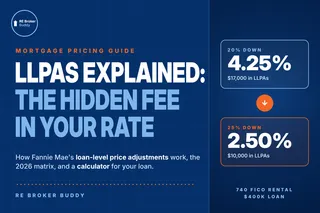
LLPA Explained: Fannie Mae's Loan-Level Price Adjustment Matrix (2026)
What a loan-level price adjustment (LLPA) is, how it works, the 2026 Fannie Mae LLPA matrix, investment property LLPAs, real-dollar examples and a calculator. ...more
DSCR loans ,Mortgage Market Updates
October 28, 2026
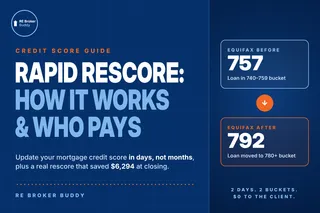
Rapid Rescore: How It Works, How Long It Takes and Who Pays
What a rapid rescore is, how it works, how long it takes, what it costs and who pays, what it can't fix, and a real rescore that saved $6,294 at closing. ...more
DSCR loans
October 28, 2026
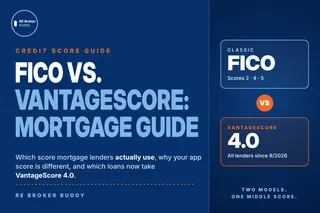
FICO vs. VantageScore for Mortgages: Which Credit Score Do Lenders Use?
Which credit score mortgage lenders use, how classic FICO and VantageScore 4.0 differ, why Credit Karma doesn't match your mortgage score, and which loans now accept VantageScore 4.0. ...more
DSCR loans ,Mortgage Market Updates
October 28, 2026
Where We Offer DSCR Loans
*Must Close in LLC
STEP 1
Apply Online or Call Directly
Find out how much home you can buy or discover how much you can save by refinancing.
STEP 2
Review What Options You Can Qualify For
Learn exactly how much you qualify for and what you would save by working with us.
STEP 3
Get Loan Approval in 24 Hours
Get mortgage loan approval to move forward with your property.


Broker Buddy LLC
Trevor Gravink
Mortgage Consultant
CEO/Owner
(619) 404-6637
NMLS: 1707407
NMLS Consumer Access Lookup Tool
CA DRE # 02117228
5371 Wilshire Dr. San Diego, CA 92116
© 2026 Broker Buddy LLC
Powered by Adaptive Mortgage Solutions
Company NMLS # 2022974
CA DRE # 02126109