Looking for a DSCR Loan in Ohio?
We are the experts!
Qualify Based on Rental Income Only!
No Personal Income Needed to Qualify!
Interest Only Options Available!
Fund Into Corporation or LLC
No Pre-Pay Options
AirBnB's Allowed
Answer a Few Quick Questions and Let’s See if You’re Eligible
🔒 This site is secure
🔒 This site is secure
Qualify Based on bank statements only!
No W2's or Tax Returns Needed!
Interest Only Options Available!
Get up to 90% Financing
100% Gift Funds Allowed
Fixed Rate and Adjustable Rate Options
DSCR Loans in Ohio: Finance Rentals on the Property's Income
A DSCR (debt service coverage ratio) loan lets Ohio investors qualify using the rent a property earns instead of personal tax returns, W-2s, or pay stubs. If the rent covers the mortgage payment, taxes, insurance, and any HOA dues, the property can usually carry its own loan. That makes DSCR financing a natural fit for self-employed investors, people growing past conventional loan limits, and anyone buying in an LLC.
Broker Buddy shops DSCR programs from multiple wholesale lenders for single-family homes, 2–4 unit properties, condos, townhomes, and short-term rentals across all 88 Ohio counties — purchases, rate-and-term refinances, and cash-out refinances.
Ohio DSCR Loan Guidelines at a Glance
Ohio's affordable prices make it a favorite for DSCR investors, but low price points, a state prepayment statute that hinges on unit count, and city-level rental rules all shape which program fits. Most rental loans land inside these ranges, and we compare several lenders to match each deal.
| Guideline | Typical range in Ohio |
|---|---|
| Credit score | Many programs begin around 620–660; 700+ earns the highest leverage and the best pricing |
| Down payment / LTV | Usually 20–25% down (up to 80% LTV) on purchases and rate-and-term refinances; cash-out typically caps around 75% LTV |
| Minimum DSCR | 1.00 is the usual target; some programs accept 0.75–0.99 with more down, and no-ratio options exist |
| Reserves | Typically 3–6 months of PITIA after closing; more for larger loans or lower scores |
| Loan size | Minimums often start around $75,000–$100,000. Many Youngstown, Toledo, Dayton and Cleveland-area homes sell below that, so duplexes, 3–4 units or portfolio loans can open more options. |
| Property types | Single-family, 2–4 units, condos, townhomes and short-term rentals; select programs add 5–10 unit and mixed-use buildings |
| Prepayment by unit count | 1–2 unit loans fall under Ohio's residential prepayment limits, while 3–4 unit properties usually qualify for full step-down options |
| Property condition | Rent-ready with no major deferred maintenance. Some cities require rental registration, inspections or lead-safe certification on older homes before you can lease. |
| Time to close | Roughly 3–5 weeks once the appraisal is ordered |
Guidelines change often and vary by lender, credit and property. Try your numbers in our DSCR calculator, or see how 30-year, 40-year, interest-only and ARM terms change your payment and ratio.
Why Investors Are Buying Rentals in Ohio
Ohio pairs home prices well below the national median with three large, diversified metros — Columbus, Cleveland, and Cincinnati — plus a string of mid-sized cities where rents can cover the full payment. Demand comes from several directions at once:
- New manufacturing investment, including Intel's semiconductor campus under construction in Licking County east of Columbus and Honda's auto and EV battery operations in central Ohio, is drawing workers to the region.
- Healthcare systems such as Cleveland Clinic, University Hospitals, OhioHealth, and Cincinnati Children's are among the state's largest employers.
- Wright-Patterson Air Force Base near Dayton brings a steady flow of military and civilian personnel who rent.
- Universities — Ohio State, the University of Cincinnati, Kent State, Ohio University, and Miami University — support student and staff rentals.
- Lake Erie and the Hocking Hills — Sandusky, Put-in-Bay, and the cabins around Logan — are Ohio's best-known vacation-rental markets.
Ohio Rental Markets Worth a Closer Look
Ohio offers big-city demand and small-city cash flow in the same state. Here's how investors usually size up the main areas — confirm rents, school-district taxes and city rental rules on the specific address.
Ohio State, state government, Nationwide and a wave of tech and manufacturing investment east of the city have made Columbus the state's fastest-growing metro. Suburbs like Hilliard, Grove City and Reynoldsburg draw family renters.
Cleveland Clinic, University Hospitals and Case Western Reserve anchor demand around University Circle. Cleveland requires a Lead Safe Certificate for rentals built before 1978, and several inner-ring suburbs require point-of-sale or rental inspections.
Procter & Gamble, Kroger, Cincinnati Children's and the University of Cincinnati support neighborhoods from Over-the-Rhine to Northside, plus fast-growing suburbs in Butler and Warren counties.
Wright-Patterson AFB is the region's largest employer, with military, civilian and contractor renters spread through Beavercreek, Fairborn, Huber Heights and Kettering.
Low entry prices and healthcare, university and manufacturing employers (including EV battery production near Warren and Jeep assembly in Toledo) attract cash-flow investors. Watch minimum loan sizes on low-priced homes.
Cedar Point in Sandusky, the Lake Erie islands and the cabin country around Logan drive seasonal vacation rentals. Local governments set their own short-term rental rules and lodging taxes.
Want to know what an Ohio property should rent for before you write an offer? Try our free DSCR rent estimate tool.
Ohio Rent Benchmarks by Metro
Lenders qualify DSCR loans using the lower of the current lease or an appraiser's market-rent estimate, so it helps to know where local rents sit before you make an offer. HUD's Fair Market Rents are a useful, neutral starting point:
| Metro area | 2-bedroom | 3-bedroom | 4-bedroom |
|---|---|---|---|
| Columbus | $1,602 | $1,909 | $2,172 |
| Cincinnati (OH-KY-IN) | $1,442 | $1,897 | $2,141 |
| Cleveland | $1,274 | $1,628 | $1,756 |
| Dayton-Kettering-Beavercreek | $1,248 | $1,623 | $1,774 |
| Akron | $1,231 | $1,474 | $1,618 |
| Lima | $1,179 | $1,418 | $1,571 |
| Springfield | $1,160 | $1,434 | $1,648 |
| Toledo | $1,145 | $1,461 | $1,558 |
| Canton-Massillon | $1,049 | $1,327 | $1,421 |
| Youngstown-Warren | $1,003 | $1,295 | $1,374 |
Source: HUD Fair Market Rents, FY2027 schedule (effective October 1, 2026). Fair Market Rents are a government benchmark, not an appraisal; actual market rent for a specific property may be higher or lower. In the Columbus, Cleveland, Cincinnati, Akron, and Dayton areas, HUD also publishes ZIP-code-level Small Area FMRs that can differ noticeably from the metro figure.
Example: How a Columbus Rental Pencils Out
Here's a simplified look at how a lender would calculate DSCR on a three-bedroom single-family rental in the Columbus area:
| Purchase price | $240,000 |
| Down payment (20%) | $48,000 |
| Loan amount | $192,000 |
| Principal & interest (30-yr fixed, 7.25% example rate) | $1,310 / mo |
| Property taxes (estimate) | $400 / mo |
| Homeowners insurance (estimate) | $110 / mo |
| Total housing payment (PITI) | $1,820 / mo |
| Monthly rent (HUD 3-bedroom benchmark) | $1,909 / mo |
| DSCR = $1,909 ÷ $1,820 | 1.05 |
A DSCR of 1.0 or higher means the rent covers the full payment, which qualifies with most lenders. Ratios at 1.20 and above typically earn better pricing, and some programs go below 1.0 with a larger down payment and stronger credit. Property taxes vary a lot between Columbus-area school districts, so check the actual bill for the parcel. The rate, taxes, and insurance shown are illustrations only — request a quote for numbers on your property.
That Columbus example clears 1.00, but property taxes vary widely by school district across Franklin County and its suburbs. Plug in your own numbers with the DSCR calculator, or see whether an interest-only or 40-year term helps a tight deal reach 1.00.
Ohio Prepayment Penalty Rules for DSCR Loans
Ohio limits prepayment penalties on mortgages secured by property with one or two residential units (Ohio Revised Code 1343.011). On those loans, a penalty can apply only during the first five years and can't exceed 1% of the original principal. Smaller first-lien loans made or arranged by a mortgage broker or non-bank lender — below an inflation-adjusted threshold that started at $75,000 and is updated each year — can't carry a prepayment penalty at all. The statute isn't limited to individual borrowers, so most DSCR lenders apply these limits even when you close in an LLC. Properties with three or four units fall outside that definition, and lenders generally offer standard step-down options on them. Choosing a prepayment penalty usually lowers your rate; choosing none gives you the freedom to sell or refinance at any time. We'll price both ways so you can compare.
| Prepay option | How it works | Best for |
|---|---|---|
| 5-year step-down (5-4-3-2-1) — 3–4 units | Penalty is 5% of the balance paid off in year 1, falling 1% each year to 0% after year 5. | Long-term holds of small multifamily; lowest rate |
| 3-year step-down (3-2-1) — 3–4 units | 3% in year 1, 2% in year 2, 1% in year 3, then none. | A balance of rate and flexibility |
| 1% prepay — 1–2 units | Up to 1% of the original loan amount if you pay off within the prepay period (no more than five years), then none. | Single-family and duplex buy-and-hold |
| No prepayment penalty | Sell or refinance any time with no penalty, usually at a higher rate. Required on smaller 1–2 unit loans under the state threshold. | Flips-to-rentals, BRRRR, short holds |
Ohio-Specific Costs Every Investor Should Budget For
Property taxes: rentals don't get owner-occupant credits
In Ohio, the county auditor sets each parcel's taxable value at 35% of its appraised market value, with a full reappraisal every six years and an update in the third year. Homeowners who live in the property can receive credits and exemptions that a rental can't, and voted levies differ widely from one school district to the next, so the current owner-occupant's bill may understate what you'll pay as an investor. Ohio also requires owners of residential rental property to file their contact details with the county auditor and keep them current. See the Ohio Department of Taxation's real property tax resources for how assessments work.
Insurance, storms, and flood risk
Severe thunderstorms, hail, and tornadoes are the main weather risks statewide, and properties near the Ohio River, Lake Erie, and smaller rivers can sit in mapped flood zones. Check the flood zone of any address on the FEMA Flood Map Service Center before you make an offer, and make sure your policy is written for a non-owner-occupied rental. The Ohio Department of Insurance has consumer guidance on homeowners and landlord coverage.
Lodging taxes on short-term rentals
Ohio's state sales tax applies to lodging furnished by a "hotel" — defined as a place with five or more rooms for guests — to stays of less than 30 consecutive days, so a single-home rental may fall outside the state tax. Counties and cities, however, levy their own lodging taxes, and many apply to short-term rentals. Columbus, for example, requires a city short-term rental permit before a home is listed and collects a 5.1% lodging excise tax on short-term stays. Check the Ohio Department of Taxation sales and use tax page and your city and county before you buy.
Landlord-tenant law
Long-term rentals are governed by Ohio's landlord-tenant law (Ohio Revised Code Chapter 5321), which covers security deposits, notices, and repairs. Ohio doesn't cap the amount of a security deposit, but the landlord must return it — with an itemized list of any deductions — within 30 days after the lease ends and the tenant gives up possession. If a tenant stays six months or more, the portion of the deposit above the greater of $50 or one month's rent earns 5% annual interest. You can read the current law on the Ohio Laws website (Chapter 5321).
Eviction notices
Before filing an eviction for nonpayment or another reason, an Ohio landlord must give the tenant written notice to leave at least three days before filing. The notice must include conspicuous language telling the tenant they are being asked to leave, that an eviction action may be filed if they don't, and that they should seek legal help if unsure of their rights. For a tenant's failure to meet health and safety obligations, a separate notice can set a termination date at least 30 days out, and the tenancy continues if the problem is fixed in time. Month-to-month tenancies end with 30 days' notice before the rent date, and week-to-week with 7 days. Sources: ORC 1923.04, ORC 5321.11 and ORC 5321.17.
Statewide ban on local rent control
Ohio law prevents cities and counties from adopting or enforcing local measures that conflict with the state landlord-tenant chapter, and a 2022 amendment specifically bars local rent control and rent stabilization on private rentals. Local building, health and safety codes still apply, which is why city rental registration and inspection rules remain in place. Source: ORC 5321.19.
State and city income tax on rental profits
Starting in 2026, Ohio's personal income tax is a flat 2.75% on income over $26,050, and net rental income flows onto your state return. Many Ohio cities also levy a municipal income tax on net rental profits from property located inside their limits, and some require non-resident rental owners to file even when no tax is due. Check the city where each property sits, and ask your CPA how depreciation and LLC pass-through rules apply. Sources: EY summary of Ohio H.B. 96 and an example city income tax guide (Findlay).
Buying in an LLC
Many Ohio investors hold rentals in an LLC for liability protection, and DSCR loans can close directly in the entity's name. Ohio LLCs are formed with the Ohio Secretary of State. Remember that the county rental registration must list a responsible member or manager for an LLC owner. Talk to your attorney or CPA about the right structure for your situation.
Ohio County Property Tax & Assessment Offices
Use these official county offices to look up a property's appraised value, current tax bill, and parcel details before you make an offer. In Ohio, the county auditor appraises property; in charter counties such as Cuyahoga and Summit, that work is done by the Fiscal Officer or Fiscal Office.
| County | Major cities | Assessment office |
|---|---|---|
| Franklin | Columbus, Dublin, Grove City | County Auditor |
| Cuyahoga | Cleveland, Parma, Lakewood | Fiscal Officer |
| Hamilton | Cincinnati, Norwood, Blue Ash | County Auditor |
| Summit | Akron, Cuyahoga Falls, Stow | Fiscal Office |
| Montgomery | Dayton, Kettering, Huber Heights | County Auditor |
| Lucas | Toledo, Sylvania, Maumee | County Auditor (via county website) |
| Butler | Hamilton, Middletown, Fairfield | County Auditor |
| Stark | Canton, Massillon, Alliance | County Auditor |
| Lorain | Lorain, Elyria, Avon | County Auditor |
| Warren | Mason, Lebanon, Springboro | County Auditor |
| Lake | Mentor, Painesville, Willoughby | County Auditor |
| Delaware | Delaware, Powell, Sunbury | County Auditor |
| Mahoning | Youngstown, Boardman, Austintown | County Auditor |
| Clermont | Batavia, Milford, Union Township | County Auditor |
| Trumbull | Warren, Niles, Girard | County Auditor |
Other counties: the Ohio Department of Taxation links to a directory with contact information for all 88 county auditors: Links to Other Government Agencies.
More Free Resources for Ohio Investors
- HUD Fair Market Rents — rent benchmarks by county and ZIP code
- U.S. Census QuickFacts: Ohio — population, income, and housing data
- FEMA Flood Map Service Center — look up the flood zone for any address
- Ohio sales and use tax — state tax rules, including lodging
- Ohio Secretary of State: Business Services — form or look up an LLC
Ohio DSCR Loan Options & Free Tools
Ohio investors use DSCR financing for more than a basic 30-year purchase. Find the option that matches your plan:
Check whether a Columbus or Dayton rental covers its payment at that school district's tax rate.
Estimate market rent in Cleveland, Cincinnati or Akron the way a DSCR appraiser will see it.
See how much cash you could pull from an appreciated Columbus-suburb or Cincinnati rental for your next purchase.
Compare 30-year fixed, 40-year, interest-only and ARM options and how each changes your DSCR.
Tap equity in an Ohio rental without refinancing a low-rate first mortgage.
Finance Lake Erie, Put-in-Bay and Hocking Hills cabin rentals using projected nightly income.
Ohio DSCR Loan FAQs
How much do I need to put down on an Ohio DSCR loan?
Most DSCR programs require 20–25% down on a purchase. Select programs allow less with strong credit and a higher DSCR. Short-term rentals and properties with a DSCR under 1.0 usually need more down.
Do Ohio DSCR loans have prepayment penalties?
They can, within limits. On 1–2 unit properties, Ohio caps a prepayment penalty at 1% of the original loan amount during the first five years, and smaller loans under an inflation-adjusted threshold can't have one at all. On 3–4 unit properties, step-downs such as 5-4-3-2-1 or 3-2-1 are generally available. You can always choose no prepayment penalty, typically at a slightly higher rate.
Can I use Airbnb income to qualify?
Yes, on eligible programs. Lenders use your booking history or a short-term rental market analysis for the property. This is popular for Hocking Hills cabins and Lake Erie properties around Sandusky and Put-in-Bay. Check local permit rules first; Columbus, for example, requires a short-term rental permit.
Can I close in my LLC?
Yes. DSCR loans can close in the name of an LLC or corporation, with the owners signing a personal guarantee.
Do I need to register my Ohio rental with the county?
Yes. Ohio law requires owners of residential rental property to file their name, address, and phone number (or a responsible member or manager for an LLC) plus the property's address and parcel number with the county auditor, and to update it within 60 days of any change. Some cities have their own rental registration or inspection rules too.
Can I do a cash-out refinance on an Ohio rental?
Yes. DSCR cash-out refinances let you pull equity from a rental you already own to fund your next purchase, again qualifying on the property's rent.
What does an Ohio eviction notice need to say?
The landlord must give written notice at least three days before filing, and for residential property it must state conspicuously that the tenant is being asked to leave, that an eviction may be filed if they don't, and that they should seek legal help if unsure. Using the statutory wording exactly helps avoid a dismissed case.
Can Ohio cities enact rent control?
No. Ohio law bars cities and counties from imposing rent control or rent stabilization on private rental property. Local health, safety and building codes, including rental inspection programs, still apply.
Do Ohio cities tax rental income?
Many do. Ohio municipalities can tax net profits from rental property located within their limits, and some require non-resident owners to file even when no tax is due. Check each city's income tax rules where you own property.
What is Ohio's state income tax rate on rental profits?
Beginning in 2026, Ohio uses a flat 2.75% personal income tax on income above $26,050. Net rental income is included on your state return, so ask your CPA how depreciation affects the amount.
Get an Ohio DSCR Rate Quote
Tell us about the property and we'll shop multiple DSCR lenders — with and without a prepayment penalty — so you can compare. No credit check to see your options.
Check My EligibilityLooking for another state? See all DSCR loan states.
DSCR Loans Explained
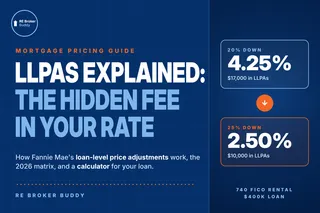
LLPA Explained: Fannie Mae's Loan-Level Price Adjustment Matrix (2026)
What a loan-level price adjustment (LLPA) is, how it works, the 2026 Fannie Mae LLPA matrix, investment property LLPAs, real-dollar examples and a calculator. ...more
DSCR loans ,Mortgage Market Updates
October 28, 2026
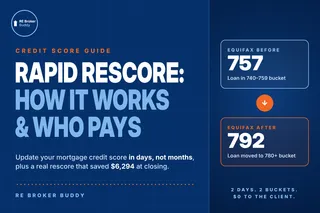
Rapid Rescore: How It Works, How Long It Takes and Who Pays
What a rapid rescore is, how it works, how long it takes, what it costs and who pays, what it can't fix, and a real rescore that saved $6,294 at closing. ...more
DSCR loans
October 28, 2026
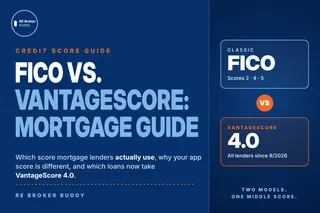
FICO vs. VantageScore for Mortgages: Which Credit Score Do Lenders Use?
Which credit score mortgage lenders use, how classic FICO and VantageScore 4.0 differ, why Credit Karma doesn't match your mortgage score, and which loans now accept VantageScore 4.0. ...more
DSCR loans ,Mortgage Market Updates
October 28, 2026
Where We Offer DSCR Loans
*Must Close in LLC
STEP 1
Apply Online or Call Directly
Find out how much home you can buy or discover how much you can save by refinancing.
STEP 2
Review What Options You Can Qualify For
Learn exactly how much you qualify for and what you would save by working with us.
STEP 3
Get Loan Approval in 24 Hours
Get mortgage loan approval to move forward with your property.


Broker Buddy LLC
Trevor Gravink
Mortgage Consultant
CEO/Owner
(619) 404-6637
NMLS: 1707407
NMLS Consumer Access Lookup Tool
CA DRE # 02117228
5371 Wilshire Dr. San Diego, CA 92116
© 2026 Broker Buddy LLC
Powered by Adaptive Mortgage Solutions
Company NMLS # 2022974
CA DRE # 02126109