Looking for a DSCR Loan in Washington, DC?
We are the experts!
Qualify Based on Rental Income Only!
No Personal Income Needed to Qualify!
Interest Only Options Available!
Fund Into Corporation or LLC
No Pre-Pay Options
AirBnB's Allowed
Answer a Few Quick Questions and Let’s See if You’re Eligible
🔒 This site is secure
🔒 This site is secure
Qualify Based on bank statements only!
No W2's or Tax Returns Needed!
Interest Only Options Available!
Get up to 90% Financing
100% Gift Funds Allowed
Fixed Rate and Adjustable Rate Options
DSCR Loans in Washington, DC: Finance Rentals on the Property's Income
A DSCR (debt service coverage ratio) loan lets DC investors qualify using the rent a property earns instead of personal tax returns, W-2s, or pay stubs. If the rent covers the mortgage payment, taxes, insurance, and any HOA dues, the property can usually carry its own loan. DC is a single jurisdiction where about 58% of housing units are renter-occupied (owner-occupied rate 41.5%), and the median owner-occupied home value is $737,100, per Census QuickFacts. Investors work under one set of District rules covering licensing, rent stabilization, TOPA and short-term rentals, rather than a patchwork of county and city ordinances.
Broker Buddy shops DSCR programs from multiple wholesale lenders for single-family homes, 2–4 unit properties, condos and townhomes in all eight wards of the District — purchases, rate-and-term refinances, and cash-out refinances.
Washington D.C. DSCR Loan Guidelines at a Glance
Each DSCR lender writes its own rulebook, but most District rental loans fall within these ranges. We compare several lenders side by side, so a rule that blocks one program — like a condo or unit-count limit — often doesn't apply at another.
| Guideline | Typical range in Washington D.C. |
|---|---|
| Credit score | Most programs begin around 620–660; 700 and up earns the highest leverage and best pricing |
| Down payment / LTV | Usually 20–25% down (up to 80% LTV) on purchases and rate-and-term refinances; cash-out typically tops out near 75% LTV |
| Minimum DSCR | 1.00 is the usual target; some programs accept 0.75–0.99, and no-ratio options help with high-priced rowhouses whose rent doesn't fully cover the payment |
| Reserves | Often 3–6 months of PITIA after closing, and more on jumbo loans common at District price points |
| Loan size | Minimums commonly start near $100,000; jumbo DSCR programs cover Capitol Hill, Georgetown and Dupont Circle prices |
| Property types | Rowhouses, single-family, 2–4 unit flats (including legal basement units) and condos; co-op shares are generally not eligible, and condo projects get a separate review |
| Who can borrow | Individuals or an LLC; an LLC can't host a District short-term rental, so DSCR loans here are usually underwritten on long-term leases |
| Licensing | Lenders may ask for the rental's Basic Business License and registration, especially on refinances of tenant-occupied units |
| Time to close | About 3–5 weeks once the appraisal is ordered; tenant-occupied sales can take longer while TOPA notices run |
Guidelines change often and depend on the lender, credit and property. See how the ratio works with our DSCR calculator, or compare 30-year, 40-year, interest-only and ARM terms to see how each changes your payment.
Why Investors Are Buying Rentals in Washington, DC
- The federal government is the District's anchor employer, and federal agencies, contractors and the institutions that serve them shape housing demand across all eight wards.
- Universities are among the District's largest private employers, led by Georgetown University, George Washington University, American University and Howard University.
- Health systems including Children's National Medical Center, Washington Hospital Center, Georgetown University Hospital, Sibley Memorial Hospital and George Washington University Hospital rank among DC's top 15 employers.
- Joint Base Anacostia-Bolling in Southwest DC hosts the Defense Intelligence Agency headquarters along with other military and federal tenants.
- Tourism brought a record 27.2 million visitors (25 million domestic, 2.2 million international) and $11.4 billion in visitor spending to DC in 2024, per Destination DC.
Washington D.C. Rental Neighborhoods Worth a Closer Look
The District is one city, but its wards rent very differently. Here's how investors tend to think about the main areas — run the numbers on the exact address before you offer.
Congressional staff, the Washington Navy Yard and the ballpark district keep demand high for rowhouses and condos. Entry prices are steep, so interest-only or larger down payments are common.
Ward 4 and Ward 1 rowhouses near the Green and Red lines are investor favorites, especially homes with a legal English-basement unit that adds a second rent.
Howard University, the Convention Center and a dense restaurant scene support steady demand for flats and renovated two-unit rowhouses.
Catholic University, the Red Line and newer townhome development make Brookland and Edgewood popular with grad students and young families.
Wards 7 and 8 offer the District's lowest entry prices. The Department of Homeland Security campus at St. Elizabeths and Joint Base Anacostia-Bolling anchor nearby employment.
Georgetown and George Washington universities create year-round student and faculty demand, though prices and condo dues mean the ratio needs careful checking.
Want a quick read on what a District property should rent for before you write an offer? Try our free DSCR rent estimate tool.
Washington, DC Rent Benchmarks
Lenders qualify DSCR loans using the lower of the current lease or an appraiser's market-rent estimate, so it helps to know where local rents sit before you make an offer. HUD's Fair Market Rents are a useful, neutral starting point:
| Area | 2-bedroom | 3-bedroom | 4-bedroom |
|---|---|---|---|
| Washington-Arlington-Alexandria, DC-VA-MD HMFA | $2,438 | $3,107 | $3,658 |
Source: HUD Fair Market Rents, FY2027 schedule (effective October 1, 2026). Fair Market Rents are a government benchmark, not an appraisal; actual market rent for a specific property may be higher or lower.
How Much Can a Washington, DC Rental Support?
A quick way to size a deal is to work backward from the rent. Using the HUD 3-bedroom benchmark for the Washington, DC area and some simple assumptions, here's roughly what purchase price that rent can carry with 20% down:
| Monthly rent (HUD 3-bedroom benchmark) | $3,107 |
| Purchase price the rent covers at a 1.00 DSCR | about $463,000 |
| Purchase price for a 1.20 DSCR (better pricing) | about $386,000 |
| Median value of owner-occupied homes, Washington, DC | $737,100 |
Typical homes in the area cost more than a benchmark rent alone supports, so investors often put more down, choose an interest-only option, or target properties with above-benchmark rents or multiple units. Assumptions: 30-year fixed at a 7.25% example rate, with taxes and insurance estimated at 1.5% of the price per year. The median value is from U.S. Census QuickFacts. These are illustrations only — request a quote for numbers on your property.
Plug your own District price, rent and HOA dues into the DSCR calculator, or see whether an interest-only or 40-year term helps a high-priced rowhouse reach 1.00.
Washington, DC Prepayment Penalty Rules for DSCR Loans
The District of Columbia allows lenders to include a standard prepayment penalty on investment-property (business-purpose) loans. Choosing a prepayment penalty usually lowers your rate; choosing no penalty gives you the freedom to sell or refinance at any time. We'll price both ways so you can compare.
| Prepay option | How it works | Best for |
|---|---|---|
| Flat 5% (1–5 years) | 5% of the amount prepaid during the penalty term, e.g. 5/5/5 for a 3-year term. | Long-term buy-and-hold; often the best rate |
| Step-down (5-4-3-2-1 or 3-2-1) | The penalty drops each year, e.g. 5% in year 1, 4% in year 2, down to 0% after year 5. Offered by many lenders. | A balance of rate and flexibility |
| Six months' interest | Offered by some lenders: the penalty is capped at six months of interest on 80% of the original balance. | Investors who want a smaller, predictable penalty |
| No prepayment penalty | Sell or refinance any time with no penalty, at a higher rate or price. | Flips-to-rentals, BRRRR, short holds |
Washington, DC-Specific Costs and Rules for Investors
Property taxes on rentals
The Office of Tax and Revenue taxes residential property, including multifamily (Class 1A), at $0.85 per $100 of assessed value. Class 1B (properties with no more than two dwelling units) pays $0.85 on the first $2.558 million and $1.00 above that. Commercial property (Class 2) pays $1.65 to $1.89 per $100, and properties classified as vacant (Class 3) or blighted (Class 4) pay $5.00 and $10.00 per $100. The Homestead Deduction ($91,950 off assessed value for tax year 2026) and the 10% Assessment Cap Credit, which requires the homestead deduction, apply only to an owner's principal residence, so non-owner-occupied rentals get neither. Source: DC Office of Tax and Revenue: Real Property Tax Rates.
Insurance and flash-flood risk
DC's Department of Insurance, Securities and Banking warns residents about flash flooding and notes that standard homeowner's insurance does not cover flood damage. Investors should check flood exposure, especially for basement and English-basement units, and price separate flood coverage into their rental analysis. See DISB Consumer Alert: Beware of Flash Floods.
Short-term rentals and lodging tax
DC charges a 15.95% sales tax on transient accommodations (the rate took effect April 1, 2023), and Airbnb collects and remits it for DC stays of 90 nights or fewer. Under current DLCP rules, short-term rentals are allowed only at the host's primary residence, defined as a property eligible for the Homestead Deduction. LLCs and corporations cannot be hosts, and each stay is limited to 30 continuous nights. A whole-home Vacation Rental license is capped at 90 nights per calendar year, and a Short-Term Rental or Vacation Rental license costs $99 for two years. Details: DLCP: Operating a Short-Term Rental in the District of Columbia.
Landlord-tenant law
Long-term rentals are governed by the Rental Housing Act of 1985 (D.C. Law 6-10, D.C. Official Code 42-3501.01 et seq.), with security deposits covered by 14 DCMR 308-309. A security deposit may not exceed one month's rent and may be charged only once. Within 45 days after the tenancy ends, the landlord must return the deposit with interest or give written notice of intent to withhold for expenses, and then must refund any balance with an itemized statement within 30 days of that notice. Read more: Interest on Rental Security Deposits Amendment Act of 2006 (D.C. Law 16-276).
Shorter nonpayment notice under the RENTAL Act
The RENTAL Act (D.C. Law 26-80), effective December 31, 2025, shortened the notice a housing provider must serve before filing a nonpayment case from 30 days to 10 days. Proposed Rental Housing Commission rules tie filing to an unpaid balance of $600 or more. Non-renewal of a lease, by itself, is still not grounds for eviction. Have a District attorney review your notices. Source: Rental Housing Commission rulemaking notice.
2026 rent stabilization cap
For rent-stabilized units, the standard annual increase for May 1, 2026 through April 30, 2027 is capped at 4.1% (CPI-W plus 2%), or 2.1% for registered elderly or disabled tenants. If you're buying an older, larger building, confirm whether it's exempt before you underwrite rent growth. Source: Office of the Tenant Advocate.
Unincorporated business franchise tax
The District can't tax most non-residents' income, but an unincorporated business — which can include a rental operation — generally must file Form D-30 once its D.C. gross income tops $12,000. The rate has been 8.25%, with a $250 minimum tax. Ask your CPA how this applies to your rental or LLC. Source: D.C. Office of Tax and Revenue.
Buying in an LLC
File Articles of Organization (Form DLC-1) with the DC Department of Licensing and Consumer Protection online through BOSS or by mail or walk-in. The filing fee is $99, and DC LLCs also file a $300 biennial report. Start here: DC DLCP: register an LLC. Talk to your attorney or CPA about the right structure for your situation.
DC Property Tax, Licensing and Tenant Offices
DC is a single jurisdiction, so one set of District offices handles assessments, rental licensing and tenant issues. Use these official resources to check a property before you make an offer.
| Resource | Coverage | Office |
|---|---|---|
| OTR Real Property Tax Administration: Assessment Process | District-wide | Office of Tax and Revenue, Real Property Tax Administration (Assessment Division) |
| Real Property Tax Database Search (MyTax.DC.gov) | District-wide | Office of Tax and Revenue |
| Basic Business License: Housing Business (rental housing) | District-wide | Department of Licensing and Consumer Protection (DLCP) |
| Office of the Tenant Advocate | District-wide | Office of the Tenant Advocate (OTA) |
| Real Property GIS Program and Assessment Map Search | District-wide | Office of Tax and Revenue, Real Property GIS Program |
More Free Resources for Washington, DC Investors
- HUD Fair Market Rents — rent benchmarks by county and ZIP code
- U.S. Census QuickFacts: Washington, DC — population, income, and housing data
- FEMA Flood Map Service Center — look up the flood zone for any address
- DLCP: Operating a Short-Term Rental in the District of Columbia — short-term rental tax rules
- DC DLCP: register an LLC — form or look up an entity
Washington D.C. DSCR Loan Options & Free Tools
District investors use DSCR financing for more than a standard 30-year purchase. Explore the option that fits your plan:
Check whether a Petworth rowhouse or Capitol Hill condo covers its payment, HOA dues included.
Estimate market rent for a basement unit or full rowhouse the way a DSCR appraiser will.
See how much cash you could pull from a Brookland or Shaw rental with a cash-out refinance.
Compare 30-year fixed, 40-year, interest-only and ARM options, which can matter at District price points.
Tap equity in a D.C. rental without giving up a low-rate first mortgage.
District STRs are limited to a host's primary residence, but you can finance vacation rentals in nearby Virginia, Maryland and Delaware beach markets.
Washington, DC DSCR Loan FAQs
How much do I need to put down on a Washington, DC DSCR loan?
Most DSCR programs require 20-25% down on a purchase. Select programs allow less with strong credit and a higher DSCR. Short-term rentals and properties with a DSCR under 1.0 usually need more down.
Do Washington, DC DSCR loans have prepayment penalties?
They can. The District of Columbia permits standard prepayment penalties on investment loans, such as a flat 5% for 1-5 years or a 5-4-3-2-1 step-down, depending on the lender. You can also choose a loan with no prepayment penalty, typically at a slightly higher rate.
Can I use Airbnb income to qualify in DC?
Generally no for an investment property. DC only allows short-term rentals in the host's primary residence, and LLCs can't be hosts, so DSCR loans in the District are usually qualified on long-term lease income.
Can I close in my LLC?
Yes. DSCR loans can close in the name of an LLC or corporation, with the owners signing a personal guarantee.
Do I need a license to rent out an investment property in DC?
Yes. DC requires a Basic Business License for a rental housing business from DLCP. The fee is $159 for two years for a one-family rental and $219 for a two-family rental, and an inspection applies to one- and two-family rentals. Two-family rentals and apartments also need a Certificate of Occupancy. Every rental unit must be registered with DHCD's Rental Accommodations Division for $43 per unit per two-year period.
Is my DC rental subject to rent control or TOPA?
Rent stabilization under the Rental Housing Act of 1985 applies to non-exempt units. Common exemptions include units built after 1975, units owned by a natural person who owns no more than four DC rental units, and subsidized units. Under the Tenant Opportunity to Purchase Act, owners selling an apartment building must give tenants offer-of-sale notices and purchase rights. Since July 2018, single-family homes are exempt from TOPA unless certain elderly or disabled tenants live there.
What credit score do I need for a D.C. DSCR loan?
Many DSCR programs start around a 620 to 660 credit score. Scores of 700 and up usually qualify for the most leverage and the best pricing, while lower scores typically need a larger down payment.
Can I count a basement unit's rent on a D.C. DSCR loan?
Usually, if the unit is legal and permitted as a separate dwelling. The appraiser and lender will want to see that it has the proper Certificate of Occupancy and licensing before counting its rent.
Can I get a DSCR loan on a D.C. co-op?
Generally not. Most DSCR programs finance fee-simple rowhouses, 2-4 unit buildings and condos, and co-op shares fall outside their guidelines. Condos are reviewed project by project.
How much notice does a D.C. landlord give for unpaid rent?
Under the RENTAL Act, effective December 31, 2025, the pre-filing notice for nonpayment dropped from 30 days to 10 days. Other notice rules still apply, so confirm current forms with a District attorney.
Get a Washington, DC DSCR Rate Quote
Tell us about the property and we'll shop multiple DSCR lenders so you can compare options. No credit check to see your options.
Check My EligibilityLooking for another state? See all DSCR loan states.
DSCR Loans Explained
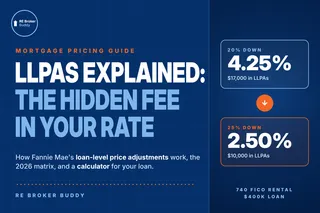
LLPA Explained: Fannie Mae's Loan-Level Price Adjustment Matrix (2026)
What a loan-level price adjustment (LLPA) is, how it works, the 2026 Fannie Mae LLPA matrix, investment property LLPAs, real-dollar examples and a calculator. ...more
DSCR loans ,Mortgage Market Updates
October 28, 2026
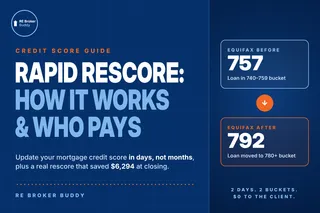
Rapid Rescore: How It Works, How Long It Takes and Who Pays
What a rapid rescore is, how it works, how long it takes, what it costs and who pays, what it can't fix, and a real rescore that saved $6,294 at closing. ...more
DSCR loans
October 28, 2026
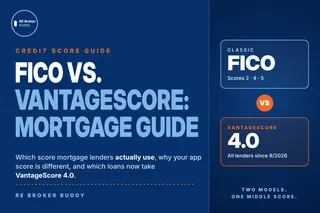
FICO vs. VantageScore for Mortgages: Which Credit Score Do Lenders Use?
Which credit score mortgage lenders use, how classic FICO and VantageScore 4.0 differ, why Credit Karma doesn't match your mortgage score, and which loans now accept VantageScore 4.0. ...more
DSCR loans ,Mortgage Market Updates
October 28, 2026
Where We Offer DSCR Loans
*Must Close in LLC
STEP 1
Apply Online or Call Directly
Find out how much home you can buy or discover how much you can save by refinancing.
STEP 2
Review What Options You Can Qualify For
Learn exactly how much you qualify for and what you would save by working with us.
STEP 3
Get Loan Approval in 24 Hours
Get mortgage loan approval to move forward with your property.


Broker Buddy LLC
Trevor Gravink
Mortgage Consultant
CEO/Owner
(619) 404-6637
NMLS: 1707407
NMLS Consumer Access Lookup Tool
CA DRE # 02117228
5371 Wilshire Dr. San Diego, CA 92116
© 2026 Broker Buddy LLC
Powered by Adaptive Mortgage Solutions
Company NMLS # 2022974
CA DRE # 02126109