Looking for a DSCR Loan in Oregon?
We are the experts!
Qualify Based on Rental Income Only!
No Personal Income Needed to Qualify!
Interest Only Options Available!
Fund Into Corporation or LLC
No Pre-Pay Options
AirBnB's Allowed
Answer a Few Quick Questions and Let’s See if You’re Eligible
🔒 This site is secure
🔒 This site is secure
Qualify Based on bank statements only!
No W2's or Tax Returns Needed!
Interest Only Options Available!
Get up to 90% Financing
100% Gift Funds Allowed
Fixed Rate and Adjustable Rate Options
DSCR Loans in Oregon: Finance Rentals on the Property's Income
A DSCR (debt service coverage ratio) loan lets Oregon investors qualify using the rent a property earns instead of personal tax returns, W-2s, or pay stubs. If the rent covers the mortgage payment, taxes, insurance, and any HOA dues, the property can usually carry its own loan. That makes DSCR financing a natural fit for self-employed investors, people growing past conventional loan limits, and anyone buying in an LLC.
Broker Buddy shops DSCR programs from multiple wholesale lenders for single-family homes, 2–4 unit properties, condos, townhomes, and short-term rentals across all 36 Oregon counties — purchases, rate-and-term refinances, and cash-out refinances.
Oregon DSCR Loan Guidelines at a Glance
No two DSCR programs are identical, but most Oregon rental loans land inside the ranges below. Because we shop several lenders on every file, a guideline that knocks you out with one program is often fine with another.
| Guideline | Typical range in Oregon |
|---|---|
| Credit score | Programs commonly begin around 620–660; scores of 700 and up get the most leverage and the strongest pricing |
| Down payment / LTV | Plan on 20–25% down (up to 80% LTV) for purchases and rate-and-term refinances; cash-out usually caps near 75% LTV, with a few programs reaching 85% for top-tier credit |
| Minimum DSCR | 1.00 is the usual target; select programs accept 0.75–0.99, and no-ratio options exist for Portland-area homes where rents trail prices |
| Reserves | Typically 3–6 months of PITIA after closing, more for large loans or lower scores |
| Loan size | Minimums often start around $75,000–$100,000; jumbo DSCR programs cover higher-priced Bend, Lake Oswego and West Hills properties |
| Property types | Single-family, 2–4 units, condos, townhomes and short-term rentals; some programs take 5–10 units and mixed-use |
| Short-term rentals | Portland only permits short-term rentals in a resident's primary home, so a non-owner-occupied Portland Airbnb rarely works; Bend, Sisters and coastal towns have their own permit rules to confirm before closing |
| Insurance | Wildfire exposure in Central and Southern Oregon can raise premiums or limit carriers; get a firm quote early because it feeds straight into your DSCR |
| Who can borrow | Individuals or an LLC; first-time investors qualify on many programs |
| Time to close | Usually 3–5 weeks after the appraisal is ordered |
Guidelines shift often and differ by lender, credit profile and property. To test a deal, run it through our DSCR calculator or compare how 30-year, 40-year, interest-only and ARM terms change the payment and the ratio.
Why Investors Are Buying Rentals in Oregon
Oregon has no state sales tax, and its limits on assessed-value growth keep property tax bills fairly predictable for long-term owners. Rents in the Portland, Bend, and Willamette Valley markets are supported by a mix of tech, healthcare, education, and tourism. Demand comes from several directions at once:
- Semiconductors and athletic apparel — Intel's Hillsboro campuses and Nike's Beaverton headquarters anchor the west side of the Portland metro.
- Healthcare and research, led by Oregon Health & Science University (OHSU) in Portland, plus major hospital systems in Salem, Eugene, Bend, and Medford.
- Universities — the University of Oregon in Eugene, Oregon State University in Corvallis, and Portland State University — support student and staff rentals.
- State government in Salem provides a stable base of renters in the mid-Willamette Valley.
- Outdoor tourism in Bend and Central Oregon, Mt. Hood, and Oregon Coast towns drives one of the West's busiest vacation-rental markets.
Oregon Rental Markets Worth a Closer Look
Oregon's rental demand is concentrated along the I-5 corridor and in Central Oregon, but each region behaves differently. Treat these as starting points and underwrite every address on its own.
Hillsboro's semiconductor fabs, Nike's Beaverton campus and the OHSU medical system support a deep renter pool. Close-in east side neighborhoods and Gresham offer lower entry prices than the west side suburbs.
As the state capital, Salem leans on government, healthcare and Willamette University jobs. Prices sit below Portland, which helps ratios on 3-bedroom homes and small multifamily.
The University of Oregon creates year-round demand for houses and duplexes near campus, while Springfield tends to deliver better cash flow on family rentals.
Oregon State University and Samaritan Health keep vacancy low. Albany, a short commute away, gives investors more house for the money.
Mt. Bachelor, the Deschutes River and remote-work migration fuel both long-term and vacation demand. Bend adopted a 500-foot buffer between permitted short-term rentals in residential zones, so verify permit status before you buy.
Medford and Grants Pass draw retirees and healthcare workers, Ashland has its theater festival crowd, and Cannon Beach, Seaside and Lincoln City attract weekend visitors from Portland.
Want to know what a property should rent for before you write an offer? Try our free DSCR rent estimate tool.
Oregon Rent Benchmarks by Metro
Lenders qualify DSCR loans using the lower of the current lease or an appraiser's market-rent estimate, so it helps to know where local rents sit before you make an offer. HUD's Fair Market Rents are a useful, neutral starting point:
| Metro area | 2-bedroom | 3-bedroom | 4-bedroom |
|---|---|---|---|
| Bend-Redmond | $1,893 | $2,621 | $3,164 |
| Portland-Vancouver-Hillsboro | $1,878 | $2,550 | $3,069 |
| Corvallis | $1,857 | $2,571 | $3,102 |
| Albany | $1,726 | $2,380 | $2,672 |
| Salem | $1,692 | $2,341 | $2,564 |
| Eugene-Springfield | $1,546 | $2,141 | $2,584 |
| Medford | $1,539 | $2,131 | $2,543 |
| Grants Pass | $1,331 | $1,843 | $2,012 |
Source: HUD Fair Market Rents, FY2027 schedule (effective October 1, 2026). Fair Market Rents are a government benchmark, not an appraisal; actual market rent for a specific property may be higher or lower.
Example: How a Portland Rental Pencils Out
Here's a simplified look at how a lender would calculate DSCR on a three-bedroom single-family rental in the Portland area:
| Purchase price | $450,000 |
| Down payment (20%) | $90,000 |
| Loan amount | $360,000 |
| Principal & interest (30-yr fixed, 7.25% example rate) | $2,456 / mo |
| Property taxes (estimate) | $413 / mo |
| Homeowners insurance (estimate) | $100 / mo |
| Total housing payment (PITI) | $2,969 / mo |
| Monthly rent (HUD 3-bedroom benchmark) | $2,550 / mo |
| DSCR = $2,550 ÷ $2,969 | 0.86 |
A DSCR of 1.0 or higher means the rent covers the full payment, which qualifies with most lenders. At 0.86, this example doesn't reach 1.0 at 20% down. Options include a larger down payment (about 35% down brings this example to roughly 1.02), a lower rate by choosing a prepayment penalty, a program that allows ratios below 1.0 with stronger credit and reserves, or a property whose actual tax bill is lower — in Oregon, the bill depends on the property's maximum assessed value, so check the real number. Ratios at 1.20 and above typically earn better pricing. The rate, taxes, and insurance shown are illustrations only — request a quote for numbers on your property.
Try your own Portland numbers in the DSCR calculator, or see whether an interest-only or 40-year term can lift a tight Oregon deal closer to 1.00 without a bigger down payment.
Oregon Prepayment Penalty Rules for DSCR Loans
Oregon is one of the states where lenders may include a standard prepayment penalty on investment-property (business-purpose) loans, whether the loan closes in your own name or in an LLC. Oregon's prepayment statute (ORS 82.160), which requires a bold-type notice in the loan agreement before a prepayment penalty can be collected, applies to loans made primarily for personal, family, or household purposes rather than business-purpose rental loans, although some lenders include similar disclosures anyway.
Choosing a prepayment penalty usually lowers your rate; choosing no penalty gives you the freedom to sell or refinance at any time. We'll price both ways so you can compare.
| Prepay option | How it works | Best for |
|---|---|---|
| 5-year step-down (5-4-3-2-1) | Penalty is 5% of the balance paid off in year 1, falling 1% each year to 0% after year 5. | Long-term buy-and-hold; lowest rate |
| 3-year step-down (3-2-1) | 3% in year 1, 2% in year 2, 1% in year 3, then none. | A balance of rate and flexibility |
| Six months' interest | Penalty is capped at six months of interest on 80% of the original principal balance. | Investors who want a smaller, predictable penalty |
| No prepayment penalty | Sell or refinance any time with no penalty, usually at a higher rate. | Flips-to-rentals, BRRRR, short holds |
Oregon-Specific Costs Every Investor Should Budget For
Property taxes: a sale doesn't reset the assessed value
Oregon taxes property on its assessed value, which is the lower of its real market value or its maximum assessed value (MAV). Under Measure 50, MAV generally grows no more than 3% a year, and unlike in California, buying a property doesn't reset it — a buyer usually inherits roughly the seller's tax bill. Because MAV sits well below market value in many neighborhoods, similar homes can have very different bills, so look up the actual bill on the county site rather than estimating from the price. New construction and major improvements can add value. Oregon has no general homestead exemption, so a rental is generally taxed the same way as an owner-occupied home. See the Oregon Department of Revenue Property Tax pages for how assessments work.
Insurance, wildfire, and earthquake risk
Wildfire is a growing concern in Southern and Central Oregon and along the Cascades, winter wind and ice storms can damage roofs and trees, and western Oregon sits near the Cascadia Subduction Zone. Standard policies don't cover earthquake or flood, which need separate coverage. Check the flood zone of any address on the FEMA Flood Map Service Center before you make an offer, especially near rivers and the coast. The Oregon Division of Financial Regulation has consumer guidance on homeowners and landlord coverage.
Lodging tax on short-term rentals
Stays of fewer than 30 consecutive days are subject to Oregon's state transient lodging tax: 1.5% through December 31, 2026, rising to 2.75% for charges on or after January 1, 2027 (the added 1.25% is labeled a nature conservation fee). Booking platforms such as Airbnb and Vrbo must collect and remit the state tax on the stays they handle, but direct bookings are your responsibility. Many cities and counties add their own lodging tax, and some have the Department of Revenue administer it. Details are on the Oregon DOR lodging tax page. Many Oregon cities and counties also require a short-term rental permit or registration, and some limit where whole-home rentals are allowed, so check with the city or county before you buy.
Landlord-tenant law
Long-term rentals are governed by the Oregon Residential Landlord and Tenant Act (ORS Chapter 90), which covers security deposits, notices, and repairs. Oregon doesn't set a maximum security deposit, but a landlord generally can't add or increase a deposit during the first year of a tenancy, and the deposit must be returned with a written accounting within 31 days after the tenancy ends. Oregon also caps annual rent increases on most rentals; the maximum for 2027 is 10%. You can read the current statutes on the Oregon Legislature's ORS Chapter 90 page.
Nonpayment notices
For a month-to-month or fixed-term tenancy, Oregon gives landlords two options for a nonpayment termination notice: at least 10 days' written notice served no sooner than the eighth day of the rental period, or at least 13 days' written notice served no sooner than the fifth day. The notice must state the amount due and the deadline to pay. Weekly tenancies use a 72-hour notice. Source: ORS 90.394.
Just-cause rules after the first year
Once a tenant has occupied a unit for one year, a landlord generally cannot end the tenancy without cause. Qualifying landlord reasons, such as major renovations, demolition, moving in yourself or selling to a buyer who will live there, require 90 days' notice (60 days for the sale route) plus a relocation payment of one month's rent. Landlords who own an interest in four or fewer residential units are exempt from that payment. Source: ORS 90.427.
State income tax on rental profits
Oregon has no sales tax, but its graduated personal income tax starts at 4.75% and reaches 9.9% on higher incomes, and net rental income is taxed at those rates. Out-of-state investors with Oregon rentals generally file a nonresident return. See the Oregon Blue Book tax overview and talk with your CPA.
Buying in an LLC
Many Oregon investors hold rentals in an LLC for liability protection, and DSCR loans can close directly in the entity's name. Oregon LLCs are formed with the Oregon Secretary of State Corporation Division. Talk to your attorney or CPA about the right structure for your situation.
Oregon County Property Tax & Assessment Offices
Use these official county offices to look up a property's assessed value, current tax bill, and parcel details before you make an offer. In Oregon, the office may be called the Assessor or Assessment & Taxation, and it usually handles both valuation and tax collection.
| County | Major cities | Assessment office |
|---|---|---|
| Multnomah | Portland, Gresham, Troutdale | Assessment, Recording & Taxation |
| Washington | Hillsboro, Beaverton, Tigard | Assessment & Taxation |
| Clackamas | Lake Oswego, Oregon City, Happy Valley | Assessment & Taxation |
| Lane | Eugene, Springfield | Assessment & Taxation |
| Marion | Salem, Keizer, Woodburn | Assessor's Office |
| Jackson | Medford, Ashland, Central Point | Assessor |
| Deschutes | Bend, Redmond, Sisters | Assessor's Office |
| Linn | Albany, Lebanon | Assessment & Taxation |
| Yamhill | McMinnville, Newberg | Assessor / Tax Collector |
| Benton | Corvallis, Philomath | Assessment Department |
| Josephine | Grants Pass, Cave Junction | Property Records (Public Access) |
| Polk | Dallas, Monmouth, West Salem | Assessor's Office |
| Umatilla | Hermiston, Pendleton | Assessment & Taxation |
Other counties: the Oregon Department of Revenue keeps contact links for all 36 county assessors, including Douglas County (Roseburg): County Assessor Information.
More Free Resources for Oregon Investors
- HUD Fair Market Rents — rent benchmarks by county and ZIP code
- U.S. Census QuickFacts: Oregon — population, income, and housing data
- FEMA Flood Map Service Center — look up the flood zone for any address
- Oregon state lodging tax — short-term rental tax rules
- Oregon Secretary of State: Business — form or look up an LLC
Oregon DSCR Loan Options & Free Tools
Oregon investors use DSCR financing for much more than a standard 30-year purchase. Pick the option that matches your plan:
Check whether a Portland, Salem or Eugene rental's rent covers the full payment before you make an offer.
Estimate market rent the way a DSCR appraiser will, from Corvallis student rentals to Medford family homes.
See how much cash a Bend or Hillsboro rental could free up with a cash-out refinance.
Compare 30-year fixed, 40-year, interest-only and ARM options, which matter in pricey Portland-area deals.
Pull equity from an Oregon rental without giving up a low first-mortgage rate.
Finance Bend, Sisters or Oregon Coast vacation homes using projected nightly income.
Oregon DSCR Loan FAQs
How much do I need to put down on an Oregon DSCR loan?
Most DSCR programs require 20–25% down on a purchase. Select programs allow less with strong credit and a higher DSCR. Short-term rentals and properties with a DSCR under 1.0 usually need more down.
Do Oregon DSCR loans have prepayment penalties?
They can. Oregon permits standard prepayment penalties on investment loans, such as 5-4-3-2-1 or 3-2-1 step-downs, whether you close in your own name or an LLC. You can also choose a loan with no prepayment penalty, typically at a slightly higher rate.
Can I use Airbnb income to qualify?
Yes, on eligible programs. Lenders use your booking history or a short-term rental market analysis for the property. This is popular for Bend, Sisters, Mt. Hood, and Oregon Coast properties. Check local permit rules first, since many Oregon cities and counties require a short-term rental permit.
Can I close in my LLC?
Yes. DSCR loans can close in the name of an LLC or corporation, with the owners signing a personal guarantee.
Will my property taxes reset when I buy in Oregon?
Usually not. Oregon taxes the lower of real market value or maximum assessed value, which generally grows no more than 3% a year and isn't reset by a sale. Your bill will usually be close to the seller's, although new construction or major improvements can add value.
Can I do a cash-out refinance on an Oregon rental?
Yes. DSCR cash-out refinances let you pull equity from a rental you already own to fund your next purchase, again qualifying on the property's rent.
Can I get a DSCR loan for a Portland short-term rental?
Usually only if the home is someone's primary residence, because Portland limits short-term rentals to homes where a resident lives at least 270 days a year. Investors who want a dedicated vacation rental tend to look at Bend, Central Oregon or the coast instead, subject to each city's permit rules.
What credit score do I need for an Oregon DSCR loan?
Many programs start around a 620 to 660 score. A 700 or higher score typically unlocks the most leverage and better pricing, while lower scores usually need a bigger down payment.
Does Oregon's just-cause law affect my DSCR loan?
It doesn't change how the loan is underwritten, but it affects how you manage the property. After the first year of occupancy you generally need a tenant cause or a qualifying landlord reason to end a tenancy, so plan your renovation or sale timeline accordingly.
Can a first-time investor get a DSCR loan in Oregon?
Yes. Many programs accept first-time investors, although some short-term rental and 5-10 unit programs ask for prior ownership experience. We match you with a lender whose requirements fit your background.
Get an Oregon DSCR Rate Quote
Tell us about the property and we'll shop multiple DSCR lenders — with and without a prepayment penalty — so you can compare. No credit check to see your options.
Check My EligibilityLooking for another state? See all DSCR loan states.
DSCR Loans Explained
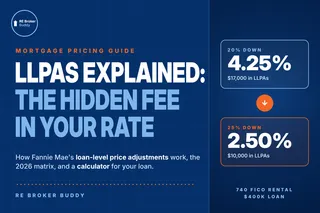
LLPA Explained: Fannie Mae's Loan-Level Price Adjustment Matrix (2026)
What a loan-level price adjustment (LLPA) is, how it works, the 2026 Fannie Mae LLPA matrix, investment property LLPAs, real-dollar examples and a calculator. ...more
DSCR loans ,Mortgage Market Updates
October 28, 2026
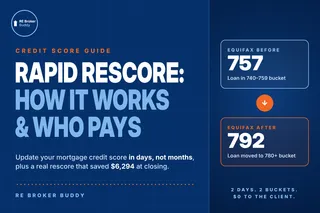
Rapid Rescore: How It Works, How Long It Takes and Who Pays
What a rapid rescore is, how it works, how long it takes, what it costs and who pays, what it can't fix, and a real rescore that saved $6,294 at closing. ...more
DSCR loans
October 28, 2026

FICO vs. VantageScore for Mortgages: Which Credit Score Do Lenders Use?
Which credit score mortgage lenders use, how classic FICO and VantageScore 4.0 differ, why Credit Karma doesn't match your mortgage score, and which loans now accept VantageScore 4.0. ...more
DSCR loans ,Mortgage Market Updates
October 28, 2026
Where We Offer DSCR Loans
*Must Close in LLC
STEP 1
Apply Online or Call Directly
Find out how much home you can buy or discover how much you can save by refinancing.
STEP 2
Review What Options You Can Qualify For
Learn exactly how much you qualify for and what you would save by working with us.
STEP 3
Get Loan Approval in 24 Hours
Get mortgage loan approval to move forward with your property.


Broker Buddy LLC
Trevor Gravink
Mortgage Consultant
CEO/Owner
(619) 404-6637
NMLS: 1707407
NMLS Consumer Access Lookup Tool
CA DRE # 02117228
5371 Wilshire Dr. San Diego, CA 92116
© 2026 Broker Buddy LLC
Powered by Adaptive Mortgage Solutions
Company NMLS # 2022974
CA DRE # 02126109