Looking for a DSCR Loan in Hawaii?
We are the experts!
Qualify Based on Rental Income Only!
No Personal Income Needed to Qualify!
Interest Only Options Available!
Fund Into Corporation or LLC
No Pre-Pay Options
AirBnB's Allowed
Answer a Few Quick Questions and Let’s See if You’re Eligible
🔒 This site is secure
🔒 This site is secure
Qualify Based on bank statements only!
No W2's or Tax Returns Needed!
Interest Only Options Available!
Get up to 90% Financing
100% Gift Funds Allowed
Fixed Rate and Adjustable Rate Options
DSCR Loans in Hawaii: Finance Rentals on the Property's Income
A DSCR (debt service coverage ratio) loan lets Hawaii investors qualify using the rent a property earns instead of personal tax returns, W-2s, or pay stubs. If the rent covers the mortgage payment, taxes, insurance, and any HOA dues, the property can usually carry its own loan. Hawaii has some of the highest home values and rents in the country (the statewide median owner-occupied home value is $839,100 per Census QuickFacts), and each of the four counties sets its own property tax classes and rental rules. Investors need to weigh long-term rental demand from residents and the military against county limits on short-term rentals and higher tax rates for non-owner-occupied and vacation rental property.
Broker Buddy shops DSCR programs from multiple wholesale lenders for single-family homes, 2–4 unit properties, condos and townhomes on Oahu, Maui, the Big Island and Kauai — purchases, rate-and-term refinances, and cash-out refinances.
Hawaii DSCR Loan Guidelines at a Glance
Each DSCR lender writes its own rules, and Hawaii's high prices, leasehold land and condo-heavy inventory add some island-specific twists. Most Hawaii rental loans fall within these ranges, and we compare several lenders so one program's limit doesn't end your deal.
| Guideline | Typical range in Hawaii |
|---|---|
| Credit score | Many programs begin around 620–660; 700+ earns the most leverage and the best pricing |
| Down payment / LTV | Usually 20–25% down (up to 80% LTV) on purchases and rate-and-term refinances; cash-out typically caps near 75% LTV. At Honolulu prices, many investors put more down to reach a 1.00 ratio |
| Minimum DSCR | 1.00 is the common target; some programs accept 0.75–0.99, and no-ratio options help where rent doesn't yet cover island price points |
| Reserves | Often 3–6 months of PITIA after closing, and more on the jumbo loan amounts common in Hawaii |
| Loan size | Jumbo DSCR programs are the norm on Oahu, Maui and Kauai; minimums commonly start around $100,000 |
| Land tenure | Fee simple is easiest to finance. Leasehold properties are reviewed case by case, and lenders generally want the ground lease to run well past the loan's maturity |
| Condos & condotels | Condos are eligible after a project review; condotels with rental programs, hotel-style operations or pending special assessments go to a smaller group of lenders |
| Hazard zones | On Hawaii Island, homes in Lava Flow Hazard Zones 1 and 2 can be hard to insure, which can rule them out for some programs |
| Time to close | Roughly 4–6 weeks once the appraisal is ordered; condo documents and leasehold reviews can add time |
Guidelines change often and vary by lender, credit and property. See how the ratio works with our DSCR calculator, or compare 30-year, 40-year, interest-only and ARM terms to see how each changes your payment.
Why Investors Are Buying Rentals in Hawaii
- Tourism is Hawaii's dominant industry: the state recorded about 9.6 million visitors and $21.91 billion in visitor spending in 2025, according to DBEDT's annual visitor report.
- Oahu drew about 5.7 million air visitors in 2025, and Honolulu is also the state's center of government, business and health care, which supports long-term rental demand in the urban core.
- Maui saw air visitor arrivals rise 7.6 percent and visitor spending rise 14.5 percent in 2025, while the County of Maui is phasing out vacation rentals in apartment-zoned condos, which is shifting some units toward long-term rental.
- The military is a major presence, including Joint Base Pearl Harbor-Hickam and Marine Corps Base Hawaii on Oahu, the Pacific Missile Range Facility on Kauai, and U.S. Army Garrison Hawaii, which creates steady demand from service members and civilian staff.
- The University of Hawaii System has 10 campuses and educational centers across the islands and enrolls about 51,700 students, supporting rental demand near UH Manoa in Honolulu and the Hilo campus.
Hawaii Rental Markets Worth a Closer Look
Every island rents differently, and county rules shape what's possible. Here's how investors tend to think about the main markets — underwrite the specific address and its zoning before you offer.
Kakaako, Ala Moana, Makiki and Manoa rent to healthcare workers, University of Hawaii at Manoa students and staff, and government employees. Condos dominate, so association dues weigh heavily on the ratio.
Kapolei, Ewa Beach, Mililani and Waipahu offer newer single-family homes near Joint Base Pearl Harbor-Hickam and Schofield Barracks, where military housing allowances support strong long-term rents.
Kailua and Kaneohe sit next to Marine Corps Base Hawaii and attract families who want space and beaches. Single-family homes here rarely come up for sale and tend to hold value.
Hilo offers the state's lowest entry prices and a tenant base tied to UH Hilo and Hilo Medical Center, while Kona and the Kohala Coast lean on resort tourism. Check the lava hazard zone in Puna and Ka'u.
Since the 2023 Lahaina wildfire, long-term rental demand in Kahului, Wailuku and Kihei has been intense. With apartment-zoned vacation rentals being phased out, long-term leases are usually the safer underwriting.
Lihue and Kapaa house resort, healthcare and government workers on long-term leases, while Princeville and Poipu resort areas carry most of the island's permitted vacation rentals.
Want a quick read on what a Hawaii property should rent for before you write an offer? Try our free DSCR rent estimate tool.
Hawaii Rent Benchmarks
Lenders qualify DSCR loans using the lower of the current lease or an appraiser's market-rent estimate, so it helps to know where local rents sit before you make an offer. HUD's Fair Market Rents are a useful, neutral starting point:
| Area | 2-bedroom | 3-bedroom | 4-bedroom |
|---|---|---|---|
| Urban Honolulu MSA | $2,542 | $3,520 | $4,249 |
| Kahului-Wailuku-Lahaina HMFA (Maui) | $2,656 | $3,351 | $4,143 |
| Kalawao County HMFA | $2,326 | $2,932 | $3,630 |
| Hawaii County (Hilo/Kona) | $2,081 | $2,620 | $2,910 |
| Kauai County | $2,105 | $2,588 | $2,952 |
Source: HUD Fair Market Rents, FY2027 schedule (effective October 1, 2026). Fair Market Rents are a government benchmark, not an appraisal; actual market rent for a specific property may be higher or lower.
How Much Can a Honolulu Rental Support?
A quick way to size a deal is to work backward from the rent. Using the HUD 3-bedroom benchmark for the Honolulu area and some simple assumptions, here's roughly what purchase price that rent can carry with 20% down:
| Monthly rent (HUD 3-bedroom benchmark) | $3,520 |
| Purchase price the rent covers at a 1.00 DSCR | about $525,000 |
| Purchase price for a 1.20 DSCR (better pricing) | about $437,000 |
| Median value of owner-occupied homes, Honolulu | $897,500 |
Typical homes in the area cost more than a benchmark rent alone supports, so investors often put more down, choose an interest-only option, or target properties with above-benchmark rents or multiple units. Assumptions: 30-year fixed at a 7.25% example rate, with taxes and insurance estimated at 1.5% of the price per year. The median value is from U.S. Census QuickFacts. These are illustrations only — request a quote for numbers on your property.
Plug your own Honolulu price, rent and HOA dues into the DSCR calculator, or see whether an interest-only or 40-year term helps a high-priced island rental reach 1.00.
Hawaii Prepayment Penalty Rules for DSCR Loans
Hawaii is one of the states where lenders may include a standard prepayment penalty on investment-property (business-purpose) loans. Choosing a prepayment penalty usually lowers your rate; choosing no penalty gives you the freedom to sell or refinance at any time. We'll price both ways so you can compare.
| Prepay option | How it works | Best for |
|---|---|---|
| Flat 5% (1–5 years) | 5% of the amount prepaid during the penalty term, e.g. 5/5/5 for a 3-year term. | Long-term buy-and-hold; often the best rate |
| Step-down (5-4-3-2-1 or 3-2-1) | The penalty drops each year, e.g. 5% in year 1, 4% in year 2, down to 0% after year 5. Offered by many lenders. | A balance of rate and flexibility |
| Six months' interest | Offered by some lenders: the penalty is capped at six months of interest on 80% of the original balance. | Investors who want a smaller, predictable penalty |
| No prepayment penalty | Sell or refinance any time with no penalty, at a higher rate or price. | Flips-to-rentals, BRRRR, short holds |
Hawaii-Specific Costs and Rules for Investors
Property taxes on rentals
Hawaii has no state property tax. Each county assesses property and sets its own tax classes and rates, and the home exemption and lower owner-occupied rates apply only to an owner's principal residence. For FY2027, Honolulu taxes Residential property at $3.50 per $1,000, but a home or condo valued at $1 million or more without a home exemption is classed Residential A and pays $4.00 per $1,000 on the first $1 million and $11.40 above that. Maui taxes owner-occupied homes at $1.65 to $5.00 per $1,000, non-owner-occupied homes at $6.25 to $17.00, long-term rentals at $2.90 to $8.50, and TVR-STRH vacation rentals at $13.00 to $17.00. Kauai and Hawaii County also use separate classes: Kauai's non-owner-occupied residential rate starts at $5.45 versus $2.59 for owner-occupied homes, and Hawaii County's Residential rate starts at $11.10 versus $5.75 for the Homeowner class. Source: Hawaii county real property tax rates, FY2027 (Honolulu RPAD).
Insurance and hurricane risk
Hurricane damage in Hawaii is usually covered by a separate hurricane policy, and flood damage is not covered by hurricane insurance, so investors should ask about separate flood coverage. The Hawaii Insurance Division says only a few authorized insurers write condo master policies and they often cover only part of a building's hurricane exposure, so condo HOA fees and special assessments have been rising. Under Act 296 (2025), the state is expanding the Hawaii Hurricane Relief Fund and the Hawaii Property Insurance Association. See Hawaii Insurance Division: Condo Insurance FAQs.
Short-term rentals and lodging tax
Rentals of less than 180 consecutive days are subject to the state Transient Accommodations Tax (TAT), which rose from 10.25% to 11% on January 1, 2026. They are also subject to the general excise tax (4% plus a 0.5% county surcharge) and to a separate county TAT, such as Maui County's 3%, which is paid directly to the county. Operators must register for GET and TAT licenses and show the TAT license number on every advertisement, or face fines starting at $500 per day. The counties also restrict short-term rentals: Honolulu's Ordinance 22-7 (Bill 41) limits short-term rentals outside resort areas, except for registered or nonconforming units, and Maui's Bill 9 (Ordinance 5909) ends vacation rental use in apartment-zoned condos by January 1, 2029 in West Maui and January 1, 2031 in the rest of the county. Details: Hawaii Department of Taxation: Renting Residential Real Property.
Landlord-tenant law
Long-term rentals are governed by the Residential Landlord-Tenant Code (Hawaii Revised Statutes Chapter 521). A landlord may collect a security deposit of no more than one month's rent, plus a separate pet deposit of up to one month's rent if the rental agreement allows it. The landlord must return the deposit, along with written notice of any amounts kept, within 14 days after the rental agreement ends, or must return the full deposit. Read more: DCCA Office of Consumer Protection: Residential Landlord-Tenant Handbook.
Eviction and termination notices
Hawaii's Residential Landlord-Tenant Code requires a written five-day notice to pay before a landlord can end a rental agreement for unpaid rent, and a 10-day notice to fix most other lease violations. To end a month-to-month tenancy without cause, a landlord must give at least 45 days' written notice. Have a Hawaii attorney review your notices before you serve them. Source: summary of HRS §§ 521-68 and 521-72.
General excise tax on long-term rents
Hawaii's general excise tax applies to gross rental income — not just short-term stays. Long-term landlords (rentals of 180 consecutive days or more) need a GET license and pay the 4% state rate plus the 0.5% county surcharge every county now charges, figured before expenses. Long-term rentals are not subject to the transient accommodations tax. Sources: Hawaii Department of Taxation and county surcharge rates.
Income tax and HARPTA withholding
Hawaii's graduated income tax currently tops out at 11%, and Act 24 (2026) adds a 13% bracket for the highest earners starting in 2027. If you live outside Hawaii, plan your exit too: when a non-resident sells Hawaii property, the buyer generally must withhold 7.25% of the sales price under HARPTA, which you can recover by filing a return. Source: Hawaii Form N-288 instructions.
Buying in an LLC
A Hawaii LLC is formed by filing Articles of Organization (Form LLC-1) with the DCCA Business Registration Division, online through Hawaii Business Express or by email, mail or fax; the fee is $50, plus $25 for expedited service. Start here: Hawaii DCCA: domestic LLC registration. Talk to your attorney or CPA about the right structure for your situation.
Hawaii County Real Property Assessment Offices
Each of Hawaii's four counties assesses property and sets its own tax rates by property class. Use these official offices to look up a property's assessment and tax class before you make an offer.
| County | Islands / areas | Office |
|---|---|---|
| City and County of Honolulu | Honolulu, Pearl City, Kapolei, Kailua, Kaneohe | Real Property Assessment Division (Department of Budget and Fiscal Services) |
| Hawaii County | Hilo, Kailua-Kona, Waimea | Real Property Tax Office |
| Maui County | Kahului, Wailuku, Kihei, Lahaina, Molokai, Lanai | Real Property Assessment Division |
| Kauai County | Lihue, Kapaa, Princeville, Koloa | Real Property Assessment Office (Department of Finance) |
More Free Resources for Hawaii Investors
- HUD Fair Market Rents — rent benchmarks by county and ZIP code
- U.S. Census QuickFacts: Hawaii — population, income, and housing data
- FEMA Flood Map Service Center — look up the flood zone for any address
- Hawaii Department of Taxation: Renting Residential Real Property — short-term rental tax rules
- Hawaii DCCA: domestic LLC registration — form or look up an entity
Hawaii DSCR Loan Options & Free Tools
Hawaii investors use DSCR financing for more than a basic 30-year purchase. Explore the option that fits your plan:
Check whether a Kapolei home or Honolulu condo covers its payment, HOA dues and GET included.
Estimate market rent for a Hilo, Kailua or Kahului rental the way a DSCR appraiser will.
See how much cash you could pull from an Oahu or Maui rental with a cash-out refinance.
Compare 30-year fixed, 40-year, interest-only and ARM options, which can matter at Hawaii price points.
Tap equity in a Hawaii rental without giving up a low-rate first mortgage.
Finance permitted vacation rentals in resort-zoned areas like Ko Olina, Kohala, Princeville and Poipu using projected nightly income.
Hawaii DSCR Loan FAQs
How much do I need to put down on a Hawaii DSCR loan?
Most DSCR programs require 20-25% down on a purchase. Select programs allow less with strong credit and a higher DSCR. Short-term rentals and properties with a DSCR under 1.0 usually need more down.
Do Hawaii DSCR loans have prepayment penalties?
They can. Hawaii permits standard prepayment penalties on investment loans, such as a flat 5% for 1-5 years or a 5-4-3-2-1 step-down, depending on the lender. You can also choose a loan with no prepayment penalty, typically at a slightly higher rate.
Can I use vacation rental income to qualify in Hawaii?
Only where short-term rentals are legal. Hawaii's counties tightly limit vacation rentals outside resort-zoned areas, so many DSCR loans here are qualified on long-term lease income. Confirm the property's zoning and permits before counting on short-term rental income.
Can I close in my LLC?
Yes. DSCR loans can close in the name of an LLC or corporation, with the owners signing a personal guarantee.
Can I buy a Maui condo to use as a vacation rental with a DSCR loan?
Be careful. Maui County's Bill 9 (Ordinance 5909, signed December 15, 2025) ends vacation rental use in apartment-zoned condos, including Minatoya-list units, on January 1, 2029 in West Maui and January 1, 2031 in the rest of the county. A later bill, Bill 88, created new hotel zoning districts that some of these owners may apply for. Before relying on short-term rental income, confirm the unit's zoning and permit status with the county. For long-term rentals, Maui's long-term rental tax class has much lower rates than its TVR-STRH class.
What is Honolulu's Residential A tax class?
In Honolulu, a single-family home or condo assessed at $1 million or more that does not have a home exemption, as is typical for a rental, is classed Residential A. For FY2027 it is taxed at $4.00 per $1,000 on the first $1 million and $11.40 per $1,000 on the value above that, compared with $3.50 per $1,000 for the regular Residential class.
What credit score do I need for a Hawaii DSCR loan?
Many DSCR programs start around a 620 to 660 credit score. Scores of 700 and above usually qualify for the highest loan-to-value and the best pricing, while lower scores typically need a larger down payment.
Can I get a DSCR loan on leasehold property in Hawaii?
Sometimes. Lenders review leasehold properties case by case and generally want the ground lease to extend well beyond the loan term. Fee simple properties have the most lender options.
Do Hawaii landlords pay general excise tax on long-term rent?
Yes. Gross rental income from long-term rentals is subject to the 4% general excise tax plus a 0.5% county surcharge, and landlords need a GET license. Budget for it when you estimate cash flow.
What is HARPTA and does it affect investors?
HARPTA requires a buyer to withhold 7.25% of the sales price when the seller is not a Hawaii resident. Non-resident investors can recover any excess by filing a Hawaii return, but it ties up cash when you sell.
Get a Hawaii DSCR Rate Quote
Tell us about the property and we'll shop multiple DSCR lenders so you can compare options. No credit check to see your options.
Check My EligibilityLooking for another state? See all DSCR loan states.
DSCR Loans Explained
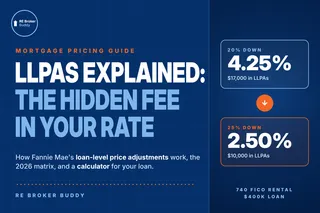
LLPA Explained: Fannie Mae's Loan-Level Price Adjustment Matrix (2026)
What a loan-level price adjustment (LLPA) is, how it works, the 2026 Fannie Mae LLPA matrix, investment property LLPAs, real-dollar examples and a calculator. ...more
DSCR loans ,Mortgage Market Updates
October 28, 2026
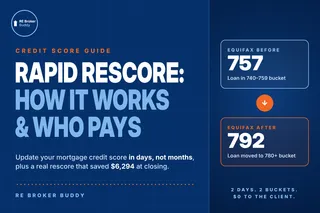
Rapid Rescore: How It Works, How Long It Takes and Who Pays
What a rapid rescore is, how it works, how long it takes, what it costs and who pays, what it can't fix, and a real rescore that saved $6,294 at closing. ...more
DSCR loans
October 28, 2026
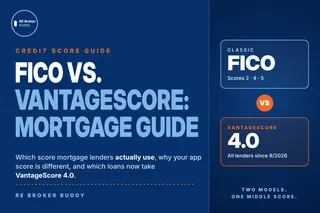
FICO vs. VantageScore for Mortgages: Which Credit Score Do Lenders Use?
Which credit score mortgage lenders use, how classic FICO and VantageScore 4.0 differ, why Credit Karma doesn't match your mortgage score, and which loans now accept VantageScore 4.0. ...more
DSCR loans ,Mortgage Market Updates
October 28, 2026
Where We Offer DSCR Loans
*Must Close in LLC
STEP 1
Apply Online or Call Directly
Find out how much home you can buy or discover how much you can save by refinancing.
STEP 2
Review What Options You Can Qualify For
Learn exactly how much you qualify for and what you would save by working with us.
STEP 3
Get Loan Approval in 24 Hours
Get mortgage loan approval to move forward with your property.


Broker Buddy LLC
Trevor Gravink
Mortgage Consultant
CEO/Owner
(619) 404-6637
NMLS: 1707407
NMLS Consumer Access Lookup Tool
CA DRE # 02117228
5371 Wilshire Dr. San Diego, CA 92116
© 2026 Broker Buddy LLC
Powered by Adaptive Mortgage Solutions
Company NMLS # 2022974
CA DRE # 02126109