Looking for a DSCR Loan in Connecticut?
We are the experts!
Qualify Based on Rental Income Only!
No Personal Income Needed to Qualify!
Interest Only Options Available!
Fund Into Corporation or LLC
No Pre-Pay Options
AirBnB's Allowed
Answer a Few Quick Questions and Let’s See if You’re Eligible
🔒 This site is secure
🔒 This site is secure
Qualify Based on bank statements only!
No W2's or Tax Returns Needed!
Interest Only Options Available!
Get up to 90% Financing
100% Gift Funds Allowed
Fixed Rate and Adjustable Rate Options
DSCR Loans in Connecticut: Finance Rentals on the Property's Income
A DSCR (debt service coverage ratio) loan lets Connecticut investors qualify using the rent a property earns instead of personal tax returns, W-2s, or pay stubs. If the rent covers the mortgage payment, taxes, insurance, and any HOA dues, the property can usually carry its own loan. Connecticut's rental markets are spread across several mid-sized metros, from the Bridgeport-Stamford corridor near New York City to Hartford, New Haven and the defense-industry hub around Groton and New London. Because property is assessed and taxed by each of the 169 towns, the tax cost of a rental can vary considerably from one town line to the next.
Broker Buddy shops DSCR programs from multiple wholesale lenders for single-family homes, 2–4 unit properties, condos and townhomes in all 169 Connecticut towns — purchases, rate-and-term refinances, and cash-out refinances.
Connecticut DSCR Loan Guidelines at a Glance
DSCR rules differ from one lender to the next, but most Connecticut rental loans land inside the ranges below. Because we shop several lenders on every file, a guideline that knocks out one program often isn't an issue for another.
| Guideline | Typical range in Connecticut |
|---|---|
| Credit score | Programs commonly open at 620–660; a 700+ score gets you the most leverage and the strongest pricing |
| Down payment / LTV | Plan on 20–25% down (up to 80% LTV) for purchases and rate-and-term refinances; cash-out usually caps around 75% LTV, with a handful of strong-credit programs reaching 85% |
| Minimum DSCR | Most lenders want rent to cover the payment at 1.00 or better; select programs go down to 0.75, and no-ratio options exist for properties that don't cash-flow yet |
| Reserves | Usually 3–6 months of PITIA left in the bank after closing, more for larger loans or lower scores |
| Loan size | Minimums typically begin near $75,000–$100,000, which matters in lower-priced cities like Waterbury and New Britain; jumbo programs cover Fairfield County prices |
| Property types | Single-family, condos, townhomes and the 2–4 family homes common in Hartford, New Haven and Bridgeport; some programs finance 5–10 units and mixed-use |
| Who can borrow | Individuals or an LLC; out-of-state entities usually need to register to do business in Connecticut first |
| Property condition | Rent-ready, with no major deferred maintenance; older multi-family homes should have working heat and separate meters where possible |
| Time to close | Roughly 3–5 weeks after the appraisal is ordered |
Guidelines shift often and depend on the lender, your credit and the property. Check a deal quickly with our DSCR calculator, or see how 30-year, 40-year, interest-only and ARM terms change the payment and the ratio.
Why Investors Are Buying Rentals in Connecticut
- Yale University in New Haven enrolls about 15,700 students and employs roughly 5,800 faculty and 12,000 staff, anchoring rental demand in the New Haven area.
- Naval Submarine Base New London in Groton, the Navy's primary East Coast submarine base, has more than 9,500 active duty, reserve and civilian personnel.
- Aerospace and defense manufacturers including Pratt & Whitney (East Hartford), Sikorsky (Stratford) and General Dynamics Electric Boat (Groton) are major employers.
- Hartford-area insurers such as Travelers, The Hartford and Cigna (Bloomfield), along with health systems like Hartford HealthCare and Yale New Haven Health, employ large workforces.
- Tourism at Mohegan Sun (Uncasville) and Foxwoods Resort Casino (Ledyard), plus the University of Connecticut in Storrs, add demand in eastern Connecticut.
Connecticut Rental Markets Worth a Closer Look
Connecticut packs very different rental markets into a small state. Here's a quick look at how investors tend to sort them — always underwrite the specific address.
Stamford, Norwalk, Danbury and Bridgeport ride Metro-North commuter demand into New York. Prices are the state's highest, so many investors focus on Bridgeport and Danbury multi-families where rent-to-price ratios work better.
East Rock, Wooster Square and Westville draw graduate students, hospital staff and young professionals, while Hamden, West Haven and Milford give investors lower entry prices a short drive away.
The capital region mixes government, insurance and healthcare jobs. Hartford's classic two- and three-family homes, plus suburbs like East Hartford, Manchester and Wethersfield, are popular with buy-and-hold investors.
Waterbury, Meriden, New Britain and Bristol offer some of the lowest prices per unit in the state. Mill rates here can be high, so get the actual tax bill before you run the ratio.
Groton, New London, Norwich and Mystic serve shipyard, Navy and casino workers on long-term leases, and the Mystic and Stonington waterfront supports seasonal rentals.
Willimantic and Storrs house UConn renters, while Litchfield County lake and ski towns attract weekenders. Check each town's zoning before planning a short-term rental.
Want a quick read on what a Connecticut property should rent for before you write an offer? Try our free DSCR rent estimate tool.
Connecticut Rent Benchmarks
Lenders qualify DSCR loans using the lower of the current lease or an appraiser's market-rent estimate, so it helps to know where local rents sit before you make an offer. HUD's Fair Market Rents are a useful, neutral starting point:
| Area | 2-bedroom | 3-bedroom | 4-bedroom |
|---|---|---|---|
| Bridgeport-Stamford-Danbury | $2,399 | $2,878 | $3,573 |
| New Haven | $2,091 | $2,602 | $2,935 |
| Norwich-New London-Willimantic | $1,902 | $2,418 | $2,995 |
| Hartford-West Hartford-East Hartford | $1,933 | $2,303 | $2,542 |
| Waterbury-Shelton | $1,745 | $2,184 | $2,599 |
| Northwest Hills (nonmetro) | $1,560 | $2,061 | $2,359 |
| Northeastern CT (nonmetro) | $1,568 | $2,006 | $2,126 |
Source: HUD Fair Market Rents, FY2027 schedule (effective October 1, 2026). Fair Market Rents are a government benchmark, not an appraisal; actual market rent for a specific property may be higher or lower.
How Much Can a Bridgeport Rental Support?
A quick way to size a deal is to work backward from the rent. Using the HUD 3-bedroom benchmark for the Bridgeport area and some simple assumptions, here's roughly what purchase price that rent can carry with 20% down:
| Monthly rent (HUD 3-bedroom benchmark) | $2,878 |
| Purchase price the rent covers at a 1.00 DSCR | about $429,000 |
| Purchase price for a 1.20 DSCR (better pricing) | about $358,000 |
| Median value of owner-occupied homes, Bridgeport | $274,900 |
Benchmark rents can support a typical home in the area, which is why many investors here qualify at or above a 1.00 DSCR. Assumptions: 30-year fixed at a 7.25% example rate, with taxes and insurance estimated at 1.5% of the price per year. The median value is from U.S. Census QuickFacts. These are illustrations only — request a quote for numbers on your property.
Run your own Bridgeport numbers, or any Connecticut town, in the DSCR calculator, and see whether an interest-only or 40-year term helps a tight deal reach 1.00 in a high-mill-rate city.
Connecticut Prepayment Penalty Rules for DSCR Loans
Connecticut is one of the states where lenders may include a standard prepayment penalty on investment-property (business-purpose) loans. Choosing a prepayment penalty usually lowers your rate; choosing no penalty gives you the freedom to sell or refinance at any time. We'll price both ways so you can compare.
| Prepay option | How it works | Best for |
|---|---|---|
| Flat 5% (1–5 years) | 5% of the amount prepaid during the penalty term, e.g. 5/5/5 for a 3-year term. | Long-term buy-and-hold; often the best rate |
| Step-down (5-4-3-2-1 or 3-2-1) | The penalty drops each year, e.g. 5% in year 1, 4% in year 2, down to 0% after year 5. Offered by many lenders. | A balance of rate and flexibility |
| Six months' interest | Offered by some lenders: the penalty is capped at six months of interest on 80% of the original balance. | Investors who want a smaller, predictable penalty |
| No prepayment penalty | Sell or refinance any time with no penalty, at a higher rate or price. | Flips-to-rentals, BRRRR, short holds |
Connecticut-Specific Costs and Rules for Investors
Property taxes on rentals
Connecticut has no county property tax; each of the 169 towns and cities assesses property and sets its own mill rate. Real property is assessed at 70% of fair market value, and towns must revalue at least every five years, so assessments can jump after a revaluation (towns may phase in increases over up to five years). Rental and owner-occupied homes are assessed the same way, but owner-occupant relief such as the Homeowners Elderly/Disabled Circuit Breaker program is limited to owners who live in the property, so investors should not count on it. Source: Connecticut General Statutes Chapter 203 (Property Tax Assessment).
Insurance and hurricane/flood risk
The Connecticut Insurance Department warns that hurricanes and tropical storms can affect the whole state, not just the coast, and that flood damage is not covered by standard homeowners or business policies. Some policies carry a separate hurricane or wind deductible, often set as a percentage of the insured value, so investors should price flood coverage (for example through the NFIP) and check deductibles, especially for shoreline properties. See CT Insurance Department: Hurricanes and Tropical Storms.
Short-term rentals and lodging tax
Connecticut charges a 15% room occupancy tax on hotels, motels, lodging houses and short-term home rentals (11% for bed and breakfasts), and it applies only to the first 30 consecutive days of a stay. Since October 1, 2019, short-term rental facilitators that meet the state's threshold (at least $250,000 in sales over the prior 12 months, collecting rent on hosts' behalf) must register with DRS and collect and remit the tax. Hosts who book directly are responsible for collecting it themselves. Details: CT DRS Room Occupancy Tax information.
Landlord-tenant law
Long-term rentals are governed by the Connecticut General Statutes Title 47a (Landlord and Tenant); security deposits under Section 47a-21. Landlords can't require more than two months' rent as a security deposit (one month's rent if the tenant is 62 or older). The deposit, with interest, or an itemized list of damages must be returned within 21 days after the tenancy ends, or within 15 days of receiving the tenant's forwarding address if that comes later. Read more: CT Department of Banking: Rental Security Deposits.
Grace period and notice to quit
Connecticut gives residential tenants a nine-day grace period: a landlord can't move to end the tenancy for nonpayment until rent is more than nine days late (five more days are added if the landlord's online payment system kept the tenant from paying on time). After that, the landlord serves a notice to quit, and the eviction itself runs through Connecticut Superior Court (a dedicated Housing Session in the larger cities). Plan for this timeline in your reserves, and have a Connecticut attorney prepare your notices. Source: Conn. Gen. Stat. § 47a-15a.
Fair Rent Commissions
There is no statewide rent control, but every town with 25,000 or more residents had to create a Fair Rent Commission by July 1, 2023. Tenants can file complaints about excessive rent increases, and a commission can hold hearings and issue orders. Keep increases in line with the market and document your reasons. Source: summary of Public Act 22-30.
State income tax on rental profits
Connecticut taxes net rental income under graduated income tax brackets that run from 2% to 6.99% for 2026. Your CPA can tell you how depreciation and LLC pass-through treatment affect what you actually owe. More at the Connecticut Department of Revenue Services.
Buying in an LLC
A Connecticut LLC is formed by filing a Certificate of Organization with the Secretary of the State, online at business.ct.gov, for a $120 filing fee. Start here: Connecticut Certificate of Organization (Secretary of the State). Talk to your attorney or CPA about the right structure for your situation.
Connecticut Town Assessor Offices
Connecticut has no county government, so each town's assessor values property and each town sets its own mill rate. Use these official assessor pages to look up a property's assessment and tax details before you make an offer.
| Town / city | County | Office |
|---|---|---|
| Bridgeport | Fairfield County | Tax Assessor |
| Norwalk | Fairfield County | Tax Assessor's Office |
| Danbury | Fairfield County | Assessor's Office |
| Greenwich | Fairfield County | Assessor's Office |
| Fairfield | Fairfield County | Office of the Tax Assessor |
| New Haven | New Haven County | Assessor's Office |
| Waterbury | New Haven County | Assessor's Office |
| Meriden | New Haven County | Assessor's Office |
| Hartford | Hartford County | Office of the Tax Assessor |
| West Hartford | Hartford County | Assessment Office |
| New Britain | Hartford County | Assessor |
Other towns: The CT Office of Policy and Management keeps a directory of assessors for all 169 Connecticut towns, with names, phone numbers and email addresses. View the directory.
More Free Resources for Connecticut Investors
- HUD Fair Market Rents — rent benchmarks by county and ZIP code
- U.S. Census QuickFacts: Connecticut — population, income, and housing data
- FEMA Flood Map Service Center — look up the flood zone for any address
- CT DRS Room Occupancy Tax information — short-term rental tax rules
- Connecticut Certificate of Organization (Secretary of the State) — form or look up an entity
Connecticut DSCR Loan Options & Free Tools
Connecticut investors use DSCR financing for more than a basic 30-year purchase. Pick the option that matches your plan:
Check whether a Bridgeport three-family or a Hartford duplex covers its payment before you make an offer.
Estimate market rent for a New Haven or Stamford rental the way a DSCR appraiser will.
See how much cash you could pull from a Waterbury or New Britain multi-family you've already stabilized.
Compare 30-year fixed, 40-year, interest-only and ARM options and how each moves your DSCR on high-tax towns.
Tap equity in a Connecticut rental without disturbing a low-rate first mortgage.
Finance Mystic, shoreline and Litchfield Hills vacation rentals using projected nightly income.
Connecticut DSCR Loan FAQs
How much do I need to put down on a Connecticut DSCR loan?
Most DSCR programs require 20-25% down on a purchase. Select programs allow less with strong credit and a higher DSCR. Short-term rentals and properties with a DSCR under 1.0 usually need more down.
Do Connecticut DSCR loans have prepayment penalties?
They can. Connecticut permits standard prepayment penalties on investment loans, such as a flat 5% for 1-5 years or a 5-4-3-2-1 step-down, depending on the lender. You can also choose a loan with no prepayment penalty, typically at a slightly higher rate.
Can I use Airbnb income to qualify?
Yes, on eligible programs. Lenders use your booking history or a short-term rental market analysis for the property. Check local short-term rental licensing first.
Can I close in my LLC?
Yes. DSCR loans can close in the name of an LLC or corporation, with the owners signing a personal guarantee.
Why does my Connecticut assessment look lower than the purchase price?
Connecticut towns assess real property at 70% of fair market value, and the tax is that assessed value times the town's mill rate. Towns revalue at least every five years, so an assessment and tax bill can change noticeably in a revaluation year.
Do I owe Connecticut room occupancy tax on a monthly or mid-term rental?
The 15% room occupancy tax covers short-term home rentals only for the first 30 consecutive days of a stay; starting on the 31st consecutive day of occupancy by the same person, it no longer applies. Leases longer than that are ordinary residential tenancies.
What credit score do I need for a Connecticut DSCR loan?
Many DSCR programs start around a 620 to 660 credit score. Scores of 700 and above usually unlock the highest loan-to-value and the best pricing, while lower scores typically need a bigger down payment.
Can I use a DSCR loan on a Connecticut two- or three-family house?
Yes. Two- to four-unit properties are standard DSCR collateral, and the lender adds up the rent from every unit when it figures the ratio. Buildings with five or more units need a 5-10 unit or commercial program.
Do Connecticut towns cap rent increases?
There's no statewide rent control. However, towns with 25,000 or more residents must have a Fair Rent Commission that can review complaints about excessive increases, so keep increases reasonable and documented.
How long is the grace period for late rent in Connecticut?
Tenants get nine days after the due date before a landlord can begin ending the tenancy for nonpayment. After that the landlord serves a notice to quit, and the case goes through Connecticut Superior Court.
Get a Connecticut DSCR Rate Quote
Tell us about the property and we'll shop multiple DSCR lenders so you can compare options. No credit check to see your options.
Check My EligibilityLooking for another state? See all DSCR loan states.
DSCR Loans Explained
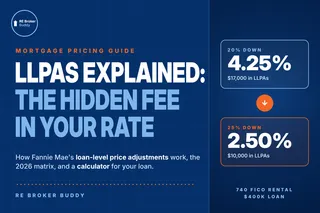
LLPA Explained: Fannie Mae's Loan-Level Price Adjustment Matrix (2026)
What a loan-level price adjustment (LLPA) is, how it works, the 2026 Fannie Mae LLPA matrix, investment property LLPAs, real-dollar examples and a calculator. ...more
DSCR loans ,Mortgage Market Updates
October 28, 2026
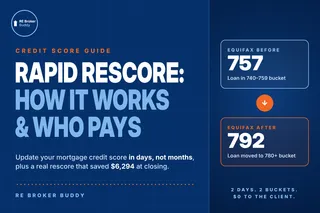
Rapid Rescore: How It Works, How Long It Takes and Who Pays
What a rapid rescore is, how it works, how long it takes, what it costs and who pays, what it can't fix, and a real rescore that saved $6,294 at closing. ...more
DSCR loans
October 28, 2026
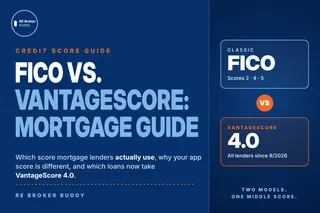
FICO vs. VantageScore for Mortgages: Which Credit Score Do Lenders Use?
Which credit score mortgage lenders use, how classic FICO and VantageScore 4.0 differ, why Credit Karma doesn't match your mortgage score, and which loans now accept VantageScore 4.0. ...more
DSCR loans ,Mortgage Market Updates
October 28, 2026
Where We Offer DSCR Loans
*Must Close in LLC
STEP 1
Apply Online or Call Directly
Find out how much home you can buy or discover how much you can save by refinancing.
STEP 2
Review What Options You Can Qualify For
Learn exactly how much you qualify for and what you would save by working with us.
STEP 3
Get Loan Approval in 24 Hours
Get mortgage loan approval to move forward with your property.


Broker Buddy LLC
Trevor Gravink
Mortgage Consultant
CEO/Owner
(619) 404-6637
NMLS: 1707407
NMLS Consumer Access Lookup Tool
CA DRE # 02117228
5371 Wilshire Dr. San Diego, CA 92116
© 2026 Broker Buddy LLC
Powered by Adaptive Mortgage Solutions
Company NMLS # 2022974
CA DRE # 02126109